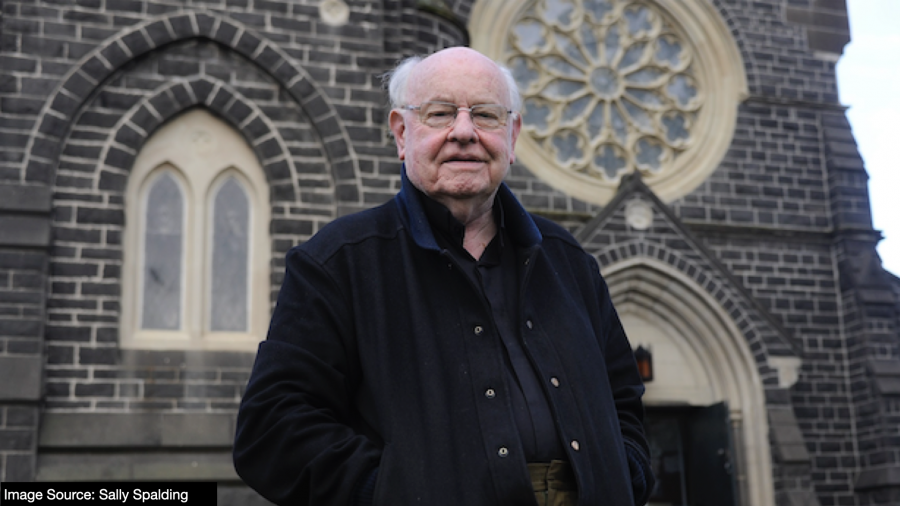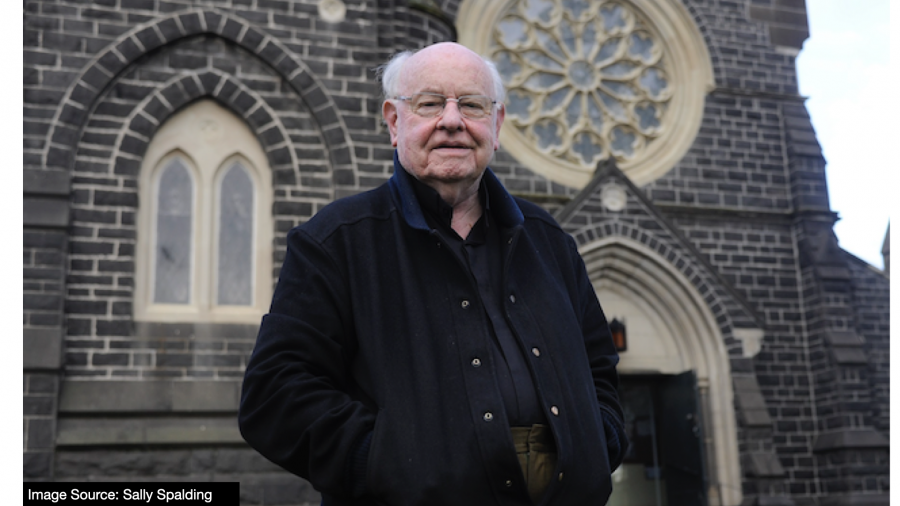
Remembering the life of Father Bob Maguire - By Sally Spalding | 28 April 2023

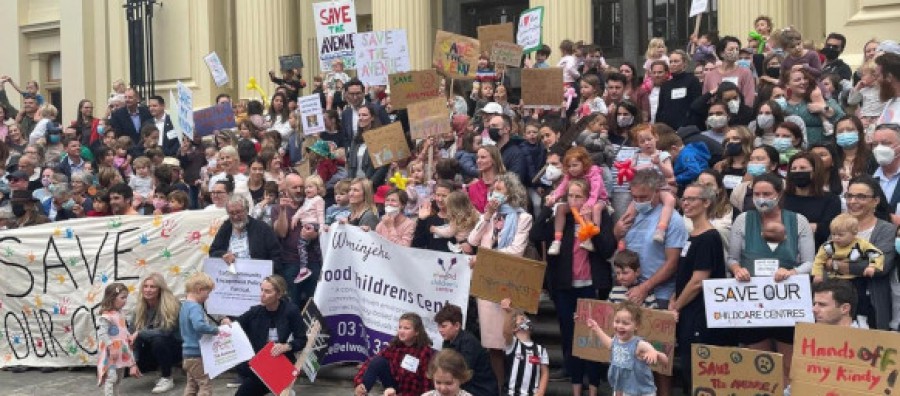
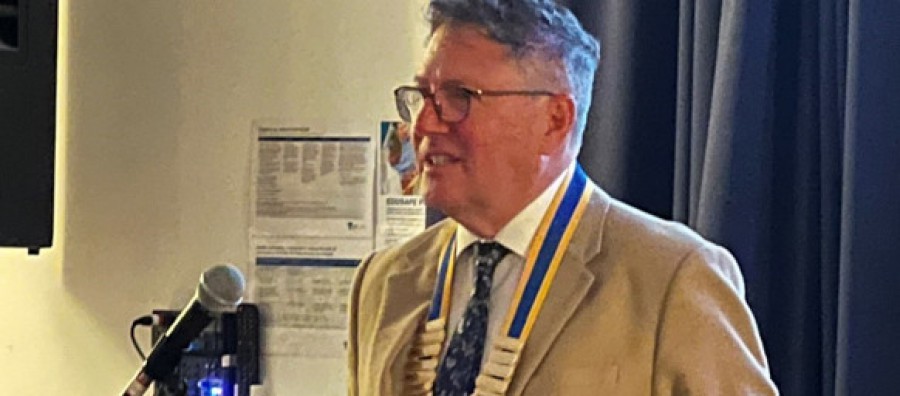
It’s hard to imagine there would be too many residents in the COPP who hadn't met Father Bob Maguire over his 38 year tenure at the South Melbourne, St Peter and Paul parish.I was privileged to have a working relationship with Fr Bob as a local journalist for the Port Phillip area on Leader Newspapers, and as I reflect on his passing, what a hilarious relationship it was. It was one also filled with pathos and love as I watched him lose some of the street kids and lost souls close to him, over a 2-3 year period, and its impact on his spirit. He was flat.

Mostly he was a funny bastard so it was not usual to see him grieving. But we did.

I rang former four-time Mayor, Dick Gross, on the news of Fr Bob’s passing at 88, because I knew they had experienced an idiosyncratic, charismatic and joyful friendship.

On the surface it may have appeared unlikely.

A secular Jew and a Catholic Priest. But they were great mates. They talked about religion, the role of Jesus, the architecture of great Cathedrals and their mutual love of their dogs.

And Fr Bob never discriminated.  He lived and espoused the religious values he upheld in the church’s teachings every day. But let’s get back to Dick’s memories for a moment. In everything I’ve read since Fr Bob has passed away, no one has summed it up more eloquently as Dick when he said:

“The leadership of the Catholic Church couldn’t stand him; Fr Bob captivated the world but they couldn’t get over their enmity towards him and wouldn’t work with him.

“And we all know how that played out.

“As we look back, where was the greater Christianity?”

Every weekend Fr Bob would go to the local footy, netball, or cricket and support the kids playing in South Melbourne.

“He was deeply embedded in the community and it must have been wonderful for those young players to see their Priest come and watch their games and really inspire them,” Gross said.

“He was so supportive and such a part of the community; being born in Prahran and attending CBC when it was a very rough school in those days, and then being given the Parish in South Melbourne, when he was 25.

“He was a St Kilda institution.”

Gross says Fr Bob had the power of personality along with the power of personal intervention to change the world.

“He often put himself in harm’s way when he worked with the street kids.

“He nurtured his great friend Costa, who lived at the back of the Parish and was homeless.

“When they died, he was always devastated.

“The work he did is incredibly taxing and someone had to bury them when they died, Fr Bob did that but it wasn’t easy, it took its toll.”

Costa came and went from the parish and he always bought Fr Bob something from the street.

A few days before he died, he found a beautiful butterfly on the pavement. And bought it home for Fr Bob.

The day photographer Jason Sammon and I arrived, to do a photo essay with Fr Bob, he was sitting holding the butterfly in his hand.

“A present from Costa,” he said, admiring its vibrant colour. 

Fr Bob loved to lend a hand to anything that he was asked.

He agreed to launch one of Dick Gross’s books, when he wrote Death by Ellergy in 2011, which explores different aspects of dying.

At the launch Fr Bob said, “It will help me prepare for death, Gross is an undercover religiologist”.

He said to those gathered: “Don’t be afraid of this book.

“We are not arguing about the concept but the delivery and the vocabulary, and you should be able to have this discussion.”

Also in 2011, the Catholic Church, under the formidable hand of then Archbishop Denis Hart, pushed Fr Bob to retire. He was 77.

Yet, the Mornington Priest, Fr Kevin Mogg, was still administering to his flock, at 79 years old.

Fr Bob said the Archbishop was waving a white flag saying Maguire resign, “but I’m not ready to go yet”.

“We are in the middle of something here and have got a good thing going in South Melbourne,” he said.

I suspect Fr Bob would have never been ready to go as such, but let’s hope Dick Gross’s book helped him when the final moments came, from one atheist to a man of God, their friendship spanned, decades of work and discussion together in the City of Port Phillip.

And the final words go to Gross; “He was a great man.”

Port Phillip launches communal FOGO, glass bins. - By Cr Rhonda Clark | 28 April 2023

Thanks to everyone for their great support of the FOGO – food organic and green organic rollout. The kitchen caddies have been so popular that council almost ran out. Caddies can be collected from St Kilda Town Hall or any of our five library branches: Albert Park, Emerald Hill, Middle Park, Port Melbourne, and St Kilda.

Since the introduction of FOGO bins for houses and townhouses we have seen a great improvement in diversion from our landfill from 31.8% to 39.5%. Well done to everyone for reducing our landfill and improving our sustainability. 

Many people who live in apartments have been asking me when they are getting a FOGO bin. Good news is that apartments will start receiving their bins in July 2023. For those that don’t have access to either, there will be communal FOGO locations across the Municipality which will commence in April 2023. Communal Glass hubs will commence in April 2023.

You may remember that the introduction of the weekly FOGO collection meant that the general waste weekly collection was to change to fortnightly. The council has decided to delay that change until January and February 2024. So please make sure you continue to put all garden and food organics to the green FOGO bin so when the general waste changes to fortnightly, you will have plenty of room in your general waste bin.

The waste charge for all residents for next financial year is proposed to increase by $22 to $198.20. The cost of the kerbside FOGO bin charge is proposed to reduce by $22 to $66 for the next financial year. Multi units (apartments) will have no collection charge. 

Please provide your feedback on FOGO and the draft budget on the link below and you have until May 18th, 2023. Council Plan and Budget | Have Your Say Port Phillip

Image of FOGO caddies and liners courtesy of City of Port Phillip
Port Phillip City Council commits to traffic assessment - By Brian Mears | 28 Apr 2023

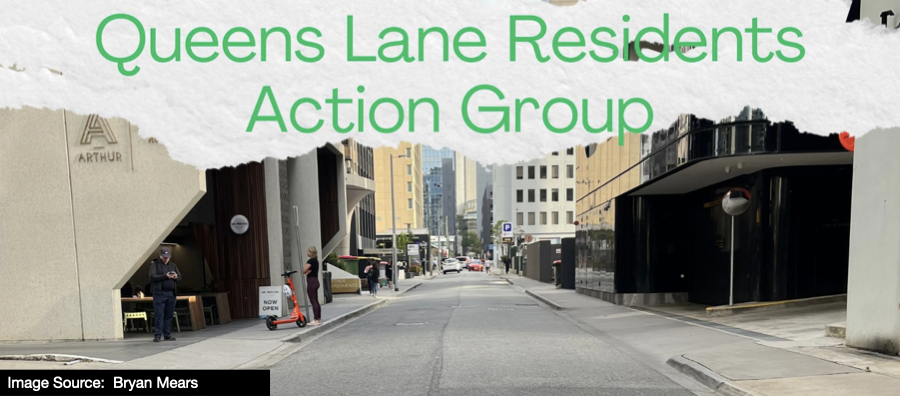
The QLRAG submitted a question to the Meeting of the Port Phillip City Council on the 19th April. This action and the prior 4+ months of advocacy has resulted in the commitment by Council to a review (traffic assessment) and recommendations to be completed by August 2023. Further the Council has committed to engage with QLRAG “in particular” with respect to the findings. Public questions are summarised below. The submissions were made verbally and can be listened to in full

The Queens Lane Resident Action Group (QLRAG), representing the  residents in the Queens Lane precinct, is concerned about the lack of a contemporary  traffic assessment and management plan for the lane given the recent Council approvals of developments within the lane and future development that will inevitably be approved  by Council. By its own admission Council recognises the traffic issues that currently exist  in the lane. Traffic congestion will only become worse with current and future  developments planned along the laneway. Traffic flows have been further affected by the  recent closure of vehicles lanes on St Kilda Road to accommodate a wider bicycle lane.

When will the Council recognise and act on the concerns raised by the long-suffering ratepayers in the precinct and undertake a current traffic assessment and introduce appropriate traffic flow controls that will provide reasonable access and amenity for residents living along the lane?

Nellie Montague, Acting Manager Partnerships and Transport thanked the QLRAG for their advocacy and feedback around traffic and parking issues in Queens Lane. Council officers have looked into the request and are progressing an investigation that builds on reviews and  works completed in 2017 and will consider the feedback provided by QLRAG, the current development context and more recent changes to the road network in the area as outlined in the question. The investigation has begun and will be completed by August 2023.

Recommendations from this investigation will then be costed and planned to determine the next steps, which will be communicated to the community in particular the QLRAG.

Separately QLRAG are conducting an independent analysis of the traffic issues we all know so well. Our analysis will insure we are fully advised of all implications for any changes going forward. 

I see this result as substantive given the difficulty in getting the attention of Council and represents the first real analysis of Queens Lane since 2017.

We will continue to advocate on the residents behalf, ensure Council complies with these undertakings and keep you informed of progress.

We are engaged in VCAT currently, appealing the decision to award a planning permit to 448 St. Kilda Road. That action will play out in June 2023. 

Bryan Mears

Wales' approach to future generations & well-being - By Sally Spalding | 28 Apr 2023

A visit this week to Melbourne, coinciding with council voting on a rate increase at COPP should have all residents and ratepayers interested in the outcomes of the rate decision.

Because there is another way and Port Phillip representatives should take note, from Wales, the land of the wild and song.

In 2016 Wales appointed its first Commissioner for Future Generations and Well Being, Ms Sophie Howe. She completed her tenure of seven years in January 2023.

Under Welsh Law passed in 2015, well-being was protected.

The public sector was expected to make joined-up, long-term decisions, helping people in Wales live better lives and leave a more liveable planet behind. They have also made a new definition of prosperity.

Ms Howes was in Melbourne to deliver the John Menadue oration at the invitation of the Centre for Policy Development.

Her brief, along with her powers to call out the madness of some policy ideas, was to embark on the biggest cultural change programme Wales had ever seen and protect the rights of future generations.

It included a moratorium on road building; a major transformation on transport, innovations like free bike hire; a transition to a low carbon society and protection for future generations so that they could live in a sustainable society.

Sophie Howes was in fact the guardian of Wales' future generations.

After her appointment, the United Nations Assistant Secretary General, Nikhil Seth, said “where Wales goes today, the rest of the world will follow tomorrow”.

Part of Ms Howes role was to introduce mandatory education on black history, develop ethical and informed citizens through the education system, help people re-connect with nature and to develop capable learners who were emotional and empathetic leaders for the future.

Ms Howes said despite a framework and legislation, human beings do not like change.

“We had to reconstruct or rebuild the society; we needed to turn a piece of legislation to walk a path to the new normal.”

The 'How' of the new legislation meant there were five ways to work; long-term, prevention, integration, collaboration and involvement.

This meant going back to bureaucrats and asking them if their decisions were in line with the goal of resilience, or a prosperous nation, would it damage biodiversity in the area, did it add to a healthier nation and would it add to rising levels of pollution?

Ms Howes said Wales had a passionate Environment Minister who led the legislation but it was all encompassing.

“He worked with NGO's, environment organisations and then cultural and creative communities were included.

“In hindsight, it was important to broaden the conversation to people and equality groups for a cross pollination of ideas.

“We took the community along with us, but you had to have everyone on board, the public servants, the politicians.

“We had community meetings, we had children write postcards to their future selves,... imagine if every single leader across the world, had been through an education system that taught them to be ethical and informed citizens?”

Sophie Howe said within the bureaucratic system there are always frustrated champions, the people in the system who know there is a better way of doing things.

“But the system has frustrated them, because these are the people who have been waiting for something like this and will become the first to use it to do different things to challenge the system, it's important to use them to channel that system and to walk a path to the new normal. 

“The best way is for us to walk that path with them and create it with them,” she said.

Professor Fiona Stanley, who was part of the panel at the oration, said after Ms Howe's speech that citizen engagement is really vital to the success.

“Citizens have not been engaged in Australia, and I think what Wales has proved, is that engaging citizens might increase democracy.”

Community faces rate rises as council prioritizes pet projects - By Ron | 28 Apr 2023

Another year passes and our community is once again expected to be bitten by rate rises. Council is proposing to increase rates by 2.8% instead of the maximum amount of 3.5%. The final decision will be made on 20 June subject to community consultation. In a time of ongoing hardships the community is once again likely to be forced by the politically aligned councillors to cough up more money for their pet projects. Feeding a regular snaking conga line begging for more and more money looking for $12 Million of our community rates money to go towards social housing, welfare and climate change.

Note that ALL OF THESES ARE STATE AND FEDERAL GOVERNMENT RESPONSIBILITIES and should be funded by them. 

Yet our Local Council continues to support these efforts each year with our Rate moneys thanks to the overbearing numbers of the politically aligned councillors looking to make a name for themselves to their political masters.

One has to question why these local councillors aren’t looking after the interests of the broader community who they are meant to represent, rather than minority factions that are also being funded elsewhere. In any case it’s a lucrative business for this annual conga line and we are to blame for allowing this to happen in our community. 

We are to blame as the majority of us voted for a political party to represent them rather than an independent local that will work for and look after the needs of the community - not spend our money year in and year out on political passion projects. Our independent councillor voting numbers are outnumbered by the political factions of our LOCAL Council

  • Does the community want to pay a double tax on things that they are already paying for via State and Federal Taxes? 
  • Why does our Council continue to increase our Rates year in and year out when there is no need to do so?
  • Are we getting value from our council for the rates we all pay? (remember renters also pay Rates through their rent). When rates ago up … rents go up
  • Why do our politically aligned Councillors keep working against the greater good of the community.
  • Are the Political councillors toeing the party line and treating COPP as training camp to further their political careers?

The City of Port Phillip are a soft bellied target with these political councillors dictating and doling our moneys out to their snaking conga line of beggars.

Personally I want a fairer deal from Council.  It’s time for our community to became involved in redressing this political imbalance and stop voting for political parties in the next local Council Elections. 

The best way to get rid of this snaking conga line that is choking funding for our local community is to cut of its head by - 

Keeping Politics out of Port Phillip 

Editor's note: 

ROPP believes Port Phillip Council has a role in influencing state and federal governments and advocating for social and affordable housing, welfare for the vulnerable and net zero CO2 emissions. But ROPP does not support the endless spending of scarce council funds when other key council responsibilities are inadequately funded. If CoPP could spend every cent of its budget on these areas and it would barely make a difference and importantly these matters are state and federal responsibilities. Wouldn’t it be nice to halve the time it takes to get a planning permit? Wouldn’t it be nice to plant more trees and address stormwater issues in low lying suburbs? If money were not diverted to state and federal responsibilities, Council would be able to properly fund these integral responsibilities.

City of Port Phillip's regulations for unsightly premises - By Rod Mitchell | 28 Apr 2023

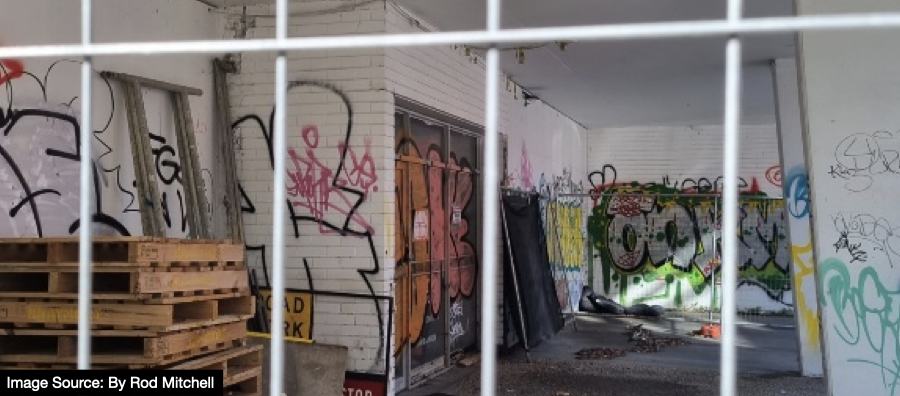
My recent experience with the City of Port Phillip (CoPP) in relation to dealing with unsightly graffitit was positive. After working through the issue of what constituted art or murals against normal graffiti, the Council Officer moved quickly and an eyesore in one street of St Kilda was resolved between the CoPP and the landowner. The building has now had rubbish removed and repainted. 
Under the City of Port Phillip Community Amenity Local Law regulations 2023, there is something you can do with unsightly nature strips, rubbish, or buildings that are graffitied, dilapidated or otherwise in your area. Below outlines the regulations which can be sighted in any referral to the City of Port Phillip for actioning.


Dilapidated buildings are covered under Division 2, Section (c)

(c) must maintain any building or other structure in a state of good repair and appearance, including undertaking temporary repairs as required to ensure on-site safety and security and to avoid the appearance of neglect out of character with other premises in the vicinity. 

Graffitied buildings are covered Council local law section 57 3(d)

(d) must not allow any graffiti to remain on any building, wall, fence, post or other structure or object erected on that land

Relevant Regulation: Division 2 – Premises – Unsightly or dangerous 

Dangerous or unsightly land 

(1) An owner or occupier of land must not allow that land to be kept in a manner which is dangerous or unsightly. 

(2) An owner or occupier of land must not allow the nature strip or footpath adjacent to that land to be unsightly or occupied with furniture or other objects. 

(3) For the purpose of sub-clause (2), where the land adjacent to the nature strip or footpath has one or more owner’s corporation, the owner of land includes those owners’ corporation. 

(4) Without limiting sub-clause (1), the owner or the occupier of land on which is located any building or other structure which is unoccupied, unfit for occupation or normal use or not occupied most of the time: 

(a) must not permit any building or other structure to become dilapidated or further dilapidated. 

(b) must take all reasonable steps to secure the building or other structure and the land on which it is built from unauthorised access. 

(c) must maintain any building or other structure in a state of good repair and appearance, including undertaking temporary repairs as required to ensure on-site safety and security and to avoid the appearance of neglect out of character with other premises in the vicinity. 

(d) must not allow any graffiti to remain on any building, wall, fence, post or other structure or object erected on that land; and 

(e) will commit a new offence under this Local Law every month any breach of this sub-clause continues unless effective works have been undertaken to remedy any breach. 

(5) A person is not guilty of an offence under sub-clause (1) or (4) where that person is unable to remove the source of the danger or carry out the required maintenance and repairs due to age, illness, or disability.


A Rich History - By Dan Peel | 28 Apr 2023

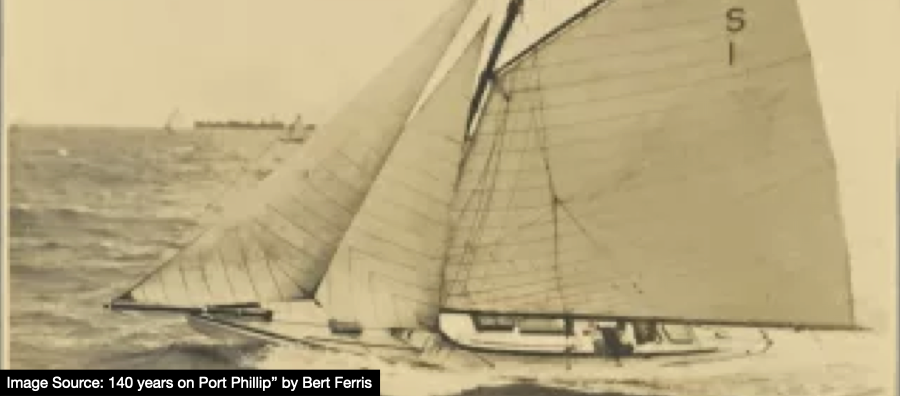
The Royal Melbourne Yacht Squadron, with a history of over 140 years, is one of the oldest yacht clubs in Victoria with a long list of historical firsts. Situated at St Kilda most major championships have been held off its shores and the Squadron was the control centre for the 1956 Melbourne Olympic yachting events, as well as the 1999 Laser World Championship.

The Squadron had its beginnings in the early 1870s when a small group of yachtsmen and occasional fishermen gathered at St Kilda beach. Where there are yachts, there were challenges, and soon informal races started.

By 1876 the group became the St Kilda Sailing Club, with approximately 20 members and Robert Hill as Commodore. The annual subscription was ten shillings.

During season 1879-80 and with a bank balance of over seventeen pounds, plans for a club shed were submitted to Council; however strong opposition from St Kilda residents ended that plan.

Membership grew to 44 in the 1881-82 season and with a bank balance of thirty nine pounds, Louis Meyer again took up the question of a clubhouse. But his efforts were to no avail, because the Council again objected to the plan.

At the Annual Meeting on September 1884, with the desire to place the Club in a premier position , it was moved to change the name from St Kilda Sailing Club to the St Kilda Yacht Club. It was also decided to extend the tonnage limits to allow larger yachts to participate in races.

Louis Meyer never gave up negotiations for a club site and in December 1885 his persistence was rewarded when the Lands Minister provided a ‘Free Grant Site’ on West Beach. A weather board club shed designed by Sydney Wilson was later built on the site, at a cost of one hundred and twenty pounds.

By 1890, St Kilda Yacht Club had 200 members and 25 yachts on the register. By weight of members this made it the strongest on Port Phillip. Improvements made at the time included connection to the water main, a cold shower for members and a fence around the premises.

In 1894 it became apparent that the club would have to build a slipway suitable for slipping larger yachts. An application was lodged by Commodore Meyer for a more convenient site closer to the pier. In September 1895 this was granted by the Crown.

In October 1903, at its annual meeting, the Club decided to admit women as members and entitle them to all privileges. 

During 1904 the construction of the Club’s slipway began at the new site. It became necessary to proceed immediately with the erection of a clubhouse.

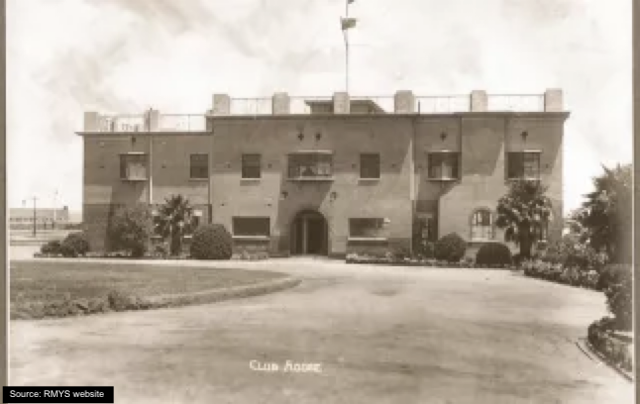
Designed by a member, J.P. Kennison, the two-storey clubhouse was built by Adams Bros. at a cost of 629 pounds. The clubhouse was formally opened by Past Commodore Louis Meyer on 24th June 1905, making St Kilda Yacht Club one of the first yacht clubs in Australia to have an on-site clubhouse. Eighty two members joined the services during World War I. Six were killed. In January 1920, a tablet was unveiled by the Mayor of St Kilda Councillor T.G. Allen, bearing the names of the members who lost their lives during the War.

In May 1924  His Majesty, King George V, had conferred on the Club the prefix ‘Royal’.


By this time the Club had 284 members and was becoming very cramped so the battle for more land started again.

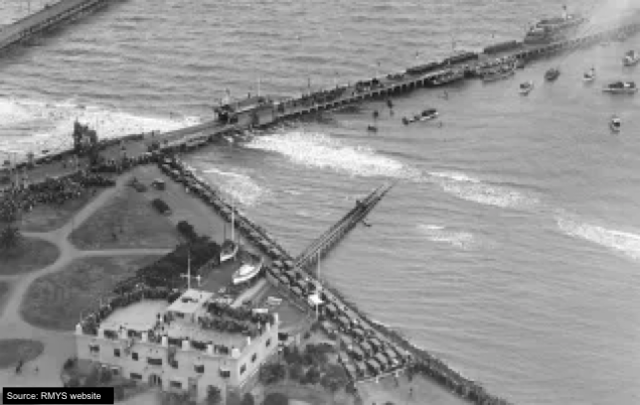
The erection of an imposing two-storey building was commenced in 1926. The Foundation Stone was laid by the Governor-General Lord Stonehaven. To mark the Club’s Golden Jubilee the new clubhouse was opened on 23 October 1926.

Soon after the opening, more than 1,200 members and visitors were at the Club when the Duke and Duchess of York (later King George VI and Queen Elizabeth) landed at St Kilda.

World War II saw 140 members enlist in the various services. By the end of the War, 10 had been killed in action.

1956 was a big year for the Club. It was the Executive Headquarters for the yachting section of the Melbourne Olympics. The victory ceremony and presentation of medals took place on the lawns on 6 December 1956.

Discussions began in 1961 on the possible amalgamation of the St Kilda 14 Foot Sailing Club with Royal St Kilda Yacht Club. In the meantime the Club was negotiating through the Government for a name change.

The Club was advised through the Governor General’s Office, that from 26 June 1961, Her Majesty the Queen approved the club’s change of name to the ‘Royal Melbourne Yacht Squadron’.

It was agreed that the name change was to be effective from Cup Eve, 6 November 1961, when the club officially amalgamated with the St Kilda 14 Foot Sailing Club.

Women were around the club house from as early as WWII as guests and later on as Honorary members. By 1976, women were accepted as full members with equal rights, making it the first of the Australian yacht clubs with a royal charter to do so. 

There have been many famous yachts based at the Squadron over the years. An equally promising future seems assured as committee and members take seriously their obligation to respect its traditions while striving wherever and whenever possible to improve the sailing experience for generations to come.

A multi-million dollar investment improving an already exceptional clubhouse experience, and the opening of the magnificent floating marina in February 2014 have helped place RMYS as one of the most progressive and forward-thinking clubs to be found not only in Victoria, but in the whole of Australia.

This achievement was recognised when the Squadron won the prestigious Yachting Victoria 2014 Yacht Club of the Year Award.


References
extracts from the hard cover printed book “140 years on Port Phillip” written Bert Ferris club historian Royal Melbourne Yacht Squadron.
By Claire – St Kilda Resident | 28 Apr 2023

Victoria Police (VIC Pol) need your assistance. Now is a great time to voice your opinion!

Police play a critical role in communities across Victoria. According to VIC Pol, the duties undertaken by the police force include (but not limited to); preventing anti-social behaviour, dealing with community safety concerns, resolving disputes, attending accidents, investigating crime, enforcing traffic law, dealing with drug and alcohol affected people and attending critical incidents and emergencies.

As many in our community know, residents have been raising safety concerns for some time, particularly around Fitzroy Street and Acland Street, which have been in decline for some time. That’s the message many in the community want to voice to Police, from long and short-term residents, business owners and those visiting St Kilda on holidays, family visits and business trips. 

Whilst the issues underlying homelessness, drug abuse and street violence are complex and require a myriad of services to support those that are legitimately vulnerable, residents hold very real concerns about the slow and sometimes absent Police response to 000 calls, and Police street presence to minimise anti-social behavior, drinking in public and using/dealing drugs in broad daylight. Are there sufficient resources for Police to do their job in the large area of the City of Port Phillip? 

Police, Council and Community need to work together to ensure that residents feel safe and are safe walking the streets, businesses continue to operate without property damage or vagrants blocking their entrances, and our community is able to thrive.

The survey only takes a few minutes and runs for the month of April 2023.

Have your say and share your thoughts through the Victoria Police survey HERE, and click on START SURVEY at the bottom of the page. Of course, you can also use your phone to scan the QR code below.


Claire,

St Kilda Resident.


Annual Victoria Police Community Sentiment Survey – 2023 | Engage Victoria


Previously

I am extremely frustrated that the Department of Transport & Planning (DTP) has not acted on a request from Port Phillip Council to remove the pop-up bike lanes almost 16 weeks since Council voted to remove the pop-up bike lanes.  

I am one of a group of concerned Port Phillip residents who commissioned the report by respected traffic engineering consultants Traffix which concluded that the pop-up bike lanes infrastructure was misconceived, unnecessary and posed a danger to both cyclists and drivers alike. 

I have written to Melissa Horne (MP, Department of Transport & Planning and Local Government) and Nina Taylor (MP, Albert Park) to express my extreme frustration with the total failure of the Department to act on the resolution passed by the City of Port Phillip on 8th December to remove portions of the dangerous and unnecessary blocks of concrete and other ‘pop-up bike infrastructure’ installed by DTP. Below is a copy of my email to Melissa Horne, Nina Taylor and Josh Burns (MP, Macnamara) sent on 6th March.
__________________________________________________________________________________

Dear Melissa, Nina & Josh

I have received no response at all to my email sent on 26th February, so I am writing to you once again to urge you to act to remove the pop-up bike infrastructure.

Frankly, I am astonished at the utter lack of response from any of you in circumstances where:

The Council resolution was passed 13 weeks ago

Nina Taylor made the following pre-election commitment to the community.

__________________________________________________________________________________

Here is an extract of Nina Taylor’s letter to me in November 2022. 

__________________________________________________________________________________

I have read the Traffix report with interest, and I believe it provides a thoughtful and thorough assessment of this temporary infrastructure. As the Labor candidate for Albert Park, the safety of residents is of utmost importance to me. 

Since the installation of the pop-up bike lanes, I have had a great many conversations with constituents who are advocating for their removal. I share the concerns of residents regarding the safety of cyclists and road users, as well as the lack of community consultation by the Council and the Department. 

That’s why, on multiple occasions, I have relayed the concerns that residents have raised with me in meetings with Minister Ben Carroll, which has led to the removal of several of the most problematic bike lanes. 

My commitment is absolutely clear: if I am elected at the upcoming state election, I will work with the City of Port Phillip, the Department of Transport and the Minister to remove the remaining pop-up bike lanes. I support active transport infrastructure that is properly designed and developed in consultation with the community.

More accidents have occurred  directly because of the hard infrastructure the Department installed in our streets – refer to the Facebook post below from Reg Crawford as yet another example.

 “We need to get rid of the concrete blocks. They are dangerous to cyclists as well. My good friend, a very good cyclist brushed the edge of one of the concrete blocks yesterday, went over the handlebars and ended up in trauma with fractures to ribs, collarbone and scapula”. 


These installations have caused several accidents already so it is mystifying that you have not yet acted to remove this junk from our streets particularly since both of your ALP colleagues elected to represent our community agree with the overwhelming sentiment in the Port Phillip/Albert Park community that this experiment has failed and the concrete blocks and other items must go.

You should all be ashamed - there is no credible explanation for your collective failure in these circumstances!

Nina –the promise you made to the Port Phillip community is now ringing very hollow indeed – are you going to continue to remain silent?

Melissa & Nina: I once again urge you to take action before more accidents occur.

Please confirm when removal of the infrastructure will take place.

Three weeks have passed since I sent the email above but I have still not received any response.

HOW MANY MORE INCIDENTS WILL IT TAKE TO GET OUR 'REPRESENTATIVES’ TO ACT IN THE COMMUNITY INTEREST?

Yours sincerely

Jan Talacko


Council is consulting the community in relation to new local laws including behaviour on Council land (Clause 17) and Furniture and Other Items on Council Land and Footpaths (New Clause 43). Residents have until 31 March to provide feedback on the proposed changes at https://haveyoursay.portphillip.vic.gov.au/proposed-local-law-2023

When completing the survey, you may wish to consider if current local laws are working in relation to community safety and amenity. 

Behaviour on Council Land (Clause 17)

The proposed new local law states: A person must not on or in Council land, a road or a footpath: 

  1. create a nuisance. 
  2. behave in a manner which unreasonably interferes with another person on or in the Council land, road or footpath. 
  3. behaves in a manner which unreasonably interferes with another person occupying premises in close proximity to the Council land, road or footpath. 
  4. harass any person using the Council land, a road or footpath. 
  5. defecate or urinate except in a toilet or urinal (as the case may be) in a public convenience. 
  6. act contrary to any conditions or signs that contain conditions applying to the use of the Council land, road or footpath. 
  7. fail to comply with a reasonable direction of an Authorised Officer or Council staff member whilst on Council land.

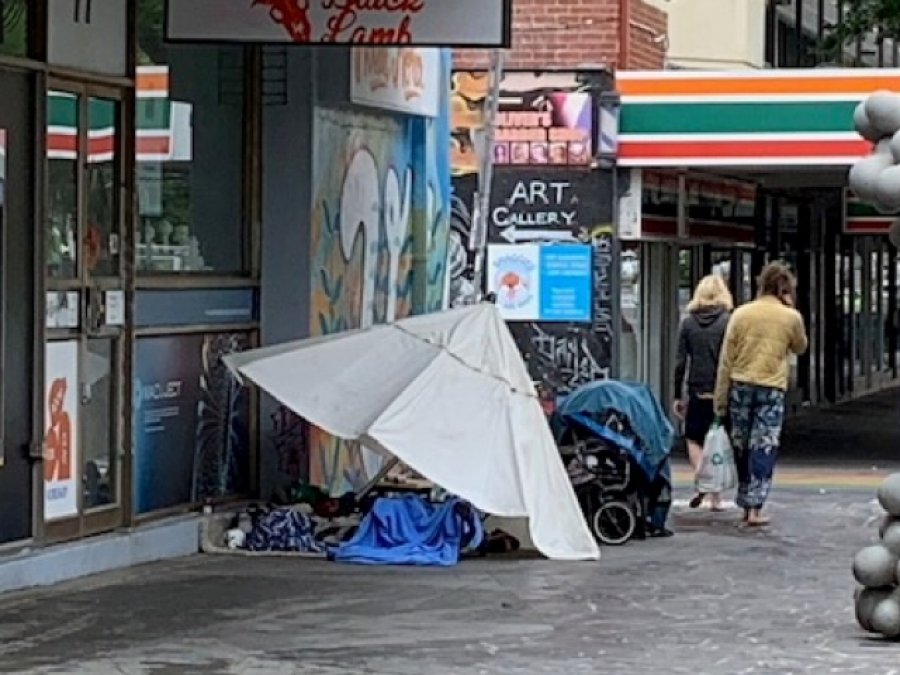
The new law defines nuisance behaviours that occasionally occur when individuals are camped on Fitzroy and Acland Streets in St Kilda. Contrary to popular belief most of the people camped on the street have housing but they chose to camp on the street because the Police turn a blind eye to drinking alcohol, selling, and using drugs.  

The proposed local laws are designed to assist Council officers manage the behaviours of individuals  and stop them from being a nuisance. Street campers can create a nuisance when the local community is verbally abused, threatened, harassed, or physically attacked. 

Furniture and Other Items on Council Land and Footpaths (New Clause 43)

The proposed new local law states:

  1. A person must not on a footpath or access way, place or cause to be placed any furniture that obstructs that footpath or accessway. 
  2. Council may direct a person to remove any of the items in subclause (1). 
  3. If a person fails to remove any item after being directed to do so, Council may seize any item and impound it in accordance with clause 78.

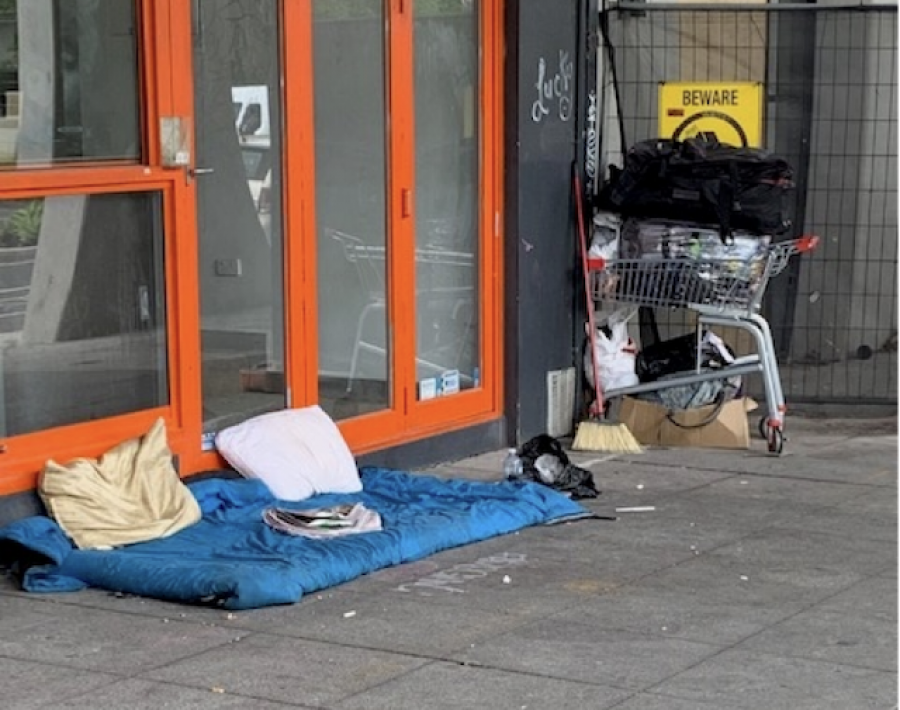
Dumped furniture including couches, chairs, mattresses, sofa's, rugs, blankets, kitchen goods, electrical good is a major problem on Grey and Fitzroy Streets and adjoining streets precinct and often, dumped rubbish is not collected for weeks. 

Furniture is sometimes used by the street camping groups and it is not helpful when volunteer groups hand out camping gear, doonas, pillows, rolled mattress, food parcels in plastic bags to the street campers.  

Clause 43 will Council Officers to remove dumped furniture when it is obstructing footpaths and access to properties.  

Camping Local Law 2023 (Clause 42)

Council is not proposing to change the Camping local law Clause 42, but the local community has been asking for this law to be changed for 10 years. 

It has been acknowledged that the council local laws management have not been enforcing the current illegal camping local laws. The existing exempts individuals with complex needs and those claiming to be homeless from camping restrictions. This loophole has allowed camping on footpaths when individual falsely claim they have no housing.

There are currently few genuinely homeless people in the Fitzroy, Acland, and Carlisle Street precincts, who would be protected under this local law if it were to be strictly enforced.

As reported by council officers the other campers have allocated housing, but choose to camp on the streets, generally because they can perform criminal and anti-social behaviours.

The Local Laws must apply the existing camping laws and prevent individuals camping on the street when they are known to have accommodation.

St Kilda was a thriving entertainment precinct when there was no camping on the footpath. 

Council is seeking your feedback on draft Local Laws, including community amenity local laws to deal with antisocial behaviours on our streets. Provide your feedback before 31st March 2023 here Proposed Local Law 2023 | Have Your Say Port Phillip

When completing the survey, you may wish to consider if current local laws are working in relation to community safety and amenity. 

Behaviour on Council Land (Clause 17)

The new law defines nuisance behaviours should be adopted to assist Council officers manage the behaviours of individuals and stop them from being a nuisance. Street campers can create a nuisance when the local community is verbally abused, threatened, harassed, or physically attacked.

Camping on Council land (Clause 42)

Council is not proposing to change this local law Clause 42, but the current law is inadequate and allows for homeless people and those with complex needs to camp on council land. A caring society must do better to care for homeless people and people with mental health and substance addictions. It is not acceptable for vulnerable people with complex needs to camp on the streets where they fall prey to drug dealers. We must do better as a society.

The camping laws must be changed because the number of people camping on the street will continue to grow if nothing is done. The council must consider how it is going to activate business activity and increase tourism on our iconic high street and these economic zones must be free of unacceptable behaviour.

Council must find a solution because it is not safe for vulnerable people to camp on footpaths and  campers deter customers and tourists from coming to our iconic high streets. Traders are losing business and many shops are empty. St Kilda was a thriving entertainment precinct when there was no camping on the footpath. The camping laws are not fit for purpose and must be changed. Council should consider two options:

Option 1:

Removal of the exemption “42(2) (b) have complex needs or is in the need of additional assistance because of mental or physical disability or illness” in the camping laws would allow Council Officers to stop most people camping on the street because most of the street campers are known to have housing. 

It is unacceptable for people with complex needs or in need of additional assistance to camp on the streets when they should be referred to drug and alcohol and mental health services. There are few genuinely homeless people in the Fitzroy, Acland, and Carlisle Street precincts, but they are protected under the existing law because they have complex needs.

Option 2:

The council amends the existing law to prevent camping on certain streets such as Fitzroy, Acland, and Carlisle Streets to activate cafes, bars, restaurants, and shops by including an additional clause to the existing law. 

42(2)(a) "A person is not guilty of an offense under sub-clause (2) where that person establishes, they are homeless or in need of secure accommodation" could be amended to include an additional clause such as "Unless the person is camping on any particular street or public land which is designated by Council as a commercially important zone. For example Fitzroy, Acland, and Carlisle Streets"

This proposed amendment would allow the key commercial areas to be declared commercially important zones and allow for Council officers and or police (if required) to move anyone on that is camping. This amendment avoids the need to firstly ascertain who can and cannot remain on our key commercial streets due to their housing status or mental capacity.

To address the problem of where to relocate the existing street campers, Council may consider providing a suitable meeting place or community meeting facilities for these people to meet for social interaction. 

Furniture, other items on Council land and footpaths (Clause 43)

This proposed new law will help Council Officers remove dumped furniture when it is obstructing footpaths and access to properties.  Dumped furniture including couches, chairs, mattresses, sofa's, rugs, blankets, kitchen goods, electrical good is a major problem on Grey and Fitzroy Streets and adjoining streets precinct and often, dumped rubbish is not collected for weeks. 


Total rates collected by Council on existing properties are set to increase by 3.5% in the 2023-24 Budget, in a year in when residents are impacted by the highest cost of living increases for many years. In addition, Council will receive millions of dollars in new rates from new properties. 

The Residents of Port Phillip (ROPP) are advocating for a rate freeze following two unsuccessful attempts at advocating for a rate freeze in prior budget years. A rate freeze is only possible if five Councillors vote for a freeze. 

Port Phillip Councillors previously voted to increase rates by the maximum allowable amount (1.5% in 2021 and 1.75% in 2022). Councillors that voted for a rate rise in 2022: Cr Cunsolo, Cr Crawford, Cr Martin, Cr Copsey & Cr Baxter. Those who voted against it were Cr Clark, Cr Sirakoff, Cr Bond & Mayor Pearl.


The only positive for residents was a motion passed by Councillors requesting Council Officers to identify options for ongoing cost reductions that would enable Council to consider adopting zero rates increase in financial year 2023/24. Cr Baxter and Cr Copsey voted against this motion. 


The CEO was required to identify cost saving options by the end of November 2022 for implementation in the 2023/24 budget. Council Officers failed to identify sufficient savings and efficiencies to allow for a rate freeze. The results of the cost review were tabled for the Council meeting on 15th February. See Agenda of Meeting of the Port Phillip City Council - Wednesday, 15 February 2023


Council massively increased its spending by $25M in 2022-23 rather than giving residents rate relief which would have only cost 1% or $2.4M of the budgeted expenditure. Surely Council could have found 1% efficiencies or cost savings to deliver rates relief? 

Port Phillip Council has budgeted to spend $247M in 2022-23, an increase of $25M or 11% from the prior year. Most of the increased spending resulted from employment costs increasing by $6.9M ($92.2M to $99.1M) and materials and services increasing by $13.1M ($83.5M to $96.4M). 

Source: Pages 41-42 Volume 2. https://www.portphillip.vic.gov.au/about-the-council/council-plan-and-budget

Facts

  1. Port Phillip rates and charges are excessive when compared to our three neighbouring local government areas. For example, the rates and charges for a median house priced at $1.85M in Port Phillip are $3,252 which is $1,100 more than Stonnington, $900 more than Bayside and $685 more than Glen Eira.  
  1. The reason for excessive rates is that Port Phillip Council spends significantly more than surrounding councils, for similar services. Port Phillip's costs are approximately 30% higher than Stonnington and Glen Eira, and 100% higher than Bayside. 
  1. Port Phillip does not need to spend more than other local government areas because it is "different”. Port Phillip is like neighbouring areas in terms of size, population, and the number of properties. Bayside has beaches as does Port Phillip. Stonnington has the Prahran Market as Port Phillip has the South Melbourne Market. Stonnington and Glen Eira have swimming pools and golf courses and Port Phillip does not. 
  1. Port Phillip spends more than other councils because of the Council’s decisions, not out of necessity.
I woke this morning into a new woke world

I don't know if this is real or imagined but I feel like I have been in a coma and since I have re-awoken my world has completely changed. I seem to have entered a parallel WOKE driven universe that looks and feels the same, but all the rules and attitudes and behaviours have totally altered. I no longer know how to think or act amongst people for fear of offending something or someone and I'm afraid to talk because when I do people chastise me for being out of step with their beliefs. 


Even my partner takes a step back when I open my mouth, giving me an elbow in the ribs on the way through. Not that she disagrees with my viewpoint but these new PC bullies some that are our children have now discovered their power and are shoving their delusional, illogical viewpoints down our throats. My partner just doesn’t want to engage and like most people would rather not make a fuss and stay hidden in the crowd. Parental abuse ? Or is there more to it. 


I’m not used to being gagged but the numbers seem to be stacked against me these days. I’m at the stage where pleasing everyone is impossible, but making everyone angry is a piece of cake. I ask myself if my moral compass has changed or slipped or am I just totally out of touch with today’s generation? When did this all start?  From my perspective its almost happened overnight. Perhaps it was it a side effect of Covid that our government bureaucrats are trying to hide from us? Or was it in the vaccinations we were all warned against but went along with for the greater good of the community?


Now, I'm not a conspiracy theorist, but I sense our education system may have something to do with this new gen of angry young adults. Educators have had control of our little darlings brainstems since they could waddle, all wide eyed like malleable sponges ready to absorb all that woke-ness rubbish we are having to live through now. I know my own kids newfound attitudes didn’t come from me as I am a straight up 'swinging voter’ type human that judges things on evidence rather than on emotional, rhetorical presentism. (I’m sure there will be folks out there in that will want to tag me as a leftie or a rightie  - I consider myself a realist and will call it as I see it, without filter) .

I'm reaching out to see if this is all just my bad dream or if this is really happening to other quiet achievers who have helped make this a better world for our offspring. It's time to circle the wagons and make a stand against this noisy, ill-informed, ideological minority that are making a lot of 'big note' noise without actually achieving a thing….


Have I woken to a woke new world this morning?


By Megan Jones


Most of Australia’s suburban and regional Councils have sensibly committed to end discrimination based on race, colour, disability,  gender and age. Yet they have failed to consider one of its most egregious forms of discrimination when setting their rates. Discrimination against the single person household.

As the costs of living and the concurrent price gouging continues, it is time to end insidious Council discrimination against single persons.

Single ratepayers are charged the same rates as couples. Singles earn less than couples when they are employed and then, when they retire, they receive only 75% of a couple’s Federal Aged pension entitlement.

 I use 50% of the services, sometimes even less, than couples. I produce 50% less garbage than a couple. I have not used maternal health care or baby health services because I don’t have children and, as a matter of fact,  neither do the other three long term singletons in my street.

I don’t use the sporting facilities largely devoted to boys/men’s games. I used the library 50% less than literate couples. I use 50% less of the pavements, the roads, the parks and the gardens. I use 50% less of the administrative services offered by the council.

The list goes on. More importantly, single people contribute less to climate disaster and environmental degradation.

Even the travel industry is starting to wake up to the world of single people. Cruises, hotels and other accommodations used to charge a single surcharge or supplement, but  they are rethinking this structural injustice.

Holidays may be an optional luxury, but rates are compulsory.

In Australia 13% of the population is permanently single and on the increase.  Many others enter and leave this state depending on demographic drivers.

I am not asking the Councils to require single rate payers to pay 50% of the rates which would be justified but I think, to be fair, single rate payers should pay only 75% of the Council rates.

Megan Jones

Port Melbourne resident


Councillors voted to remove more Department of Transport pop-up bike lanes on Thursday 8 December

The decision to remove the bike lanes resulted from safety concerns raised in an independent report by the Traffix Group, a leading traffic engineering consultancy who provide services to the DOT and Port Phillip Council.  

Traffix Group concluded “the vast majority of the pop-up bike lane infrastructure either offers limited benefit for cyclists or results in an increased risk to road users including both motorists and cyclists”.  

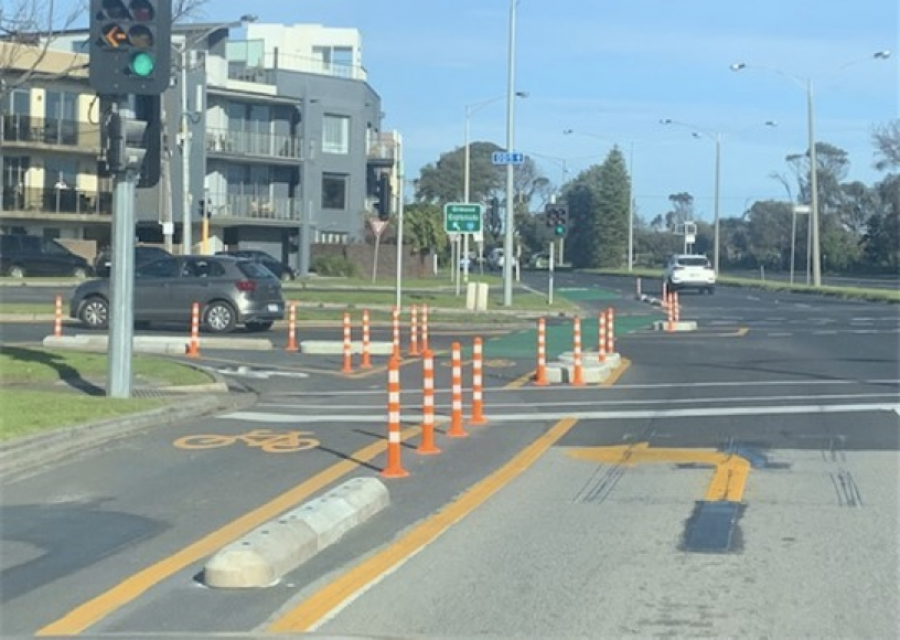
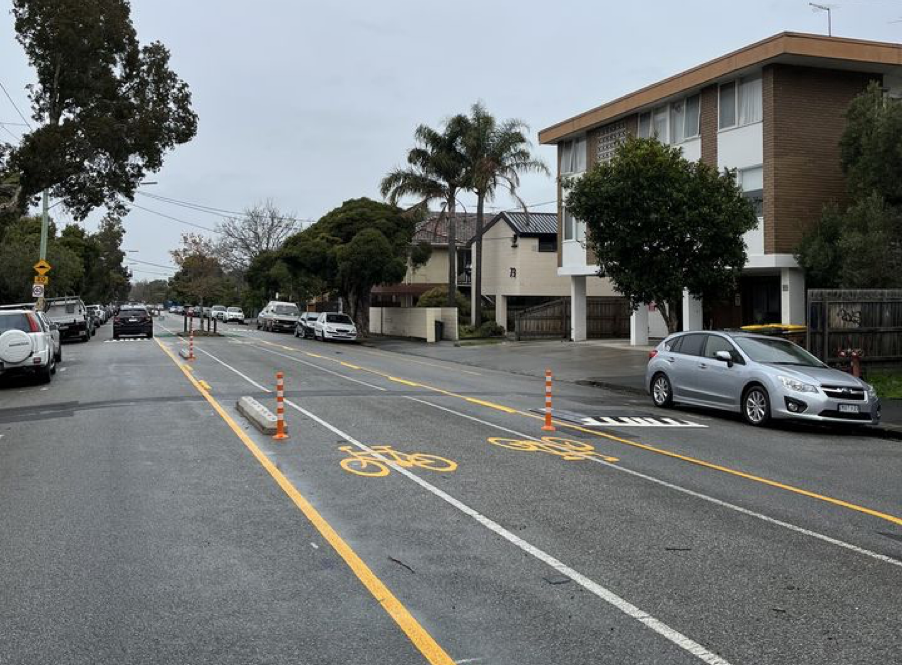
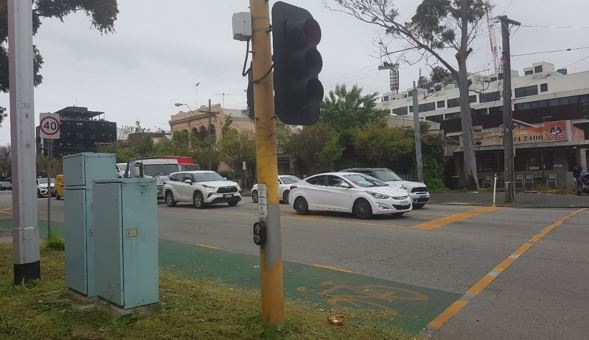
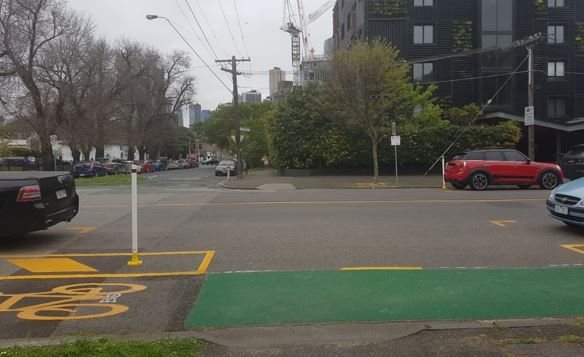
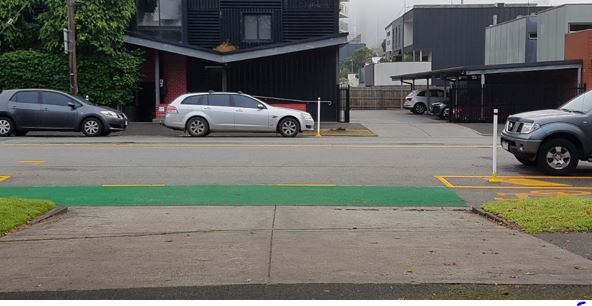
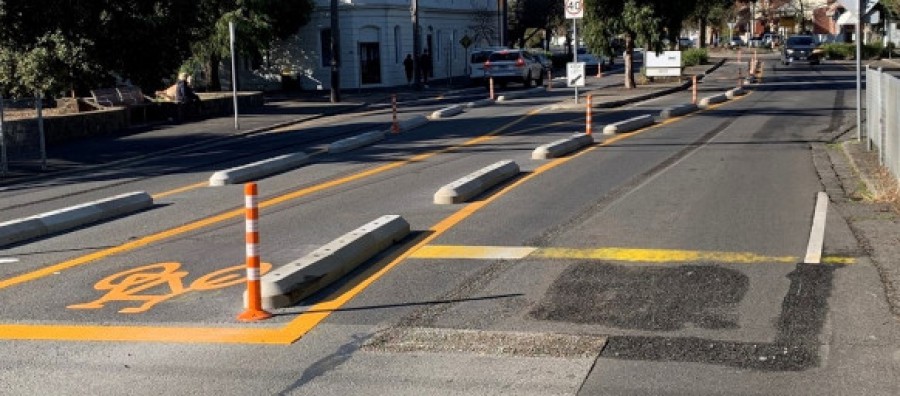
According to the Traffix report, the installed road treatments including concrete blocks, bollards and yellow and green lines and symbols are confusing for both motorists and cyclists and has increased conflict between bikes and cars. The road treatments exacerbate traffic congestion and will inevitably lead to more cycling accidents and injuries.

Jan Talacko and Mark Naughton who are active cyclists spoke in support of Cr Christina Sirakoff’s motion and confirmed they had commissioned the report because of safety concerns for cyclists. Twelve residents other cyclists and residents spoke in support of the motion to remove more of the pop-up bike lanes. 

Julie Clutterbuck who represents a Council funded cycling lobby group spoke to Council in support of continuing the pop-up bike lane trial.  Responding to Ms Clutterbuck who claimed that Traffix report was not independent and was commissioned by an advocacy group, Jan Talacko, a St Kilda resident said, “I am one of the people who commissioned the Traffix report, and I am not a member of ROPP (Residents of Port Phillip) and ROPP did not commission the report. We should think very seriously about continuing the trial to gather more data. The sort of data that would be collected I presume would be injuries or deaths. The overwhelming view in the community is this program has been a fiasco, there was no consultation . The design of these structures was inappropriate and misconceived.” 

Three speakers raised concerns about the safety of the temporary bicycle infrastructure located in Westbury Street, St Kilda East and advocated for the removal of these pop-up bike lane treatments. Una Steele, a cyclist from Westbury Street said “I am a keen cyclist and supportive of designated bike lanes. However, they have to be the right bike lanes and safe bike lanes. These lanes installed without community consultation are neither”. 

Cameron Smith, a South Melbourne resident noted that four Victorian election candidates for the seat of Albert Park committed to removing all or some of the Pop-Up Bike Lanes at a community forum on 10 November 2022 or later in social media posts.

The motion states that the CEO writes to the DOT to request that they immediately implement the recommendations in the Traffix report with regards to the removal of the Pop-Up Bike Lane treatments including all speed humps, bollards, concrete blocks, and yellow lines at those locations and also in Westbury Street, St Kilda East and the intersection of Brighton Rd with Dickens Street. Specifically, Council requests DoT to remove the following treatments:

  • Marine Parade Kerb Separated Bicycle Lanes in consultation with Council
  • Marine Parade/intersection with Wordsworth Street, Thackeray Street, Meredith 
  • Street, Marine Ave. 
  • Richardson Street/Withers Street
  • Deakin Street/Loch Street/York Street
  • Lyons Street/Bridge Street/Esplanade West
  • McGregor Street/Park Road & Page Street
  • Reinstate Brighton Road and Dickens Street intersection similar to neighbouring 
  • roads at Hennessy Ave and Milton Street

This motion follows a Council vote on 7 September to endorse the roll back 4km of the 38 km of installed Pop-up bike infrastructure. 

Council has negotiated a deal with the Australian National Academy of Music (ANAM) to undertake up-front costs of $20.5M to renovate the South Melbourne Town Hall

Council has negotiated a deal with the Australian National Academy of Music (ANAM) to undertake up-front costs of $20.5M to renovate the South Melbourne Town Hall. ANAM will lease for 35 years and pay annual rent of $550,000 per year. Importantly Port Phillip City Council will have access to the Town Hall for Council meetings and citizenship ceremonies. The deal is expected to go ahead pending community consultation.

ANAM moved from the South Melbourne Town Hall in 2020 to the Abbotsford Convent, due to the need to undertake building works at the South Melbourne Town Hall with the collapse of internal infrastructure.  

Catherine Sharples, Port Phillip resident, said “This is a wonderful outcome. The town hall has been in deep disrepair since the roof fell in. What a fabulous tenant and contribution to the culture of the local area. Well done to the locals who have been supporting this and to ANAM for getting council over the line”.

The ANAM deal follows extensive discussions over the past two years with the City of Port Phillip Council. The deal will see ANAM contribute $20.5M to the proposed renovation project of the South Melbourne Town Hall. A project that will see the renewal and upgrade of the Town Hall’s public-facing facilities, provide a secure and state-of-the-art home for ANAM for the next 35 years. According to Nick Bailey ANAM General Manager the deal will “ensure the community can access and celebrate this vibrant and significant building for many years to come”.

Cr Christina Sirakoff said “the lease arrangement is a good deal for ratepayers because ANAM will be paying rent and will be responsible for routine maintenance, rates, taxes, utilities and insurance premiums. Council will again be able to hold Council meetings and Australian Citizenship ceremonies along with other civil duties. The Town Hall will once again shine”. 

Council is seeking feedback from residents to deter commuter "rat-running

Council is seeking feedback from residents from Middle Park to St Kilda on a proposed trial to deter commuter "rat-running" traffic in Cowderoy Street, St Kilda West. The trial proposal is a response to residents who are concerned about high volumes of southbound traffic on Cowderoy Street in the late afternoon on weekdays.  

Daily traffic volumes in Cowderoy Street have surged by 80% from 1,235 vehicles in 2014 to 3,092 in 2021. Google Maps directs traffic along Cowderoy street because of the bottleneck at the intersection of Fitzroy Street, Canterbury Road, and Grey Street. 

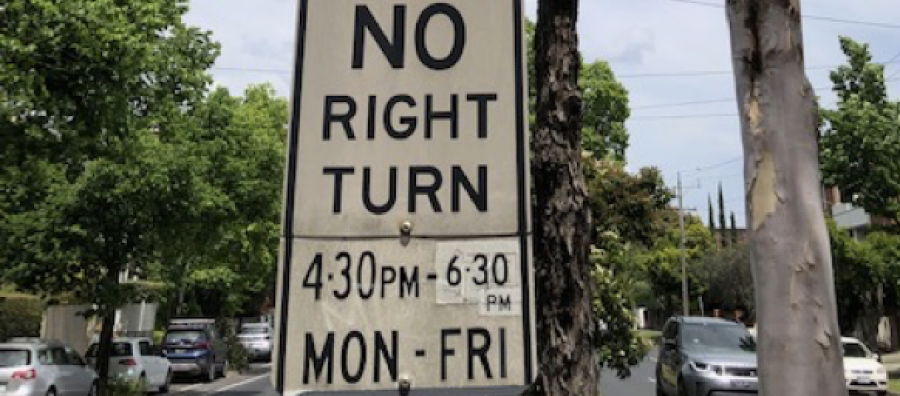
Your feedback will assist with the decision of whether to proceed with a twelve-month trial to install a No Right-Turn (4:30PM-6:30PM Mon-Fri) from Canterbury Road into Cowderoy Street, St Kilda West. The trial will evaluate the redistribution of traffic to existing arterial roads and local roads in the area.

Council has distributed fliers to properties from Fitzroy Street, St Kilda to McGregor St, Middle Park bounded by Beaconsfield Parade and properties neighbouring Canterbury Road. Council seeks your thoughts on this traffic change on your neighbourhood roads. 

Feedback is required by Tuesday 20 December 2022 to help Council decide on whether to proceed with a trial by:

1. Completing the survey https://haveyoursay.portphillip.vic.gov.au/cowderoy-street

2. Email transport@portphillip.vic.gov.au

3. Call Assist on 03 9209 6777

Grasses at Sunrise by Teresa Kuczynska
Port Phillip Matters wishes you and your families a merry Christmas and a relaxing break if you are lucky to have holidays

For most of us 2022 has been a year of recovery from the lockdowns of the two prior years and we look forward to an even better 2023. 

We hope you find our community newspaper interesting and informative. We created Port Phillip Matters to inform and connect everyone in our community. We would like to receive more contributions from you, so if you would like to share a story, promote a community group or school event please email us at mail@ropp.org.au or click on the “Got something to say” button at the bottom of this page. 

We will continue to report on decisions made by the Port Phillip City Council, and we will share information about our diverse community. 

 a concerned Port Phillip resident.

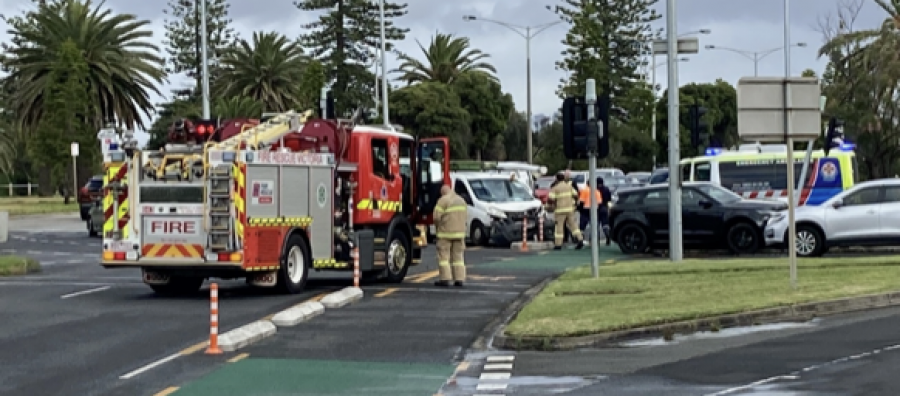
On my journey this morning, there has been a massive car accident involving these confusing and disastrous pop-up bike lanes at the corner of Marine Parade and Glen Huntly Road. Fortunately, nobody seemed to be badly injured, although an ambulance and fire truck attended the accident scene. It has not even been 6 months and the danger these road treatments are causing must be stopped.  THIS IS A FAILED TRIAL

Cars are turning in front of cyclists at Luna Park and causing many dangerous sudden stops, these bike lanes go against every principal we were told when learning to drive.  For example, the rules say don’t turn left from the middle of the road. 

 I read an article in the Age that the Traffix Group made some recommendations about the pop-up bike lanes including the separated bike lanes located on Marine Parade. They recommended the removal of these treatments.

Since I took photos of the incident this morning, I have learnt that Council voted to write to the Department of Transport to remove these dangerous bike lanes on Marine Parade. I hope that there are no more preventable accidents, and nobody is killed before these lanes are removed. 

These lanes are a massive waste of tax/rates money (approx. $4.9M) and the people pushing for them should volunteer for an hour at the food bank, that’s where I want my money to go. We should be helping disadvantaged people, not installing that are unnecessary or unsafe bike lanes that are used by very few cyclists.  Only 3-4% of road users are cyclists even cyclists don’t like the bike lanes. 

I think the city and inner city is overrun by anti-car ideology and a pipe dream of a utopia from fairy land but the reality on the ground is no one wants the disaster that places like Amsterdam have become, their city is dead and there is an undercurrent of good people in their suburbs suffering whilst the city tell them how progressive they are, they can’t afford food gas power and petrol. 

By Dean Hurlston (Vice-President, Ratepayers, Victoria)

What if I told you that the average Victorian rates bill could go from $1,810 to $6,364 within 10 years?

What would your view of Councils be if this were the case? How would your expectations of your local Council change?

Well, it’s not just hypothetical. The Victorian State Government has commissioned (but as yet refused to release) an independent report into rate capping and how it is constraining the provision of services and jobs”. The State Government has sought the input of the local government industry but has largely hidden the process from public view. The report was “delivered” to the State government a year ago. They have deliberately refused to release it until after the state election.

The Municipal Association of Victoria (MAV), the Council's “collective union”, has lobbied extensively that Rate capping has prohibited councils from offering high-quality services to their community. It also argues that with such high population growth targets pushed onto councils by the State Government that it cannot continue to deliver high-quality services without drastic increases.

In 2018 The Victorian Auditor General (VAGO) found:

Councils Do not understand the full costs of frontline services, Projects that improve efficiency are ad hoc only, and available data for any benchmarking is inconsistent. 

Alarmingly VAGO found that the government department tasked with providing guidance to all Victorian Councils does not offer any guidance on service planning, reviews, or best value practices. 

Put simply Councils failed to understand what their true costs are, what is causing the costs, whether the costs are appropriate and how to manage those costs efficiently. 

https://www.audit.vic.gov.au/report/delivering-local-government-services?section=

The State Government called for submissions to an inquiry into rate capping. In reading the submissions we are incredibly alarmed to learn that:

The ASU wants rate capping to end because:

  • Councils have not shown restraint or any efficiency since it was introduced
  • Wages growth is hampered by rate capping
  • Women have had their wages suppressed by Rate Capping which is inconsistent with equality
  • It kills jobs and is bad for communities and has no redeeming features

https://www.asuvictas.com.au/wp-content/uploads/2022/07/20211027-ASUVICTAS-Rate-Cap-Review.pdf

The MAV (MAV represents all 79 Victorian Councils) totally opposes rate capping because:

  • It restricts spending and underfunds councils
  • It doesn’t allow for CPI and inflation 

Rate capping | MAV website

The Australian Local Government Association also opposes rate capping because:

  • Rate capping hinders growing communities to plan for new infrastructure
  • Local Government should have autonomy over tax rates to the community

Rate peg ‘hindering councils' ability to build new infrastructure’ - Australian Local Government Association (alga.com.au)

The most damning report is from the Australia Institute (commissioned by the Australian Services Union). The institute claims:

  • The rate cap has cost 7425 jobs
  • Reduced GDP by $890 Million
  • The cap is anti-democratic as councils should decide their revenue increases
  • Local Government wages are good value for money

Putting a Cap on Community - The Australia Institute

What is clear here is that the most independent report into councils and rate capping comes from the Victorian Auditor General. The Auditor General states that Councils cannot manage their needs to be efficient, that hundreds of millions of assets have been left to fall into disrepair and that councils have all failed to adequately plan for their assets over time. Councils are failing miserably to do what any private or listed company would naturally do. 

Clearly, councils do not have the skillsets to manage their businesses efficiently, is it because their culture is so rotten, so antiquated and so out of date that their leaders expect revenue to be a never-ending bucket of someone else money? We think so. 

What VAGO and the Ombudsman have also revealed is that Councils don’t know how to define a service, don’t know how to define complaints, don’t know how to handle, categorise and resolve them and do not have any systems in place to adequately manage their assets and spending on them.

What all of this will result in is the Andrews government making a lazy political decision to end rate capping.

Instead of the Local Government Minister (Melissa Horne MP) making councils responsible to live within their means and drive efficiency out of their ballooning staff numbers, we will see rate capping ended to help the state government cost shift state responsibilities even further to councils. We will see councils given a range of say 5-15% that they can raise their rates annually without the need for external approval (as is the case now). We will see inflation and economic pressures as the reasons to do this, whilst ignoring the enormous impact on household cost of living.

A 5% increase, each year, over 10 years, represents a real increase to you of 55% in your rates bill

A 15% increase, each year, over 10 years, represents a real increase to you of 250% in your rates bill.

Sadly, it’s not an IF rate capping will end, it is a matter of WHEN.

Local Councils continue to operate with the lowest oversight of any tier of government, just as they like it. State government is keen to cost shift some of its own responsibilities amid its promise in the recent state elections of “no new taxes”. This makes the rates bill of every Victorian an easy casualty.

For decent hard-working Victorians, lazy policy means that our rates are now tipped to exponentially rise, and there will be incredible bill shock and pain ahead for every Victorian.

Don’t worry though, those local Councils who feel hard done by for being subjected to 6 years of constraint and austerity, will gladly make up for it in the end.

Time will tell, but the local government sector has totally scammed all of us. 

They will have the last laugh.

Attribution: RATE CAPPING FORCED TO END DUE TO LAZY COUNCILS AND LAZY STATE GOVERNMENT (ratepayersvictoria.com.au)

To find out more come to our community meetings over the next two weeks.

A group of concerned Middle Park residents have formed the “Preserving Middle Park Village, Inc.” community association to oppose a Middle Park Hotel development proposal that will adversely affect the amenity of a very peaceful community. The hotel operators (AVC) want an open-air rooftop nightclub, with additional 200 patrons operating until 1 am, 7 nights a week. 

Residents have lodged an objection to VCAT to stop the development based on concerns about noise emanating from the rooftop night club and patrons leaving the hotel and antisocial behaviour in the early hours of the morning will disrupt Middle Park residents. Residents and traders can also expect to lose car parking. 

To find out more come to our community meetings over the next two weeks.  

Saturday 19th Nov. 8am to 12 noon at Armstrong Street
Tuesday 29th Nov. 7pm at Upstairs at the Middle Park Library 

The association is seeking your support and we look forward to meeting more residents in person and sharing our concerns.  

If you would like to contribute to help fund our legal representation and experts at VCAT please donate via our GoFundMe Preserve Middle Park Village or bank account: 

Name: Preserving Middle Park Inc.
BSB: 083 004
Account No: 93 340 9318


We estimate costs to be in the vicinity of $100,000. Any leftover monies will be refunded pro rata to those contributing $1,000 or more. 

Please support the effort to stop this nightclub by sharing this email with fellow Middle Park residents. 


Sign the petition https://www.change.org/p/stop-the-middle-park-hotel-from-building-a-nightclub

Contact us at preservingmiddleparkvillage@gmail.com

Join our Facebook group https://www.facebook.com/groups/1441330309711812 


Many thanks - "Preserving Middle Park Inc." Adrian, Odette, Helen, Paul, Matthew, and Joanna


There was no community consultation on this before the pop-up bike lanes were installed.

 By Mark Naughton 

The new pop-up bike lane infrastructure installed across inner suburban Melbourne is failing to keep cyclists safer and in many places is putting them in greater danger, a new study shows. See report attached below. 

The independent review of the program in the Port Phillip local government area, part of a $13m road safety scheme across four zones in Melbourne, is scathing in its assessment of the rollout, recommending the lanes be removed or significantly modified. 

 “The vast majority of the pop-up bike lane infrastructure either offers limited benefit for cyclists or results in an increased risk to road users including both motorists and cyclists,” the report by leading consultants Traffix Group concludes. 

 The report, commissioned by a group of concerned Port Phillip residents, raises significant red flags about how cars and cyclists can co-exist on key stretches of road where the new lanes have been installed.

 Along Marine Parade, for instance, the pop-up bike lanes are applied inconsistently, leading to traffic uncertainty. 

 “The treatment has caused confusion for some motorists, with the community reporting instances of vehicles driving in the separated bicycle lane,” it says.

 The report warns that motorists are unclear about how to turn left across the new bike lanes. 

 “This is likely to increase the risk of collisions as left turning motorists will be unaware of cyclists approaching from behind them,” the report says.

 The report also notes an existing bike path completely separated from Marine Parade traffic has already been in place for many years, raising questions about why new infrastructure is needed.

 Overall, it recommends “the majority of the temporary treatments should either be removed or significantly modified.”

 Mark Naughton, a spokesperson for the Port Phillip residents’ group who commissioned the report, said the State government and local authorities who jointly funded the scheme should heed the expert advice and start again.

 “The lanes are doing the exact opposite of what they are supposed to. It’s wasting taxpayer and ratepayer money, and worse than that it is unnecessarily putting lives in danger,” he said. 

 “The devices installed are confusing for both motorists and cyclists and will increase conflict between bikes and cars. They exacerbate traffic congestion and will inevitably lead to more cycling accidents and injuries.

 There was no community consultation on this before the pop-up bike lanes were installed. What is the problem they are trying to solve here? We’re not sure, no one can articulate what the problem is.”

Readers could request a copy by sending an email to mail@ropp.org.au


All candidates acknowledged the new bike infrastructure did not meet community expectations

By Cameron Smith

Concerned residents have heard candidates for the electorate of Albert Park at a ‘Candidate Forum’  state their position on the recently installed pop-up bike lanes prior to the start of polling on Monday 14 November. Three of the candidates have provided written and firm comments, reflecting community feedback and an independent Traffix Group report on the safety of the pop-up bike lanes.

The four candidates speaking at a community forum last Thursday were provided with the Traffix report three days prior to the event, ensuring that they had time to understand the findings. Concerned residents also attended a Candidate Forum last Thursday to hear four candidates respond to the following question: 

“You have all been provided with an independent risk assessment of the pop-up bike infrastructure installed throughout the electorate. The study concludes that what has been installed is unnecessary and will inevitably add to the risks for cyclists – the exact opposite of what was intended. If you are elected, will you support the removal of all of the pop-up bike infrastructure from the streets of Port Phillip?” 

Please see table below for a summary of candidate positions on the pop-up bike lanes as of 14 November 2022:


CANDIDATES POP UP BIKE LANE WRITTEN STANCE


Full Removal

Partial Removal

Review

No Commitment

Georgina Dragwidge

No commitment to this

No commitment to this

Yes – committed to a complete review

N/A

Kim Samiotis

No commitment to this

Yes – committed to remove those highlighted in the Traffix report and other similar installations

Yes – committed to review other locations in conjunction with council and VicRoads

N/A

Lauren Sherson

Yes: committed to immediate and full removal

N/A

N/A

N/A

Nina Taylor

No commitment to this

No commitment to this

No commitment to this

Written stance not received from the candidate.


All candidates acknowledged the new bike infrastructure did not meet community expectations and three of the candidates were concerned by the conclusion of the Traffix safety assessment.

Jan Talacko who was one of the residents to commission the Traffix report said he “was astounded that Nina Taylor had not read the Traffix report prior to the forum.”  Ms Taylor said it was council’s responsibility to remove or modify the infrastructure and she would respect council’s decision. Many residents found this comment to be at odds with what has been communicated by the State Government’s Department of Transport and confirmed by the City of Port Phillip, whereby it is the DoT that has confirmed budget for the removal of the pop-up infrastructure. 
We also note that some of the infrastructure is installed on a State Arterial Road (the black and red roads in your Melways) such as Marine Parade/Beach Road which further emphasises a lack of understanding of the issues by Ms Taylor when she notes that “…council has discretion over the removal of the bike lanes because they are on council roads…” – this is not the case where it is a state arterial road and therefore administered by the DoT.
You can watch the candidates respond to the question in an 8 minute discussion starting at 1 hour 43 minutes 50 seconds on the recording of forum here:

In alphabetical surname order, we provide a summary of each candidate’s written stance below:

Georgina Dragwidge (Independent):

  • My position is that the Pop-Up bike lanes trials are a failure. There are aspects that are unsafe, over engineered and most importantly the trial had very little to no consultation with the community. If elected I will ask for a complete review of the trial and in consultation with the community make a decision that is in the best interests of all residents. I will not be making any preference deals with any party and will work with whoever is in government to ensure that our community is heard.

Kim Samiotis (Greens):

·      Having read the Traffix report and researched the pop-up bike lane program via various avenues, I have come to the conclusion that the only right way forward is to support the removal of the pop-up bike lane sites that are outlined in the report and those others where these designs are typical (i.e. with the same design risks as outlined in the Traffix report). I note that some other sites are already undergoing changes or removal and acknowledge that several others require further review and assessment. I will work towards this.

·        I commit to you that I will advocate in my role as a Member of Parliament (if elected) for safety in the community and, of course, as a Greens MP for better, safer and more sensible bike infrastructure to encourage active transport to be safely adopted in the community and contribute to lowered emissions.

·     With regard to the existing trial infrastructure, I commit to advocating for the removal of sites assessed in the Traffix report and for further review of the suitability and risks of whichever trial sites are remaining at the time, working with VicRoads and the Port Phillip Council, including the newly elected Mayor Heather Cunsolo to ensure that the community voices are heard on this issue.

Lauren Sherson (Liberal):

·        The pop up bike lanes must go. All of them.

·        Like my neighbours, I was woken in the middle of the night by road works to discover my street had become dangerous, had been destroyed and I was never consulted. The pop-up bike lanes must go. All of them. Unlike the Labor Party representative, if I am elected, I will instruct the Department of Transport to immediately end the Pop Up Bike Lane trial, and remove all the bollards, concrete blocks, speed cushions and yellow paint across St Kilda, St Kilda West, Middle Park, Albert Park, South Melbourne and Port Melbourne.

Nina Taylor (ALP):

·        No written response received as of 14 November 2022.

The Forum was hosted by UnChain who invited the four lead candidates from the Liberal, Labor and Greens parties, and Independent Georgina Dragwidge. Each of the lead candidates made an opening statement and were invited to talk about four chosen topics.

·        Access to health services

·        Climate / Public transport

·        Victoria’s post-COVID direction (potentially including social, cultural, economic, and budgetary issues)

·        Integrity in government.

In responding to these topics, candidates discussed both State government policy, and the priorities for the Albert Park electorate, followed by a Q&A session that included discussion on bike lanes. 


Promotion
Promotion
Promotion
Is it just me or is anti-social behaviour, graffiti and 'anything goes' on the rise?

By a Concerned St Kilda resident 

Is it just me or is anti-social behaviour, graffiti and 'anything goes' on the rise? Whilst we love our vibrant and eclectic community that we've made home, I can't help but think the lack of Police attendance and increase in public drinking, drug taking, drug dealing and 'anything goes because I'm untouchable' is getting worse. 

The State government tells us crime stats are down, has anyone frequented Grey and Fitzroy Streets in St Kilda in the last couple of years? Clearly they're ignoring the plethora of pleas from our community who put up with graffiti/vandalism (unsightly and costly), letterbox theft (identity theft is a nightmare if you've ever been through it), verbal abuse from those drug affected (there's nothing quite like being abused for no good reason when you have a 10 year old with you who actually thinks this is normal), drinking alcohol in public (I thought there was a law against it, or do the rules vary depending who you are), smoking bongs (yep, in broad daylight) and dealing in drugs (they don't even bother hiding it anymore when you pass them in broad daylight). Last time I looked our sidewalks weren't suitable for anyone to live on and this includes anyone vulnerable, but especially those who frequent our community to score and deal drugs and wreak havoc! 

On my morning walk down Fitzroy Street at about 9.30am, just after the school drop off (between Grey St and The Esplanade) last Monday morning, I came across one of the familiar and not so friendly faces who was exposing himself, urinating and like a true multi-tasker found time to ask me for money in the process, of which I replied NO and kept walking. To my surprise he followed me up Fitzroy St, abusing me verbally and using language not fit to repeat, but he's a big lad and it was nothing short of threatening. So, as I 'legged it' and I thanked my lucky stars it wasn't 8.30am, just in time for the school kids to witness this sidewalk mess and abuse! 

So, what next? It was the last straw, we'd called the Police the night before in the same spot when a known offender was screaming outside the 7/11, threatening to kill someone and hurling some poor soul's belongings onto the road. Since when was buying an ice cream at the 7/11 on Fitzroy St such a mission impossible? It was enough for me, so I headed to the St Kilda Police Station to report it. Basically, the offender was still there at 3.30pm that same day, apparently, he was 'driven home' so clearly exposing your genitals isn't a crime anymore, even in broad daylight just after the school run! 

You may ask 'well why did you move to St Kilda'? Well the answer is we love this place, we chose here many years ago and this is where our family has settled, but if Police and Council don't start working together on fixing this problem, I wonder why the hell I pay taxes and rates, because if I can't buy by a 10 year old an ice cream without the threats from the same people 'allowed and enabled' to make the footpath their temporary home, someone will get hurt, and then what?

Just a Dad, another concerned citizen asking the questions!

I’m hoping Mayor Heather Cunsolo is a new broom, breath of fresh air. I wish her well.

By Stephen Blair

The Department of Transport has started cutting grass on the median strips on Beach Road and Beaconsfield Parade because of me cutting grass in the media strip along Beach Road and Beaconsfield Parade. I had asked the City of Port Phillip to cut the grass, but they told me it was not their responsibility. So, I decided to cut the grass myself which attracted the attention of the media. 
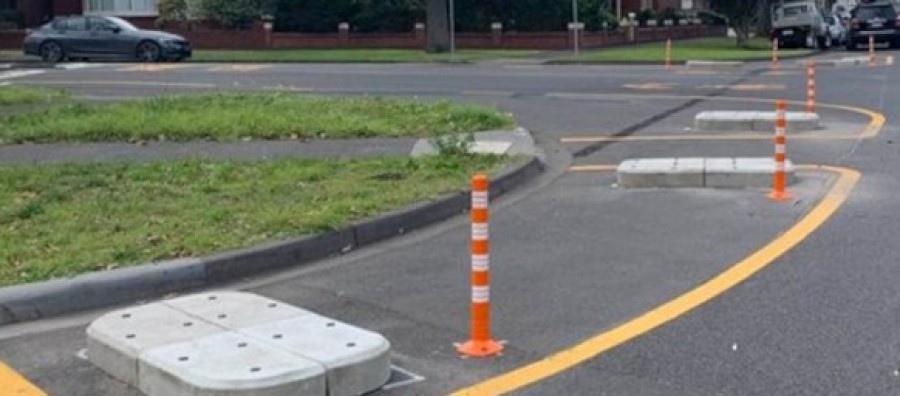
Tom Elliot on 3AW radio interviewed Mayor Marcus Pearl about the unsatisfactory condition of many of Port Phillip’s key roads and boulevards by DOT. Listen here

https://www.facebook.com/CrMarcusPearl/videos/1193195831266924

Mayor Pearl said the maintenance of major Boulevards such as Beach Road, Beaconsfield Parade, St Kilda Road, and Nepean Highway is the responsibility of DOT  The latest VicRoads contractors are SO SLOW mowing the median strips! According to Mayor Pearl the Council had been maintaining the median strips until the beginning of this year but had stopped because it was costing ratepayer $350,000 per year when the Vic Gov had shifted to cost to Council. 

I had hoped my shaming the authorities into action would result in a better response. It took DoT a week to do Beaconsfield Parade from Port Melbourne Station Pier, starting at the “easiest” spot and mowed 4 times by me to Fitzroy Street. I did it in in 3 days, by myself. There were 8 to 10 of them!

I had another look today (Friday 11 November). I’m going to have to do Bay Street and Williamstown Road myself again, this weekend if the weather holds up. I have avoided Brighton Road, right in front of the St Kilda Town Hall - the Kremlin of Port Phillip.

I can’t believe 800 employees and executives who work at the Town Hall have done nothing to have the grass on the Brighton Road media strip maintained. I accept that it is DOT’s responsibility to maintain Brighton Road but it’s disappointing that the local environment is neglected when Council officers walk and drive past the long grass every day. I couldn’t stand it any longer up this end, which prompted me into action. 

Note I have almost given up trying to influence Council’s excessive rates and budget spending which can only be described as ill-informed profligacy. 

I’m hoping Mayor Heather Cunsolo is a new broom, breath of fresh air. I wish her well.  


“My vision is for unity in the community. . . "

Cr Heather Cunsolo was elected Mayor on 9 November 2022. Cr Andrew Bond who celebrated ten years on the Council was as elected Deputy Mayor.  Cr Cunsolo was elected seven votes to two over former Deputy Mayor Tim Baxter, who nominated himself for the mayoralty received a vote from fellow Greens Cr Katherine Copsey along with his own.

Former Mayor Marcus Pearl did not recontest for the role after one year during which, he successfully negotiated co-funding agreement that commits the Victorian Government to contribute up to $12.6 million plus $18 million from the City of Port Phillip to ensure the operation of six Port Phillip childcare centres requiring significant renovation or replacement will be made fit-for-purpose. 

Mayor Cunsolo’s profile states “My vision is for unity in the community. When Council works together with residents, businesses, and organisations, we will get the most successful outcomes serving the most people. Vibrancy back in our high streets. Beautify our public spaces. Ensure sensible development in our municipality. Bounce back from COVID-19. Increase trust and satisfaction of Council”.

Promotion
Membership information can be found in the link below

Matador (pictured) led the fleet and won our short race. 

The Royal Melbourne Yacht Squadron (RMYS) opened the sailing season on Saturday 1 October and by all accounts those who participated had a wonderful day, and sailors are looking forward to the rest of the reason.

Matt Solly, RMYS general manager, prepared for the opening of our opening sailing season by dressing the building in traditional bunting. Members and guests who joined the festivities enjoyed lunch, the sail past and racing.  

Squadron Awards were given and had the burgee was unfurled by Councillor Andrew Bond and Councillor Christina Sirakoff, who joined us on our traditional Sail Past aboard Margaret Pearl. 

The Royal Melbourne Yacht Squadron, with a history of over 140 years, is one of the oldest yacht clubs in Victoria with a long list of historical firsts. Situated at St Kilda near the Melbourne central business district, it is regarded as the centre of aquatic events in Victoria.

Membership information can be found in the link: 

https://www.rmys.com.au/members/become-a-member-yacht-club-membership/


Reopened by Mayor Marcus Pearl

By Warwick Lloyd 

After years in the planning a pocket of land next to the Stokehouse on Jacka Boulevard has been rejuvenated. 

Rotary Playground was officially reopened on 21 September by Mayor Marcus Pearl. First opened in 1954, the playground will give families many years of happy playtime. Rotarians were well represented with Warwick Lloyd President of Port Phillip, Mark Davies and partner President of Albert Park and Dennis Tarrant past President of Melbourne South in attendance. Support from Federal Member Josh Burns was appreciated.


Six Port Phillip centres requiring significant renovation or replacement will be made fit-for-purpose

The City of Port Phillip and the Victorian Government announced on 14 October 2022 an agreement to fund upgrades to six of Port Phillips early years education and care centres.

Port Phillip Council will provide more than $18 million and the Victorian Government is contributing up to $12.6 million under this agreement.

This welcome news for parents and childcare operators who lobbied to stop the sale of the centres. Funding was secured following Port Phillip Council’s decision in August to not sell three ageing community-run early years education and care centres (Eildon Road Childcare and Kindergarten, St Kilda, The Avenue Children’s Centre and Kindergarten, Balaclava, and the Elwood Children’s Centre), subject to this funding agreement.
Over the next seven years, this partnership with the State Government will ensure all six Port Phillip centres requiring significant renovation or replacement will be made fit-for-purpose and accessible for generations to come, whilst staying at the same locations. 
The six centres are 

• Eildon Road Childcare and Kindergarten, St Kilda

• The Avenue Children’s Centre and Kindergarten, Balaclava

• Elwood Children’s Centre, Elwood.

• North St Kilda Children’s Centre, St Kilda

• Clarendon Children’s Centre, South Melbourne

• Lilian Cannam Kindergarten, South Melbourne.

Port Phillip Council was slammed by parents, state, and federal politicians over its plan to sell the centres because of funding challenges to upgrade the 100 years old centres which do not comply with building codes and the Disability Discrimination Act. 
Mayor Marcus Pearl said, “we are pleased this announcement provides certainty to both the operators and the families and caregivers using or planning to use these community resources is our council will continue to work closely with the centres including consulting on design and providing support to minimise disruption to operations when consultation is underway”.


By Peter Anscombe

Image of new Bicycle Lane in Park Street, South Melbourne after waste collection 

I am a resident of Park Street South Melbourne (City Edge 79-139 Park St) and I have major reservations about the newly constructed bike lanes between Kingsway and Moray Street. I am informed these bicycle lanes are a “trial” and not “final”.

Background

These works created a dedicated bicycle lane adjacent to the existing kerb in both directions and a relocated parking lane beyond that towards the centre of the prior wide carriageway, about some five lane widths (approx. 18m) from kerb to kerb. This means that there is now only a narrow central two-lane width carriageway remaining for traffic in both directions. 

These two lanes are the major road connection directly to St Kilda Road and Kingsway from the South Melbourne precinct. As such they are heavily used by through traffic from the South Melbourne precinct, especially accessing Kingsway. They are used by emergency vehicles, construction vehicles, tourist buses and residents.

They are also used by garbage trucks which of course now hold up all the traffic as they do their collections and replace emptied bins on the footpath. This significantly increases the time garbage collection now takes, along with associated delays to traffic.

There are no turning lanes at street intersections and driveways other than the existing right hand turn into Kingsway, despite 3 intersections, and 4 driveways serving multiple unit developments.

All parking arrangements have been revised with much reduced both timed and resident parking. There has been a significant loss of parking spaces.

No loading zones have been provided nor pedestrian crossings mid-block.

Access to about 90 dwellings in the precinct, plus another 54 approved for construction, fronting or adjacent to driveways or accessing streets from this section of Park Street does not appear to have been considered. Most properties can only be accessed from Park Street.

Many turning movements in both directions are generated by these residences and as I mentioned above there are no turning lanes provided to access these streets and driveways.

Road space apart from through traffic is needed for furniture vans, deliveries, trades and other servicing of these properties and parking along with taxi and ride users.

Owing to the space taken for the bike lanes, there is now not sufficient road width buffer to accommodate these needs.

Local cyclists have not embraced the bike lanes and still ride on the footpath. I suspect difficulty of crossing to the lanes and navigating the Kingsway intersection might have something to do with it.

These works have now been in full operation for several months now and I would like to make further comments in the light of my experience. The issues are:

1. Speed of cars and cyclists. The 40 km limit is rarely observed. 

The speed control treatment of the through lanes differs:-

West/East. North side. Small 40km sign but reasonably visible at the exit into the lane from the roundabout at Heather Street and a speed control hump at this point.

East/West, South side. Small 40km sign only at entry to the through traffic lane (or the exit of the intersection with Kingsway). Line of sight could be obscured by adjacent poles, especially when turning left from Kingsway. 


Image of Park St East side of Kingsway intersection. Only one small 40kmh sign which is not clearly visible for motorists. There is no speed control hump at this point, yet it is the fast-moving traffic in
this direction accelerating across East to West across Kingsway which presents the most danger to the drivers exiting the City Edge driveways.
Further speed limit signage on the road surface is required in large letters on the road surface at both ends.
A speed hump control on the entry to the East/West Lane is urgently required as well as an additional 40km sign on the North side of the street. 
Traffic calming measures are required in both bike lanes and general traffic lanes, especially at street intersections and driveways.

2. Entry access to City Edge and The Block (142 Park Street) driveways and to Law Street and Eastern Road
Entry and access to these properties are still problematic owing to now much limited vision/sightlines of the entry points from the main carriageway. This difficulty is now further compounded by fast moving cars and cyclists “hidden” from view by a row of parked cars.
Having to cross one lane to access another lane a few metres further is dangerous for all users.
Exit from driveways and streets is hampered by:

    Entry to driveways and streets (especially at night) is hampered by:

    • Restricted vision and speed of oncoming traffic.
    • Speeding cyclists appearing from nowhere while halted across the bike path for access on the main lanes.

      My suggestion to provide some clarity to motorists attempting any turning movement in Park Street would be to break the solid line-marking at the centre of the carriageway at points where the green material has been applied in the bike lanes.

      3. No pedestrian crossing at the intersection with Eastern Road. 
      This intersection carries a lot of North/South pedestrian traffic. The Eastern Road parks also generate a lot of pedestrian traffic often with families with children and animals using both park facilities and taking their children to and from the Lillian Cannan Kindergarten. 
      Reduced pedestrian vision is also an issue as there is now a need to negotiate two extra lanes of traffic. 

      • Restricted vision of the driveway and other vehicles which may be using the driveway because of vehicles parked towards the centre of the carriageway. 
      • Virtually no vision of cyclists using the lane because of vehicles parked towards the centre of the carriageway. 


      Image of location where pedestrians cross Park Street near Eastern Road. A much safer crossing is needed at this point with the associated parking setback. A formal pedestrian crossing and perhaps a refuge is required at this location. Also, a traffic calming treatment is required at this location.

      4 Parking arrangements 
      Resident and visitor parking arrangements seem “workable” for the time being, but maybe the future parking type balance mix will need to be looked at. In the “unrestricted time” permit parking area I have noticed there is often limited turnover, and that “hogging” of spaces occurs. I think in all fairness, there needs to be some control over this parking behaviour. The days of long-term free parking are past in my view. Maybe free at weekends and charged during the week with some permit spaces turned into loading zone/short term parking?
      This particularly applies to the parking between the City Edge driveways, where short term parking needs to be considered for trade services, meals on wheels and home care service delivery. This type of parking is required and will be used by all residents in the precinct often at weekends.


      Image of City Edge Driveway crossing bike and through traffic with visibility limited by parked cars. Driveway visibility from the through lanes, particularly at night is difficult. This driveway is one of two servicing a 47-unit residential building, so it carries as much traffic as other smaller streets in the precinct.
       
      5  “Non-Parking” Uses.
      The new layout does not provide any loading zones or areas for safe and convenient taxi/ride services pick/drop off. The loss of effectively a full lane width in each direction and stopping opportunities at intersections and driveways impact traffic and access in several ways, meaning that the former soft/informal pause spaces offered by the former greater lane width are now gone. 
      Taxi/ride service pickup and set down.
      As a taxi/ride service user, I have been badly affected by the changes as there are now no safe/convenient locations to be waiting for or being dropped off from these services in the whole block on either side. 
      Reduced vision of oncoming traffic, turning vehicles exiting and entering driveways and streets, passenger pickups and drop-offs from taxis and ride services, add up to a major reduction of road safety in this precinct.
       I NO LONGER FEEL SAFE USING TAXI AND RIDE SERVICES.
      Previously I was able to be seen by the driver and picked up from the driveway without impeding traffic flow. Now to start a trip, I must stand close to the roadway to be seen and the driver must see me then stop in the through lane to pick me up.
      At night the hazards are multiplied significantly by indifferent street lighting. The same situation applies to drop off at the end of the trip. Passenger and property identification from the centre lanes is now very difficult for drivers and emergency services.
      There was a taxi rank on the north side of Park Street next to the reserve near the Eastern Road several years ago. Perhaps a car space adjacent to the pedestrian crossing point at Eastern Road on either side could be dedicated to passenger pick up and set down? This would also give much greater vision to both pedestrians and drivers at this spot. 

      Deliveries and Service Provision.
      Where deliveries, furniture removals, trade services might have taken place by partially straddling the footpath and part way out into the street up to a car park width, this sort of activity cannot take place across a bike lane without blocking it entirely.
      Our Owners Corporation has an ongoing maintenance and repair program which involves the engagement of contractors with vehicles larger than can be accommodated on site. Previously these vehicles could be accommodated as described above, but now alternative arrangements will have to be made and provided for by the State Government/Council. 
      I can only suppose this will involve future partial road/bike lane closures. 

      6 Street lighting
      Street lighting in Park Street is predominantly on the north side. This means that the bike lane on the south side is somewhat in the dark under the adjacent trees and in the shadows of parked vehicles. Not an entirely safe situation.


      Image of Park Street looking East from Heather Street. Night bicycle riding is hazardous as the street lighting is mainly on the north side and the bike lane is in darkness.
      FUTURE ACTIONS NEEDED
      1. Immediate resolution of items 1, 2, and 5. 
      2. Prompt assessment and review of items 3 and 4 now that new usage patterns have been established with the aim of having more flexible parking arrangements in the vicinity of residences.
      3. An urgent review of the total layout and design of Park Street from Kingsway to Moray Street to find a solution for a much safer and workable layout, especially before the design of the tram extension is resolved.
      Decades ago councils were actually consumer focused

      By Dean Andrew Hurlston

      I’ve talked to a lot of councillors and community groups over the last 5 years.

      The constant theme in Local Government from the Communities’ point of view is that Councils have somehow lost their way and don’t align with the expectations of ordinary people.

      What many struggle with is the Direction of Councils, indeed according to the Statewide Local Government Survey for 2022, this is the ONE area that ALL councils are struggling with. Other Key areas that continue to perform badly across the sector are “community engagement and lobbying”.

      So, what do these topics really mean?

      The Direction of Council put simply is “what is your council focused on, in the media for and generally known for pursuing?” Community engagement refers to how the council is consulting with the local community when it comes to making changes that affect large groups of people. Lobbying refers to how effective ordinary residents feel they are and in turn, their councillors are at expressing their community needs and priorities.

      In researching for this article, I have also spoken to several ex-Council employees, to better understand the changes in Councils that they have seen (from a staff perspective) in the last 20 or so years.

      What is very clear, is that decades ago councils were actually consumer-focused in delivering services and projects to their communities, it was all they were interested in. Whether it be cleaning the streets of retail precincts, mowing the grass, weeding in parks and gardens, upgrading sporting facilities, or opening new or refurbished libraries and pools, Councils were firmly focused on these items. 

      There was always strong discussion about the need to expand services over time as the population increased, especially in the inner suburban councils which had enormous population growth and density thrust upon them by the constant weakening of planning laws and frameworks. I make no judgement of how well councils were doing this, but they only seemed to know how to do "local things".

      Today, it seems that much has and is changing and the pace is lightning fast. Councillors now regularly push ideology like climate change, sexual identity, gender affirmation, trans activism, free bleeding, sex workshops, welcome-to-country ceremonies, healing ceremonies, moving Australia Day, Nuclear disarmament, giving trees legal rights, and the list goes on. The list is exhaustive and incredibly hard to keep up with.

      So why has this political activism surged within our councils? 

      Is it because as a society we have demanded this and that most of us really want these items addressed by our local Council?

      Whilst there is a younger generation at play, who want us to address every issue, the answer is a resounding NO. 

      There is no evidence, not a shred that ordinary residents, ratepayers and businesses are pushing these ideological agendas, rather, it is the Councillor groups that are acting more like political activists than councillors as defined in the Local Government Act 2020.

      The role of a Councillor is to make decisions in the best interests of the municipality in which they find themselves. Those decisions are meant to be around planning, infrastructure, services, and value for money for the rates dollar. In any ordinary business, the satisfaction of the customers would be directly linked to the CEO and executive remuneration. Not Councils, not at all.

      Instead, many Councillors are tying the performance of the CEO to how well they are supporting and recommending all those ideological items that don’t actually improve the service or infrastructure that growing communities really need.

      CEOs are now acutely aware that they are much more a political activist than a traditional CEO.

      The problem with this is that the CEO and all Council officers and executives are meant to be always apolitical. Alas, they are not. I hear almost daily from a different Councillor how the actions of staff and especially the CEO and directors have become much more political and biased than ever. Whoever the “ruling faction” of Councillors are in Council, the more the “recommendations” from officers and CEOs will be skewed to the political narrative suitable to that faction.

      The further inner city the council, the higher the percentage of left-leaning Councillors, be they greens or left labor. This is causing a fundamental shift in the focus and attention of inner Melbourne Councils.

      Whilst services like rubbish collection continue to slide, be reduced or be subject to dramatic change, the focus from Head office is firmly on gender identity, trans rights, climate activism and the like.

      We are in a battle for the souls and identity of our Councils. A very real fight between the role of a council to provide excellent services, amenities and good governance and an ideological war to spend council resources on minority representation, and controversial issues that really belong in national or state conversations.


      For all the cries from CEOs that they simply can’t raise enough revenue to run councils these days, they are sure quiet when Councillors create volumes of new work in these ideological trenches.

      Why?

      Simply put, CEOs face the most obvious conflict of interest in a broken Council system.

      They are employed by the Councillors – and if the majority faction wants to push these agendas, the CEO better lead by example (even if their organisation is imploding with record staff turnover, bullying accusations and dysfunctional departments) or they can easily be replaced by many Council executives who are happy to horse trade all ideologies to be the next CEO.

      It’s time to break this nexus before the entire house of cards comes crumbling down.

      The Local Government minister needs to firmly define what the role of a Council is (to ensure they are unable to stray into federal and state issues) and it is time for the Councillor group (a politically motivated group) to not have control of the CEO in a manner that really distracts the business of the council. Perhaps it’s time for a model where the business of the council is totally subject to full and extensive community consultation. 

      Perhaps it would be better for CEOs to have their performance reviews decided by the public.

      Given how much the Local Government Act 2020 blocks Councillors in daily operational matters, and ultimately managing the CEO properly, perhaps it's time to hand this over to the community. 

      Wouldn’t that be something? 

      A community rating and rewarding CEOs who listen to them, and deliver, rather than those that play politics!

      Following a massive community backlash, Port Phillip Council voted on Wednesday 7 September to endorse an amended Department of Transport proposal to roll back 4km of the 38 km of recently installed Pop-up bike infrastructure.  Cr Andrew Bond made several amendments to ensure that Councillors were given the opportunity to review alternative designs that may necessitate the removal of car parking in Bridge Street, Port Melbourne  and Westbury Street, St Kilda East. 

       The roll back includes 

      • End the trial on Nelson Road in South Melbourne and reinstate to the original road condition
      • Reinstate the left turn traffic lane into Williamstown Road from Bridge Street in Port Melbourne
      • End the trial of the central bike lanes at Bridge Street and reinstate the original Road condition and explore alternate safe bike lane designs and request that any concepts requiring the removal of on-street parking spaces would be brought to Councillors for community consultation to be undertaken prior to any implementations
      • End trial and reinstate the left turn traffic lane at the intersection of Bridge and Bay Street
      • Improve visual amenity at Lyons Street, between Bridge Street and Esplanade West, with a focus on kerb and bollard removal
      • Improve visual amenity at the intersection of Dickens Street and Glen Huntley Road on Marine Parade
      • End the trial on Armstrong Street in Middle Park and reinstate to the original road condition
      • Continue to monitor the current trial treatments on Westbury Street, St Kilda East, and to explore alternative designs, and request that any concepts requiring the removal of on-street parking spaces would be brought to Councillors for community consultation to be undertaken prior to any implementation.

      Several Councillors voted against the proposed changes, claiming that the roll backs are unsafe for cyclists. Other Councillors supporting the motion said they were compelled to listen to residents who said the new infrastructure caused safety problems for cyclists. 

      Cr Andrew Bond who made several amendments to the motion stated “This is a very good start to undoing the bike lane mess, and a victory for common sense in our city. Thanks go to all the residents and cyclists who contacted me to express their concerns with what was installed. Keep advocating for the areas near you that still need to be removed or changed. The State Government is listening and should be congratulated for doing so”.

      Cameron Smith, a South Melbourne resident said, “Whilst the DOT proposal is a positive start, we need to continue to influence the Victorian government and Council to remove or modify the other 34 Km of these dangerous and unnecessary road treatments because they will remain unchanged until to end of the trial in late 2023”.

      A resident Adam Blandford, a regular bicycle rider “is very concerned about the safety of cyclists in Westbury Street and is disappointed that DOT have not proposed to reinstate the original road”.  DOT propose to monitor the Pop-up bike treatment in Westbury Street and work with COPP to explore alternative treatments.

      Services are on track to commence in January 2023

      Residents receiving rates notices may be surprised to learn that City of Port Phillip (COPP) have introduced a separate charge for waste collection.  COPP have introduced a two tired waste collection charge effective from 1st July 2022. All properties have been charged $176.20 for waste collection and an additional waste collection charge of $88.10 has been levied on properties eligible for kerbside Food Organic and Garden Organic (FOGO) collection which include houses, terraces, and town houses.  
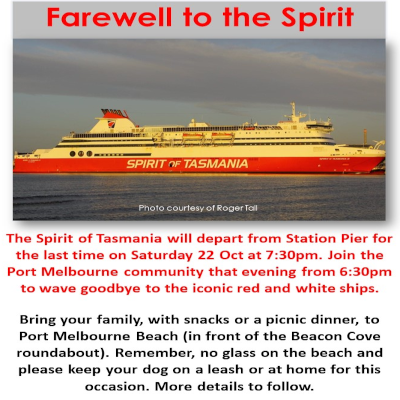
      COPP have stated the new waste is being introduced to help pay for the introduction of new FOGO and glass recycling streams will be introduced from January 2023.  

      Kerbside FOGO collection will be offered to about 18,000 properties, mostly terraces, freestanding houses and town houses, while residents living in multistorey apartments ( approximately 50,000 properties) will be required to walk up to 300m to use communal FOGO bins. 

      Campbell Spence asked the following question at the Council meeting on 7 September “why are residents required to pay an $88.10 surcharge for a service that is not expected to be delivered until after January 2023? How can the COPP justify charging a full year's fee for a service that it is planning to deliver for 6 months or less? Can the CEO provide the dates that residents will receive the new kerbside FOGO bins and when will kerbside FOGO collections commence?

      A Council Officer advised the delivery of kerbside FOGO bins and collection services are on track to commence in January 2023. The Officer also said that cost of delivering kerbside FOGO collection exceeds $88.10 and residents are not being over charged. However, the question remains how it costs $88.10 for 6 months when this is similar to what other councils charge for a full year. Does this mean that the FOGO charge will double for the first full FOGO bin service year, 2023-24?

      Source: COPP press release 


      This isn’t at all about inclusiveness, it’s about money.

      By Dean Hurlston

      There is little doubt that Victoria’s 79 Councils want to be an inclusive and healthy workplace, legislation makes sure of that and has for many years. We have anti-discrimination, sexual harassment, and workplace safety laws to ensure just this.

      Since the 2020 elections, we have seen a huge push into LGBTQI+ activism driven by a small minority of activist-councillors and rarely challenged by the rest of the establishment. This may appear noble and inclusive, but as always there is an agenda and a cost.

      During the elections, the Pride lobby asked candidates to pledge to progress an LGBTQI+ advisory committee and pursue rainbow tick accreditation of Councils services. 

      But let’s look at what the cost of these actually are:

      1. LGBTQI+ rainbow tick accreditation – this costs about $200,000 per Council

      2. LGBTQI+ inclusion training – Provided at a cost of $1,500-3,000 per workshop

      33 LGBTQI+ Advisory Committees – this involves selecting locals and staff for a regular panel – we estimate about $25,000 of councils’ resources would be used by this 

      Let’s run some numbers on that as a state-wide hypothetical.

      • 79 Councils – $200,000 each for Rainbow tick accreditation = $15.8 Million
      • 54,000 staff – 540 workshops for 100 staff at $1,500 minimum = $810,0000
      • 79 Councils - $25,000 each for Advisory Committees = $1.975 Million

      That is a potential spend in Councils of over $18 million.

      Of course, the spending is hypothetical and it will take time for all Councils to do this, but rest assured they are all being placed under enormous pressure to do this, by a lobbying group that is fastidious in getting its way. In Victoria, the Pride centre secured about $50 Million worth of land and funding from Port Phillip Council and the State Government. 
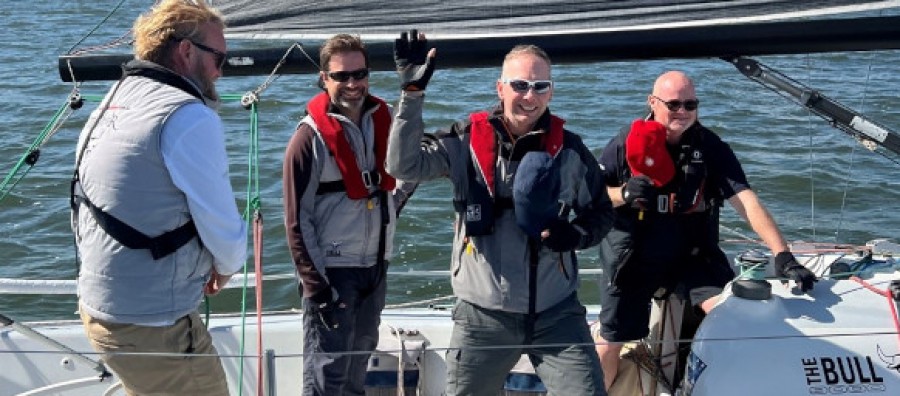
      This is BIG BUSINESS.

      What is driving this is a fundamental base belief that somehow Councils are not actually inclusive and LGBTQI+ friendly and perhaps that somehow Council needs to provide services to LGBTQI+ people in a more inclusive manner.

      As an openly gay man, I have dealt with a lot of Councils, the staff, and Councillors – Victoria-wide.

      NEVER once have I ever been demeaned or ridiculed for my sexuality, never once have I felt the level of service provided to me is any different, and never once have I felt the need to identify my sexuality and share it like a badge of honour to connect with staff. Disclosure – I am probably just as unhappy with the poor service Councils give as most of the population, and it has nothing to do with who I sleep with. Further, in the thousands of complaints we deal with, our volunteers have never had a complaint about any council treating a resident poorly because of their sexual orientation or gender identity. 

      (Yet I know people who are hearing impaired that Council has ignored for decades)

      Political correctness is becoming BIG business these days, with an LGBTQI+ industry that could gain tens of millions from councils to help them be more inclusive and a climate change lobby already securing tens of millions in funding for carbon credits from other countries and spending on buying more expensive renewable power only. The squeeze on council budgets has never been more real. We hear councils bemoan they can’t raise enough revenue – but only a few years ago these items were not even in a council’s budget, now they take pride of place (pardon the pun)

      So why aren’t CEOs and Councillors pushing back? Some Councillors have and have been labelled homophobic and been given threats of harm, how inclusive.

      In politics and councils, the photo opportunities to “appear to do good” are too enticing to resist. They make CEOs more employable and Councillors more electable, regardless of whether they actually make any improved benefits to the community. Photo opportunities for Councillors and CEOs that ultimately cost millions of ratepayers’ money.

      There are NO business cases for any of this spend – just rhetoric and feel-good motherhood statements. These days it seems anyone can create a lobbying business and activist model that can usurp tens of millions of ratepayers’ money from council coffers. 

      We are in a time when truth easily gets lost in virtue signalling and tokenism.

      The attached picture is the intro to a recent Council job ad – the wording proves my point, Councils have become infected by an all-inclusive, feel-good, rhetoric that would make a communist country’s propaganda machine envious.

       I for one am sick of this. Council's service standards are falling, and they are cutting service delivery – aged care support services are being abandoned by the truckload and many vulnerable residents are out in the cold.

      It’s time someone took a broom to councils and literally stopped this madness.

      After all, it’s our money they’re abusing whilst neglecting those who need support, imagine what $18 million could do for aged services and in-home support.

      This isn’t at all about inclusiveness, it’s about money. Our money. Money that should be better spent on the potholes in our roads, the cracked footpaths, the blocked drains, and the quality of councils’ services. Apparently, those photo opportunities are too dull and boring for mayors, councillors, and CEOs. 

      We are being had, and only we can stop it. 

      It’s why I refuse to support this tokenistic approach and also refuse to use pronouns in my email signature

      Attribution: PRIDE or PC overload? https://www.ratepayersvictoria.com.au/post/pride-or-pc-overload 

      The more people we help the more friends we make

      ROPP is a community focused association that advocates for all residents, businesses, and ratepayers on local matters. ROPP are here for you, and they have a name refresh.

      Campbell Spence, President of ROPP said “We are passionate about maintaining our heritage, diverse community, and we want Council to serve their community rather than serving the Port Phillip bureaucracy, minority vested interests and political parties”. 
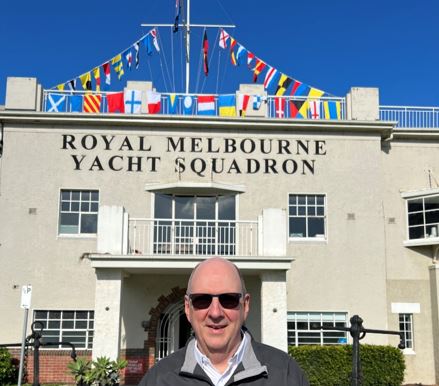
      We are active informing and assisting the community on issues often related to council matters as they happen, and as such the more people we help the more friends we make.
      When ROPP was first established in 2018 we advocated for affordable rates, better core services, less wasteful spending by our Council. We represent a broader community, which while seldom heard or seen, are also often in the majority on many council matters.

      Frequently members of our community need assistance and feel alone and helpless when faced with a council that will not help them.   These are ratepayers, businesses, residents, and property owners that are not resident.

      As such ‘Residents of Port Phillip’ better reflects the assistance we offer all those who reside here in one form or another.

      If you would like to help or contribute or learn more 

      Email: mail@ropp.org.au

      Web: https://ropp.org.au/

      Facebook: https://www.facebook.com/groups/RoPP


      By the Friends of Gasworks Arts Park

      At the Council meeting on the 6th July, Council voted to request the Victorian Schools Building Authority (VSBA) to brief Council on the development of the Victorian Youth Arts Precinct (VYAP) on the former Multinet depot site next to Gasworks Park.

      Despite numerous requests, it has been very difficult to get information from the Council, the local member Martin Foley or the VSBA.  Residents remain ill-informed and it seems there will only be consultation when everything for the VYAP is in place. The VSBA does not need any planning permits and construction is scheduled to commence later this year.

      To maintain the Park’s amenity we are asking Council to protect the brick wall between the Park and this new development.  We have been told the wall is jointly owned. The plans on the web site “Victorian Youth Arts Precinct” don’t show the wall. 

      This development is not only a large arts facility, but a campus shared by two schools with over 2000 students. If the complex is open to the Park there will be no way to control the use and flow of students (and visitors/audiences) all over the Park. In other words, it will be a school ground with a consequential detrimental effect on the enjoyment of the Park by other users. If Council is not going to stop the wall being demolished then a new fence should be built to define the Park land from the school campus and to control unlimited access.

      Cr Louise Crawford at the Council meeting said the VYAP development had nothing to do with the Council and if residents had any questions, they should contact VSBA. This is not good enough. 

      Council does have a responsibility to look after local resident's interests. This development is on a commercial scale. The proposed fifty performances a year will generate considerable traffic and require a lot of staff. This development will create parking and traffic problems as well as impacting detrimentally on our local open space.

      A theatre for the school is acceptable, but this large development is being squeezed into a small site and is in the wrong place. It should be in the Arts Precinct near the College of the Arts High School not in a residential area which should be catering for local high school students.

      Please ask your Councilors to save the brick wall and address the parking and traffic problems this inappropriate development will create.

      Email or ring your Councilors and CEO, click here. 

      And sign our petition on change.org, click here.


      Proposal represents a significant departure from the St Kilda Triangle Masterplan

      Council voted on 7 September to undertake a feasibility study for a new performance and live music venue at the St Kilda Triangle car park next to Palais Theatre. The study will investigate how a new performance/live music venue could be delivered within the spirit and intent of the St Kilda Triangle Masterplan. 

      The study is expected to test viability of the live music venue from a commercial, spatial, community and financial standpoint and enable Council to make an informed decision about future investment.

      The study is estimated to cost $378,000 results will be completed by mid-next year, at which point councillors would decide whether to progress the project or abandon it. The mayor will seek a funding commitment from the Victorian Government for this project. 

      Patrick Donovan, a live music industry consultant said “Melbourne is the music capital of the world with over 650 live music venues but there is one glaring deficiency. We need a purpose-built live music venue with a 3,000-5,000 capacity. Melbourne is crying out for a new standing live music venue following the sale of Festival Hall to a religious group and the Forum is too small. The triangle is the perfect location for a new music venue. It has music history at the site with ample public transport and parking. Some people have questioned whether two music venues can exist next to each other, but the Palais offers a very different music experience offering sit down shows”. 

      The proposal represents a significant departure from the St Kilda Triangle Masterplan developed by Council in 2016. Serge Thomann former Councillor and Deputy-Mayor and President of unChain Inc. said “We believe that the feasibility work that is suggested is too narrow and does not address what was approved by Council in the previous Masterplan. We also believe that what is recommended is ill conceived”. The Masterplan aimed to create a new cultural institution that could include an art gallery, live music venue or performance space, and carparking. Masterplan information is included in the Council Meeting Agenda papers for 7 September in the link https://www.portphillip.vic.gov.au/about-the-council/council-meetings/2022-meetings-and-agendas

      Plans to develop the St Kilda Triangle in 2007 attracted controversy when an ambitious $400 million development proposal described by opponents as a “Chadstone by the sea” was abandoned following a massive community backlash. A proposal to locate the NGV Contemporary at the site was rejected by the Victorian Government in 2016. 

      The St Kilda Triangle has a rich history of buildings and entertainment venues including Palais de Dance , Palais Pictures, The Palace Entertainment Complex, the Palais Theatre, the Stardust Lounge, and a casino.


      Previously Council had decided to sell the three centres

      Image of parent’s rally in March 2022 to protest planned childcare centre sale in Port Phillip (Source: Herald Sun) 

      Following a community backlash earlier this year, Councillors decide against selling three childcare centres subject to Victorian Government financial support. Mayor Marcus Pearl announced on 18 August 2022, ‘Our Council last night decided against selling three community-run early years education and care centres, subject to finalisation of funding arrangements’.

      The announcement follows community consultation about the future of these centres - at 17 Eildon Road, St Kilda, 39 The Avenue, Balaclava, and 46 Tennyson Street Elwood. Council will seek to rebuild or renovate these centres if Vic Gov funding is received.

      Whilst discussions for funding support with the Victorian and Australian Governments are ongoing the Port Phillip Mayor has released this update for transparency. Mayor Pearl said ‘We can report there have been productive conversations with the Victorian Department of Education and Training about long-term early childhood infrastructure needs across our city, including at those three centres. Discussions with the Department about potential co-funding arrangements under the Building Blocks Partnership program are progressing well’.

      Previously Council had decided to sell the three centres after the Victorian Government advised Port Phillip that it was not eligible for state funding because of certain eligibility hurdles. After the issued blew up the state government has corrected their earlier advice and will accept an application for funding. 

      There has been an overwhelmingly positive response to the Council’s commitment to continue supporting community run childcare across Port Phillip which is conditional on assistance from the Victorian and Australian Governments who are responsible for funding early learning. The City of Port Phillip own 17 facilities which provide over a third of our city’s licenced childcare places. 

      The Council has committed to update the community on this important issue as soon as they can but cannot provide further details due to the confidentiality of the continuing discussions.


      Membership in Rotary continues one’s growth and education in human relations

      In line with Rotary protocol a new President is appointed every twelve months, Warwick Lloyd is Rotary Port Phillip’s new President and one of his primary objectives is to recruit new members to help service the many projects Rotary is looking to deliver. 

      As a demonstration of the powerful community of Rotarians, over 20,000 people from across the globe will be visiting Melbourne next May, to listen and talk about how Rotary can make a difference. Rotary's theme of Imagine is very appropriate.

      So, if you’re interested in finding out more the Rotary website is  Portphilliprotary.org.au and here are the reasons why you should join Rotary. 

      WHY JOIN ROTARY

      Friendship: In an increasingly complex world, Rotary provides one of the most basic human needs: the need for friendship and fellowship. It is one of two reasons why Rotary began in 1905.

      Business Development: The second original reason for Rotary's beginning is business development. Everyone needs to network. Rotary consists of a cross section of every business community. Its members come from all walks of life. Rotarians help each other and collectively help others.

      Personal Growth and Development: Membership in Rotary continues one’s growth and education in human relations and personal development.

      Leadership Development: Rotary is an organization of leaders and successful people. Serving in Rotary positions is like a college education. Leadership: - learning how to motivate, influence, and lead leaders.

      Citizenship in the Community: Membership in a Rotary club makes one a better community citizen. The average Rotary club consists of the most active citizens of any community.

      Continuing Education: Each week at Rotary there is a program designed to keep one informed about what is going on in the community, nation, and world. Each meeting provides an opportunity to listen to different speakers and a variety of timely topics.

      Fun: Rotary is fun, a lot of fun. Each meeting is fun. The club projects are fun. Social activities are fun. The service is fun.

      Public Speaking Skills: Many individuals who joined Rotary were afraid to speak in public. Rotary develops confidence and skill in public communication and the opportunity to practice and perfect these skills.

      Citizenship in the World: Every Rotarian wears a pin that says “Rotary International.” There are few places on the globe that do not have a Rotary club. Every Rotarian is welcome – even encouraged – to attend any of the 29,000 clubs in 194 nations and geographical regions. This means instant friends in both one’s own community and in the world community.

      Assistance when Travelling: Because there are Rotary clubs everywhere, many a Rotarian in need of a doctor, lawyer, hotel, dentist, advice, etc., while travelling has found assistance through Rotary.

      Entertainment: Every Rotary club and district has parties and activities that provide diversion in one’s business life. Rotary holds conferences, conventions, assemblies, and institutes that provide entertainment in addition to Rotary information, education, and service.

      The Development of Social Skills: Every week and at various events and functions, Rotary develops one’s personality, social skills and people skills. Rotary is for people who like people.

      Family Programs: Rotary provides one of the world’s largest youth exchange programs; high school and college clubs for future Rotarians; opportunities for spouse involvement; and a host of activities designed to help family members in growth and the development of family values.

      Vocational Skills: Every Rotarian is expected to take part in the growth and development of his or her own profession or vocation; to serve on committees and to teach youth about one’s job or vocation. Rotary helps to make one a better doctor, lawyer, teacher, etc.

      The Development of Ethics: Rotarians practice a 4-Way Test that governs one’s ethical standards. Rotarians are expected to be ethical in business and personal relationships.

      Cultural Awareness: Around the world, practically every religion, country, culture, race, creed, political persuasion, language, colour, and ethnic identity is found in Rotary. It is a cross section of the world’s most prominent citizens from every background. Rotarians become aware of their cultures and learn to love and work with people everywhere. They become better citizens of their countries in the process.

      Prestige: Rotary members are prominent people: leaders of business, the professions, art, government, sports, military, religion, and all disciplines. Rotary is the oldest and most prestigious service club in the world. Its ranks include executives, managers, professionals – people who make decisions and influence policy.

      Nice People:  Rotarians above all are nice people - the nicest people on the face of the earth. They are important people who follow the policy of it is nice to be important, but it is important to be nice.

      The Absence of an “Official Creed”: Rotary has no secret handshake, no secret policy, no official creed, no secret meeting or rituals. It is an open society of men and women who simply believe in helping others.

      The Opportunity to Serve: Rotary is a service club. Its business is mankind. Its product is service. Rotarians provide community service to both local and international communities. This is perhaps the best reason for becoming a Rotarian: the chance to do something for somebody else and to sense the self-fulfilment that comes in the process and return of that satisfaction to one’s own life. It is richly rewarding


      Originally conceived as a boutique event,

      By a long-time St Kilda resident

      In the 1980’s, St Kilda was perceived as a seedy suburb of Melbourne that attracted society’s undesirables and activities.  St Kilda was described as “a dynamic place where good and evil worked alongside” according to the late Albert Tucker.

      In the 60’s and 70’s Melbourne media ran headlines describing the St Kilda area as streets of hell, the devil’s triangle and documentaries were made showing people buying drugs in Fitzroy Street. Mary Lou Jelbart, a former resident and Councillor of the City of St Kilda felt that a festival celebrating all the actors, writers and creative people living in the area would change these negative perceptions and reassure people that “they were living in a good community, with very good neighbours around”.

      The St Kilda festival was introduced in 1980 to change the public perception of the area and to showcase that there are some beautiful and very positive aspects to community life in St Kilda.  In the 80’s the intention was only to celebrate the local area but today, music is the central programmatic driver of the festival.

      In an interview for U3A Port Phillip, Jelbart offered the following summary of the first festival:

      “We had the first St Kilda Festival in February or March 1980. It was absolutely wonderful. The council blocked off the Upper Esplanade. We celebrated St Kilda’s history. We had a revival of Frank Thring films – not Frank Thring the Hollywood actor but his father who was a St Kilda based film producer in the 1930s. We showed the films at the Palais. We had ice-skating at St Moritz which was still in existence. George Dreyfus conducted a mass, a non-religious mass. Mirka Mora, who was living in St Kilda at that time, drew a mural on masonite and children came and coloured it in. In fact, she did three murals, for three successive festivals. One has disappeared, but one is in the St Kilda Library. At Christ Church in Acland Street the vicar and his wife provided Devonshire teas under the trees. It was really enchanting. The weather was perfect. Everything was just beautiful. The two days ended with 15 minutes of fireworks over the bay. The Esplanade was crowded with very happy people. It was wonderful to see the community celebrate together.”

      Things have certainly changed…

      The festival has seen many formats since its inception over 40 years ago.  With an attendance of a mere 5,000 in 1980, today around 400,000 people flock to the foreshore to witness Australian musicians entertaining the crowds. The St Kilda Festival is known as Australia’s largest free community festival – a celebration of community spirit, Australian talent, and the beautiful St Kilda foreshore.

      According to the 2021/22 Council Plan and Budget, the Council paid $1.7M as a contribution towards the costs of the festival (compared to a $159K contribution towards the St Kilda Film Festival).  These costs are included in the Council’s $4.3M annual budget for all festivals, major events, Esplanade market and Indigenous arts programs, including the Yaluk-ut Weelam Ngargee event.

      Many people have commented on the perceived unfairness of St Kilda as the focus of these events (and therefore festival funding being focused on St Kilda).  They believe that other areas including Elwood, Port Melbourne, Albert Park, South Melbourne and Middle Park should all receive funding for similar local events.

      Other residents have complained of poor behaviour from Festival patrons, some of whom believe that, because it’s St Kilda, they can behave in any manner they please showing no respect for the local community.  In 2012, a Festival patron was jailed for 34 months (15 months without parole) after he detonated 2 homemade devices in separate incidents at the Festival.  Five people were injured, 2 seriously, despite the defendant’s claims he ‘just wanted to have some fun’.

      During the 2013 Festival, a man was charged over the bashing of a 23-year-old New Zealand man as he walked along Jacka Boulevard.

      Others, including Councillor Andrew Bond, staunchly support the Festival and claim that delivery of the St Kilda Festival has the potential to bring economic, social and cultural benefit to the community.

      Over the years, the suburb of St Kilda has transformed itself into a highly desirable place to visit, live and work and embodies our deep connection to beach culture.

      So, do you believe there is still a need for the St Kilda Festival?  How do you, as a ratepayer, feel about the financial support given to the festival on your behalf?  We would be interested to hear your comments, opinions and ideas.

      In the meantime, we will leave you with some recent comments from Mary Lou Jelbart at whose instigation and initiative, the Festival was founded.

      “The St. Kilda Festival was originally conceived as a boutique event, promoting the talents of local artists, musicians, writers and performers who had been attracted to the bohemian and cosmopolitan character of the area.  But the magical quality of the first Festivals has been eroded by its transformation into a major rock event, swamping the foreshore with tens of thousands of fans who do nothing to add to the amenity of local residents.  Many have told me they feel prisoners in their homes during the Festival.  I continue to regret that I wasn’t able to persuade fellow Councillors to let the Festival come to a natural end after a decade.  In the case of more recent Festivals, bigger has not been better.”

      Promotion
      There are good reasons for not implementing this and other road closures

      By a concerned Mills Street Resident

      Image attribution: Google Image of Herbert-Montague Street and Kerferd Road intersection

      There is increasing concern regarding the proposed Shrine-to-Sea Avenue proposed by the Victorian Government in partnership with the City of Port Phillip. Residents are concerned the project may not only divide Port Phillip but also divide the Albert Park locality. The path to Beaconsfield Parade from Kingsway along Albert Street and Kerferd Road is already clearly delineated.  Source

      Many residents have voiced their concern that a dedicated path with intersecting side roads blocked off will seriously and permanently create a barrier that will have an effect similar to that which occurred when the enforced Kingsway was forged through the middle of South Melbourne – creating a freeway dividing the then city into two distinct areas with little communication between.

      Residents are concerned that the closure at Herbert-Montague Street and Kerferd Road, Albert Park may be the beginning of a series of Council planned closures to implement this divisive community policy. 

      The Herbert and Montague Streets closure now appears to be permanent following extensive delays of the trial that started in February 2021, with the traffic data collection. The Council website states  ‘Due to Covid-19 restrictions, we have been unable to record the final traffic data counts and will conduct these as soon as restrictions ease. Until this time the trial will remain in place’. Source

      There are good reasons for not implementing this and other road closures:

      1. An inconvenient barrier to the Albert Park shopping centre from the east of Kerferd Road and to Middle Park from the Albert Park side.

      2. All street closures have negative impact on other surrounding streets by re-directing and increasing traffic in an abnormal pattern. Traffic will be increased on: 

      • a. Canterbury Road
      • b. Hambleton Street
      • c. Richardson Street
      • d. Merton Street
      • e. O’Grady Street
      • f. Little O’Grady Street
      • g. Finlay Street

      3. Inhibits community interaction for an ageing population

      4. It is not any safer for pedestrians or cyclists

      The traffic management solution at Danks Street where it crosses Kerferd Road (see Google image below) has worked well to remove the vehicle danger of the intersection. If prevention of vehicle accidents is the concern, then a similar solution can easily be implemented at the Montague-Herbert Street intersection with Kerferd Road.


      25 residents raised concerns over the safety of the Pop-up bike infrastructure

      Councillors voted in favour of a motion that requests the Department of Transport (DoT) to modify some of the new Pop-Up Bike Lanes and to undertake a safety audit of all the new bike lanes. Council was responding to a massive community backlash on social media that raised concerns about the safety of some of the bike lane infrastructure and visual impact. Residents have questioned if the program enhances the on-road safety for cyclists because pedestrians, motorists, and cyclists are confused by the treatment of roads, random placement of concrete blocks, bollards and speed humps, and the distraction of excessive and contradictory road markings.

      The infrastructure is semi-permanent as the trial will be conducted over 12-18 months and residents are concerned the infrastructure will be not modified or removed despite overwhelming opposition. 

      The final Council motion was not as strong as Cr Andrew Bond’s original motion that called for an immediate halt to the project and immediate removal all speed humps, concrete blocks and bollards installed as a part of the DoT project. Cr Heather Cunsolo and Cr Bond agreed to a compromise position that most Councillors supported, to ensure Council officers can commence discussions with DoT with a clear position of Council. 

      The Council meeting was attended by 80-100 people and 25 residents raised concerns over the safety of the Pop-up bike infrastructure and the desecration of heritage streets. Nina Taylor MP (Southern Metropolitan Region) said DoT had consulted extensively prior to the installation of the infrastructure and three people supported the DoT project, including the CEO of Bicycles Victoria, a Member of Port Phillip Bicycle Users Group, and a resident. 

      Robyn Taylor from Albert Park said, ‘The pop-up bikes program was supposed to be ‘light touch’ but it has created a significant ugliness to our once beautiful streets and villages of Middle Park, Albert Park, South Melbourne and Port Melbourne’.  

      Cameron Smith from South Melbourne said he ‘supports of the use of public space by pedestrians, cyclists, motorcyclists,  scooters, motorists and was not anti-cycling per se. However, the new bike infrastructure impacted safety in a negative way and are therefore poorly designed. They are not necessarily located in appropriate streets and have left many residents scratching their heads about the actual need for these bike lanes over and above existing bike lanes’.  

      Other speakers said they were blind-sided by the new bike lanes because DoT did not adequately consult residents. Only a few residents received the DoT postcards and noticed the public notices fixed to poles and there was a paucity of information on the DoT website when residents clicked on the QR code in the DoT materials. DoT have recently updated their website to include more details of the road infrastructure. 

      The Council supported motion states that the CEO

      1. Writes to the Department of Transport and requests that they re-instate the left hand turn into Williamstown Road from Bridge St in Port Melbourne.

      2. Writes to the Department of Transport and requests that the Bridge St Port Melbourne central bike lane be removed, and the original conditions be reinstated.

      3. Writes to the Department of Transport and requests that DOT come back to Council with options for alternative proposals to the Westbury St, St Kilda East central bike lane.

      4. Writes to the Department of Transport and requests that where swerving around speed humps is observed; where speed humps are located on a 40kmh local road; where speed humps are immediately preceding or following a raised pedestrian crossing, and for all concrete blocks, bollards, and yellow lines, that DOT shows Council a justification for their requirements on safety or other grounds, or facilitate their removal, or proposes an alternative treatment.

      5. Council officers to brief Councillors on Department of Transport response to the Council letter as soon as possible and no later than August 2022.

      6. Writes to the Department of Transport and requests that they conduct a safety audit that reviews safety concerns raised by the community.

      7. Request that DOT works with the City of Port Phillip to review the Pop-Up Bike Lane programs prior to any revisions and future installation of infrastructure in the City of Port Phillip as part of the DOT Pop Up Bike Lane program following the upcoming practical completion.


      8. Request that DOT conducts thorough consultation with the residents of the City of Port Phillip prior to any revisions and future installation of infrastructure in the City of Port Phillip as part of the DOT Pop-Up Bike Lane program following the upcoming practical completion.



      This is where the systemic and intended failure of councils shows

      By Dean Hurlston

      A review of inner Melbourne councils has revealed that green open space levels are their lowest since records began. It’s not just limited to inner councils and is rapidly emerging as an issue in middle suburbs too. Open green space has a direct link to mental health. 

      This isn’t just a result of densification and overdevelopment but rather a neglectful and intentional problem created by local councils. 

      For many years experienced local councillors have mined the databases and parent lists of local sporting clubs with precision, knowing this is the fertile ground of vote harvesting. 

      What your local councillors know or quickly learn is that those on council remain on council with council investment in sporting clubs - new stadiums, pavilions, grounds, change rooms, equipment, and the like. The more they get council to invest in local sports, the more likely they will be re-elected. It’s the McDonalds happy meal effect. Toys bring demanding kids and parents wallets. In this case councillors who provide sporting facilities garner trust and votes because “they are doing it for the kids”. 

      Well so they say!  

      But the real victim here is the parklands, green wedges and local open space that is compromised for the ever-expanding sporting clubs. 

      Amid declaring climate emergencies - killing trees becomes an inconvenient truth.  

      What councils always seem to forget is that sporting users come and go. 

      The local residents who use the parks and green infrastructure are the ones that lose their connection to green space. All for the sporting clubs to expand. Don’t get me wrong with our ever-expanding population the need for sports is only going to grow. This is where the systemic and intended failure of councils shows. Councils should be regionalising sporting facilities to get greater efficiency and pooling resources. 

      They should be planning together. There are already groupings of councils like the infamous M9 that cover inner city councils. The best they have come up with is consistent street signage. For some reason they just can’t bear any co-investment in sporting facilities.  

      In many cases councils build facilities on their municipal borders often with ample supply within 1km in the adjoining council. 

      It is madness. 

      It is Wasteful and terrible for the community who loses their green space. 

      Where is the state government in all of this? Silent. Funding pet councils where they can harvest votes. 

      The system is ultimately broken. 

      Councillors are taking the community for a ride. They know open space doesn’t lose as many votes as they gain from all their sports investment. 

      The local councillors who speak up against this are bullied and targeted by those who have gamed the system. 

      Local government is broken. It has no oversight to stop this utter madness. 

      It has no standards that prevent sporting facilities that ruin local amenity. 

      All that happens is councils pit local residents against sporting clubs and create painful rifts and divisions. 

      It is councillors who are dividing their communities and that is the real shame in all of this. 

      The real victim is the green space that is pillaged and often destroyed. The trees, ecosystems, and serenity are ultimately concreted and desecrated. Concrete and brick sporting shrines emerge and cost a fortune to run adding huge costs to councils budget. This in turn means that older facilities get neglected and fall apart. Often eventually requiring huge investment to fix. 

      Look to any council newsletter and it will be filled with building sports facilities and spruiking sports investment.

      As for the trees, the parklands and open space. Despite a supposed climate emergency, they are to be bulldozed and forgotten.


      Promotion
      The goals of the partnership neglect a key aspect of the local government act

      By Dean Hurlston

      There is little doubt that the one of the hottest debates in our country is climate change.

      In Victoria our 79 councils are fast declaring climate emergencies and looking for ways to reduce their carbon footprint or get to “net zero”. So far almost 40 Victorian councils, including Port Phillip have joined the “cities power partnership”. Source

      This partnership aims to link councils together to help them get to net zero as fast as possible and to ensure all aspects of councils operations minimise emissions and all power purchased is renewable only. This is a noble pursuit but it’s missing a key component, Buying power!


      The goals of the partnership neglect a key aspect of the local government act (Vic) 2020. Councils must provide services to the community with “value for money” as a key requirement.

      There is little doubt “renewable” electricity purchased from electricity companies is more expensive. There is cost in installing solar panels and batteries on all council buildings, changing petrol fleets to electric only (think council cars and garbage trucks). In reality there will need to be HUGE investment by member councils in replacing fleets and installing solar and battery - in many cases this will run into the millions. The goals of entering the partnership have to be realised within 5 years of joining. 

      Stupidly, the group buying power delivers NO COST SAVINGS on power bills. 

      None. Zip. Nada. 

      The program has missed the chance to save councils money and instead has cheaply gone for the emotional rhetoric and photo opportunities of the climate change narrative, but it will look great in their council newsletters - more tokenism.

      Put simply, councils joining this program will need to spend more ratepayers money creating the narrative that they are combatting climate change.

      Sadly, this is our councils theology of today, if we look good, feel good, and “appear” to do good perhaps the residents won’t notice the open chequebook in our hands.

      Attribution: Councilscombat climate change with an open chequebook (ratepayersvictoria.com.au)

      Image Created by Andy from South Melbourne


      Culture