By Reg Macey (Posted in Born & Bred Port Melbourne on 25
February 2022)
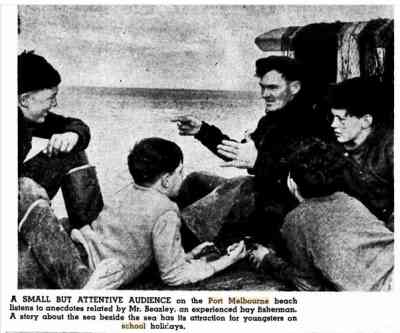
What was long time Port Melbourne fisherman Mr Beazley telling these boys in the photo with him, of the morning 80 years ago tomorrow, that has gone down in history?
Mr William Beazley's granddaughter Karen Perry has answered my question about what he may have been telling the boys in the photo below.
Karen Perry wrote “It would be nice to think that my grandfather William ‘Oppy’ Beazley was recalling the events of that day back on the 25 February 1942. He certainly did tell Dugga Beazley, and Dad has passed this story down. It was only a few years ago after a 2016 article appeared in the newspaper that I realised that this event was not reported to the public in 1942”.
A morning where he saw what few others saw.
Certainly nothing about it was reported at the time anywhere, not in newspapers or the 'on the wireless' (the radio).
Dugga Beazley's Dad was out fishing before dawn that morning.
An hour or so later, he heard the sound of an unfamiliar aeroplane's engine.
Port Melbourne folk had grown accustomed to the sound of a variety of fighter and bombers that were then being constructed in Port Melbourne's Fishermans Bend's two aircraft factories.
It was flying low.
He watched it as it changed its course to follow the lights marking the shipping channel to the Port Melbourne Piers.
As it came closer, he saw it was a single engine float plane, with a red roundels on its wings and fuselage.
It was a JAPANESE plane.
On the 20th February, only a few days earlier, front page newspaper stories had reported that the Japanese had bombed Darwin, in Northern Australia.
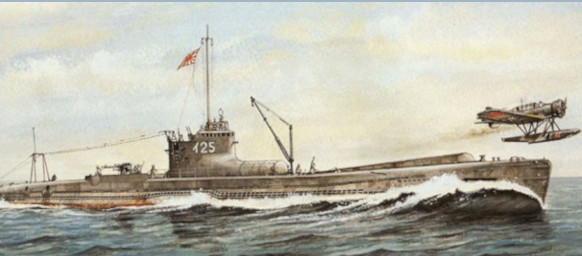
The plane Mr Beazley saw had been launched two hours before dawn from one of the world's then largest submarines, the I25.
No RAAF plane got anywhere near the Japanese plane that morning, although it had been spotted as it flew low over the RAAF base at Laverton, and (reportedly) over a battery of anti-aircraft guns in the Williamstown Rifle Range
No searchlights searched for it.
Not a single round of ammunition was fired at it.
Not until years after the war was that morning's flight revealed to the Australian public.
An illustration of the submarine launching a float plane.
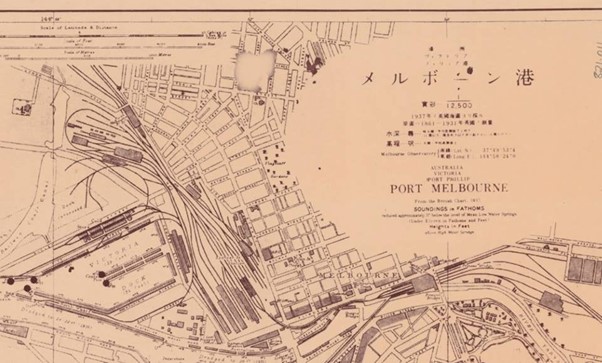
An enlargement of a section of a 1937 Japanese annotated British Admiralty map of PORT MELBOURNE that the plane's pilot and observer would almost certainly have been carrying with them at the time.