The City of Port Phillip is a great place to live. Our beachside suburbs, parks, and laid-back neighbourhoods make our city one of the most liveable in Australia. But climate change is affecting our way of life. The probability of bushfires, rising sea levels and flooding threaten our city, our country, and our way of life.
How can Port Phillip contribute to reducing carbon emissions?
Council has a role to play in reducing carbon emissions, but council itself is only responsible for <1% of emissions in the City of Port Phillip. To council’s credit, they have achieved zero net emissions in 2020/21. However, the big changes needed, like less carbon-intensive energy sources and cleaner modes of transport, can only be meaningfully addressed by state and federal governments. Council can deliver cost-effective, measured actions on climate change such as reducing the amount of residential waste going to landfill and thereby reducing greenhouse gas emissions.
What is the biggest impact council can have for a sustainable future?
The City of Port Phillip is surrounded by councils that provide food waste and green waste bin services. Port Phillip sends over 70% of waste to landfill , whereas the average Victorian council saves 50% more waste from landfill than Port Phillip.
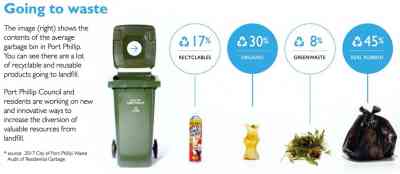
About half of the waste found in our average landfill bins are made up of food and garden waste. By recycling food and garden waste, we can help reduce the amount of greenhouse gases generated and contribute to the creation of nutrient-rich compost. Recycling food and garden waste helps reduce the amount of waste that goes to landfill and turns it into a valuable resource for farmers and parks and gardens.
The City of Melbourne introduced the new food and organic service in May 2021 to 9,000 single storey residences at no additional cost to residents and is part of the council’s wider plan to reduce landfill and improve waste and recycling services across the municipality. in the second stage of the program, the City of Melbourne will roll out this service to high-rise apartments.
Why hasn’t Port Phillip provided green and food waste bins?
The option to introduce a green and food waste bins was considered by council in 2018 but rejected because it “was found to be extremely expensive due to high set up costs and would only meet the needs of half of our community." This decision by our council to deny residents green/food waste bin services has resulted in an extra 8,000 tonnes of waste going to landfill per year.
Council commenced a trial of FOGO (food organic and garden organic) waste bins in August 2020, but only after the Victorian government mandated these bins to be rolled out by 2030 (‘Recycling Victoria, a new economy’).
Other councils have had these bins for many years, and they are highly effective at reducing waste sent to landfill. For a council that has declared a ‘climate emergency’, it is hypocritical that this important sustainability measure was not introduced earlier and even now, it will not be fully implemented for some time yet.
Council ought to be able to fund essential services, like food and green waste bins, out of its existing rates revenue. Council has a duty to provide waste management and recycling services without increasing the total amount of rates & charges collected. Waste management and recycling are fundamental core services and currently these services are substandard. Council must prioritise spending or find efficiencies to deliver these basic services.
Credits:
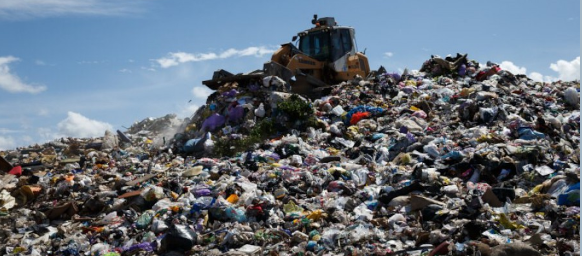
Image: Landfill at St Albans- Courtesy of The Age
https://knowyourcouncil.vic.gov.au/councils/port-phillip/reports/waste-collection
https://www.melbourne.vic.gov.au/residents/waste-recycling/Pages/food-garden-waste.aspx
Council meeting 17 October 2018, item 11.1 (http://www.portphillip.vic.gov.au/Minutes%20Ordinary%20Council%2017%20October%202018.pdf)
21,000 tonnes of garbage per year. 38% is organic and green. Source: http://www.portphillip.vic.gov.au/default/WasteManagementOperationsDocuments/WM_ Waste_Recycling_A4_6PP_0317_PROOF5_Spreads.pdf