
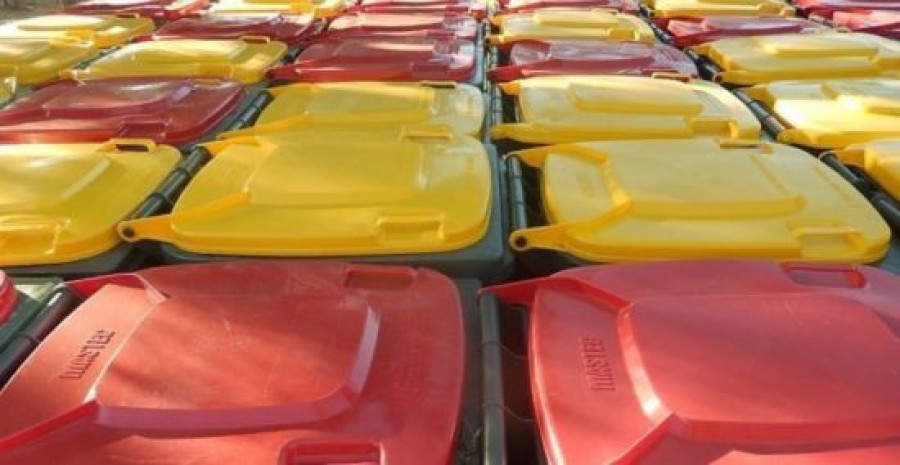
UPDATE 15 AUGUST 2020: RoPP campaign successful in delaying new Bin Tax
We are pleased to see that the Bin Tax will not be introduced this financial year, according to Port Phillip’s updated web page.
Thanks to all for your help with our Bin Tax campaign!
The best way to ensure your rates are reduced to be in line with neighbouring councils, is to vote for a RoPP endorsed candidate at the upcoming October election. We will be releasing the exciting news about our endorsed candidates soon, so stay tuned.
- At the 4th December 2019 Council meeting, a “Waste and Amenity levy” was proposed to address the waste crisis, forecasted to add $64 million over the next 10 years to Council’s “rate cap challenge”. RoPP spoke at that meeting in opposition to the new Tax, unless the Council could provide more information.
- We finally received a written response from the CEO on July 2nd 2020, confirming that Council were considering options of how to fund the Bin Tax, including the levy being additional to existing rates.
- Our poster and leaflet campaign to stop the Bin Tax commenced on 30th July 2020.
- Council’s website still detailed the impending Bin Tax. Now those details have been removed, replaced instead with a statement about the deferral.
- Why would Council remove the details from their website? As of writing this, the minutes of the 4th December 2019 Council meeting where the Bin Tax was voted on, are also no longer available on their website. Further, we have discovered that almost 20 years of Council meeting agendas & minutes have been removed in the last week.
- Please refer to the end of this webpage for details of the Essential Services Commission’s role in waste levies.
The facts and our transparency speak for themselves. The Council’s backdown on a new Bin Tax shows that our campaign has had an impact. Council have rightly recognised the harshness of introducing a new tax on top of the burden of existing rates, in a time of economic crisis.
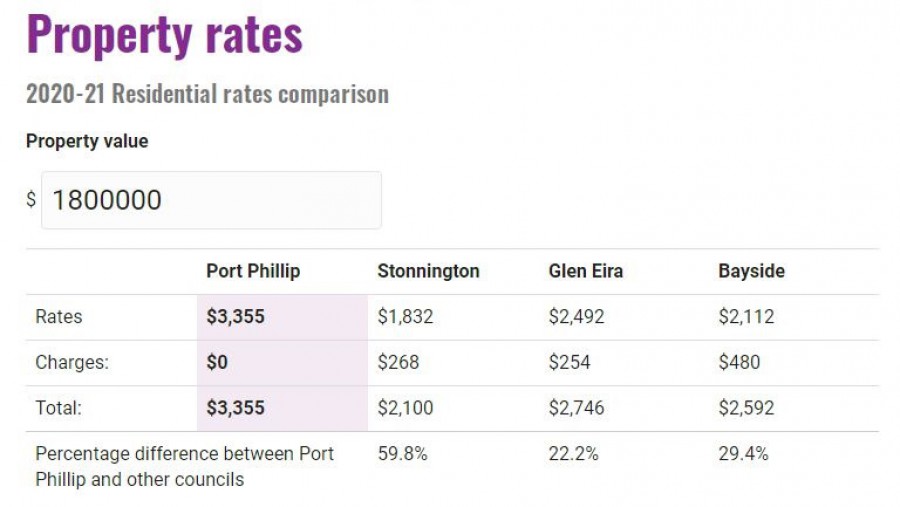
Port Phillip Council is one of the highest spending councils in the state and are now proposing to introduce an additional Waste and Amenity levy on top of the exorbitant rates you already pay.
See https://ropp.org.au/fact-check-how-high-are-port-phillip-rates-compared-to-neighbouring-councils/
So in addition to a 2% increase to total rates collected this year (the maximum allowable under the State government’s rate cap system), you would have to pay a levy for ‘Waste and Amenity’, “A BIN TAX” on this fundamental service. This would severely impact both ratepayers and residents at a time when many have lost their livelihoods, incomes and ability to pay.
Council claims that the reason they need to charge a new levy is because waste costs are rising at a greater pace than inflation. There are two issues with this:
1. Waste management, a core service of council, only accounts for 5.3% of the Port Phillip budget[1], meaning that even if this component increased by 10% per year, the effect on the overall budget would only be around 1-1.2%, well within the 2% rate cap.
2. Competent management should be able to absorb this fundamental service easily, by forecasting these cost issues and re-prioritising their budget accordingly. Instead, the majority of the 2% increase in general rates will go towards wage rises for staff, which council has stubbornly refused to address (or even acknowledge).
Council wants to take the easy way out yet again, by charging ratepayers a new BIN TAX instead of doing the hard work necessary to manage the budget.
The waste and amenity levy (BIN TAX) would sit outside the 2% annual rate cap imposed by the Essential Services Commission. This gives council the option to increase the levy by whatever amount it wishes, and you can be sure it will – council will use the levy to fund its inability to manage its own budget. Council describes this inability to live within their own means the ‘rate capping challenge’.
IT’S A NEW TAX ON TOP OF YOUR EXISTING RATES
Councillors did not want to be held accountable at the ballot box for introducing a new tax this year, so have deferred its introduction until after the election. We are here to highlight the issue so that you have the chance to stop council by voting for an independent candidate that will vote against the BIN TAX and hold the council to account. Keep an eye on our website for an independent review of candidates running in the October election.
We say:
1. ROPP does not support the introduction of a Waste and Amenity Levy in addition to the burden of existing rates. Council need to get the budget under control instead of taking the easy way out: a new Bin Tax
2. Now is not the time to impose new taxes on a struggling economy. It’s not fair and it needs to be stopped.
Essential Services Commission’s role in waste levies
Council can levy a new charge in addition to existing rates, just like two councils did in 2018-19. This is subject to the oversight of the Essential Services Commission, however Councils retain full autonomy to introduce new charges. Council can opt to introduce a waste levy in a revenue neutral way, reducing general rates by the same amount that the new levy raises. This is what Maribyrnong did in 2019-20.
As Port Phillip Council said themselves on the now removed ‘waste challenges’ webpage :
“Council is also considering a proposal to introduce a waste and amenity levy, which would be a payment separate to Council rates to cover some, or all, of the costs incurred by council to deliver waste, recycling and cleansing services. This would enable Council to set a service rate or charge (levy) that’s in line with the true cost of the service.
UPDATE 15 AUGUST 2020: RoPP campaign successful in delaying new Bin Tax
We are pleased to see that the Bin Tax will not be introduced this financial year, according to Port Phillip’s updated web page.
Thanks to all for your help with our Bin Tax campaign!
The best way to ensure your rates are reduced to be in line with neighbouring councils, is to vote for a RoPP endorsed candidate at the upcoming October election. We will be releasing the exciting news about our endorsed candidates soon, so stay tuned.
- At the 4th December 2019 Council meeting, a “Waste and Amenity levy” was proposed to address the waste crisis, forecasted to add $64 million over the next 10 years to Council’s “rate cap challenge”. RoPP spoke at that meeting in opposition to the new Tax, unless the Council could provide more information.
- We finally received a written response from the CEO on July 2nd 2020, confirming that Council were considering options of how to fund the Bin Tax, including the levy being additional to existing rates.
- Our poster and leaflet campaign to stop the Bin Tax commenced on 30th July 2020.
- Council’s website still detailed the impending Bin Tax. Now those details have been removed, replaced instead with a statement about the deferral.
- Why would Council remove the details from their website? As of writing this, the minutes of the 4th December 2019 Council meeting where the Bin Tax was voted on, are also no longer available on their website. Further, we have discovered that almost 20 years of Council meeting agendas & minutes have been removed in the last week.
- Please refer to the end of this webpage for details of the Essential Services Commission’s role in waste levies.
The facts and our transparency speak for themselves. The Council’s backdown on a new Bin Tax shows that our campaign has had an impact. Council have rightly recognised the harshness of introducing a new tax on top of the burden of existing rates, in a time of economic crisis.
Port Phillip Council is one of the highest spending councils in the state and are now proposing to introduce an additional Waste and Amenity levy on top of the exorbitant rates you already pay.
See https://ropp.org.au/fact-check-how-high-are-port-phillip-rates-compared-to-neighbouring-councils/
So in addition to a 2% increase to total rates collected this year (the maximum allowable under the State government’s rate cap system), you would have to pay a levy for ‘Waste and Amenity’, “A BIN TAX” on this fundamental service. This would severely impact both ratepayers and residents at a time when many have lost their livelihoods, incomes and ability to pay.
Council claims that the reason they need to charge a new levy is because waste costs are rising at a greater pace than inflation. There are two issues with this:
1. Waste management, a core service of council, only accounts for 5.3% of the Port Phillip budget[1], meaning that even if this component increased by 10% per year, the effect on the overall budget would only be around 1-1.2%, well within the 2% rate cap.
2. Competent management should be able to absorb this fundamental service easily, by forecasting these cost issues and re-prioritising their budget accordingly. Instead, the majority of the 2% increase in general rates will go towards wage rises for staff, which council has stubbornly refused to address (or even acknowledge).
Council wants to take the easy way out yet again, by charging ratepayers a new BIN TAX instead of doing the hard work necessary to manage the budget.
The waste and amenity levy (BIN TAX) would sit outside the 2% annual rate cap imposed by the Essential Services Commission. This gives council the option to increase the levy by whatever amount it wishes, and you can be sure it will – council will use the levy to fund its inability to manage its own budget. Council describes this inability to live within their own means the ‘rate capping challenge’.
IT’S A NEW TAX ON TOP OF YOUR EXISTING RATES
Councillors did not want to be held accountable at the ballot box for introducing a new tax this year, so have deferred its introduction until after the election. We are here to highlight the issue so that you have the chance to stop council by voting for an independent candidate that will vote against the BIN TAX and hold the council to account. Keep an eye on our website for an independent review of candidates running in the October election.
We say:
1. ROPP does not support the introduction of a Waste and Amenity Levy in addition to the burden of existing rates. Council need to get the budget under control instead of taking the easy way out: a new Bin Tax
2. Now is not the time to impose new taxes on a struggling economy. It’s not fair and it needs to be stopped.
Essential Services Commission’s role in waste levies
Council can levy a new charge in addition to existing rates, just like two councils did in 2018-19. This is subject to the oversight of the Essential Services Commission, however Councils retain full autonomy to introduce new charges. Council can opt to introduce a waste levy in a revenue neutral way, reducing general rates by the same amount that the new levy raises. This is what Maribyrnong did in 2019-20.
As Port Phillip Council said themselves on the now removed ‘waste challenges’ webpage :
“Council is also considering a proposal to introduce a waste and amenity levy, which would be a payment separate to Council rates to cover some, or all, of the costs incurred by council to deliver waste, recycling and cleansing services. This would enable Council to set a service rate or charge (levy) that’s in line with the true cost of the service.
UPDATE 15 AUGUST 2020: RoPP campaign successful in delaying new Bin Tax
We are pleased to see that the Bin Tax will not be introduced this financial year, according to Port Phillip’s updated web page.
Thanks to all for your help with our Bin Tax campaign!
The best way to ensure your rates are reduced to be in line with neighbouring councils, is to vote for a RoPP endorsed candidate at the upcoming October election. We will be releasing the exciting news about our endorsed candidates soon, so stay tuned.
- At the 4th December 2019 Council meeting, a “Waste and Amenity levy” was proposed to address the waste crisis, forecasted to add $64 million over the next 10 years to Council’s “rate cap challenge”. RoPP spoke at that meeting in opposition to the new Tax, unless the Council could provide more information.
- We finally received a written response from the CEO on July 2nd 2020, confirming that Council were considering options of how to fund the Bin Tax, including the levy being additional to existing rates.
- Our poster and leaflet campaign to stop the Bin Tax commenced on 30th July 2020.
- Council’s website still detailed the impending Bin Tax. Now those details have been removed, replaced instead with a statement about the deferral.
- Why would Council remove the details from their website? As of writing this, the minutes of the 4th December 2019 Council meeting where the Bin Tax was voted on, are also no longer available on their website. Further, we have discovered that almost 20 years of Council meeting agendas & minutes have been removed in the last week.
- Please refer to the end of this webpage for details of the Essential Services Commission’s role in waste levies.
The facts and our transparency speak for themselves. The Council’s backdown on a new Bin Tax shows that our campaign has had an impact. Council have rightly recognised the harshness of introducing a new tax on top of the burden of existing rates, in a time of economic crisis.
Port Phillip Council is one of the highest spending councils in the state and are now proposing to introduce an additional Waste and Amenity levy on top of the exorbitant rates you already pay.
See https://ropp.org.au/fact-check-how-high-are-port-phillip-rates-compared-to-neighbouring-councils/
So in addition to a 2% increase to total rates collected this year (the maximum allowable under the State government’s rate cap system), you would have to pay a levy for ‘Waste and Amenity’, “A BIN TAX” on this fundamental service. This would severely impact both ratepayers and residents at a time when many have lost their livelihoods, incomes and ability to pay.
Council claims that the reason they need to charge a new levy is because waste costs are rising at a greater pace than inflation. There are two issues with this:
1. Waste management, a core service of council, only accounts for 5.3% of the Port Phillip budget[1], meaning that even if this component increased by 10% per year, the effect on the overall budget would only be around 1-1.2%, well within the 2% rate cap.
2. Competent management should be able to absorb this fundamental service easily, by forecasting these cost issues and re-prioritising their budget accordingly. Instead, the majority of the 2% increase in general rates will go towards wage rises for staff, which council has stubbornly refused to address (or even acknowledge).
Council wants to take the easy way out yet again, by charging ratepayers a new BIN TAX instead of doing the hard work necessary to manage the budget.
The waste and amenity levy (BIN TAX) would sit outside the 2% annual rate cap imposed by the Essential Services Commission. This gives council the option to increase the levy by whatever amount it wishes, and you can be sure it will – council will use the levy to fund its inability to manage its own budget. Council describes this inability to live within their own means the ‘rate capping challenge’.
IT’S A NEW TAX ON TOP OF YOUR EXISTING RATES
Councillors did not want to be held accountable at the ballot box for introducing a new tax this year, so have deferred its introduction until after the election. We are here to highlight the issue so that you have the chance to stop council by voting for an independent candidate that will vote against the BIN TAX and hold the council to account. Keep an eye on our website for an independent review of candidates running in the October election.
We say:
1. ROPP does not support the introduction of a Waste and Amenity Levy in addition to the burden of existing rates. Council need to get the budget under control instead of taking the easy way out: a new Bin Tax
2. Now is not the time to impose new taxes on a struggling economy. It’s not fair and it needs to be stopped.
Essential Services Commission’s role in waste levies
Council can levy a new charge in addition to existing rates, just like two councils did in 2018-19. This is subject to the oversight of the Essential Services Commission, however Councils retain full autonomy to introduce new charges. Council can opt to introduce a waste levy in a revenue neutral way, reducing general rates by the same amount that the new levy raises. This is what Maribyrnong did in 2019-20.
As Port Phillip Council said themselves on the now removed ‘waste challenges’ webpage :
“Council is also considering a proposal to introduce a waste and amenity levy, which would be a payment separate to Council rates to cover some, or all, of the costs incurred by council to deliver waste, recycling and cleansing services. This would enable Council to set a service rate or charge (levy) that’s in line with the true cost of the service.


- Malgré les coûts supplémentaires chaque année, nous constatons une baisse des services dans la municipalité
- Moins de disponibilité de stationnement
- Frais de stationnement et amendes plus chers
- Les bandes commerçantes deviennent des zones mortes
- Une augmentation du nombre de sans-abri et de drogue touchés dans les rues
- Représenter la communauté
- Promouvoir la responsabilité fiscale et
- Les fonds des contribuables à la demande sont utilisés pour les services et les commodités du conseil local

- durable d'un point de vue financier, afin que les résidents de tous les moyens puissent continuer à vivre dans notre grande communauté
- et qu'ils améliorent l'habitabilité de notre banlieue
- représenter la communauté
- promouvoir la responsabilité fiscale et
- exiger que les fonds précieux des contribuables soient utilisés pour les affaires du conseil local

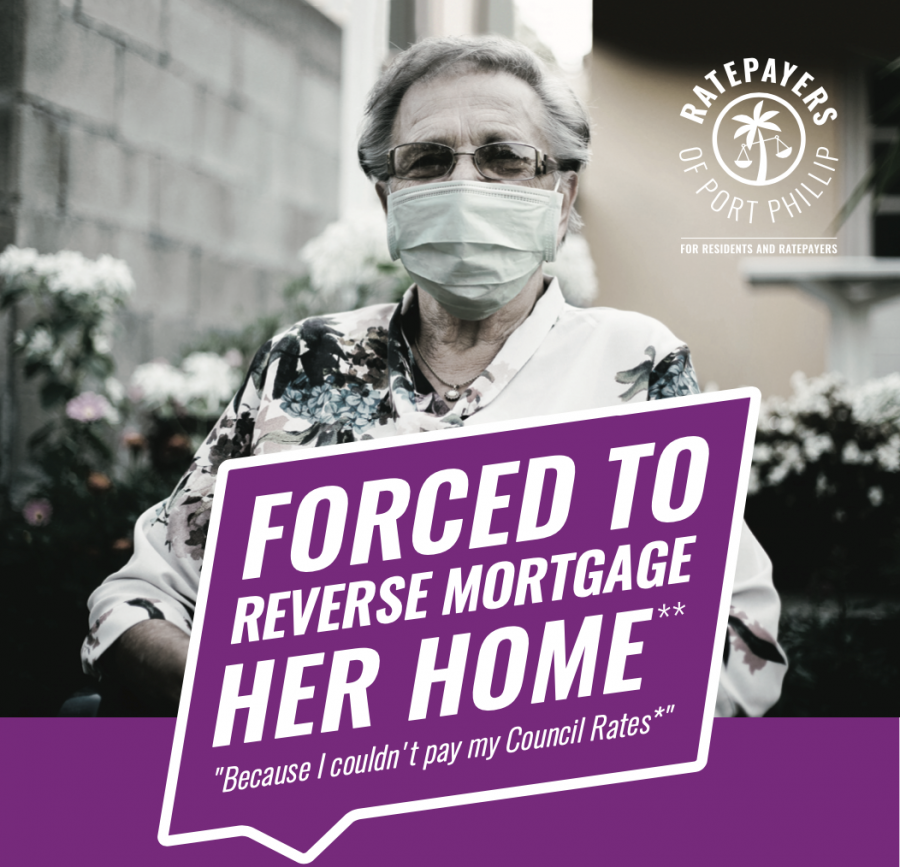
Nous disons - réduire les taux pour les personnes âgées, ne pas les forcer à quitter leur maison ou à s'endetter.
Il y a de nombreux résidents de Port Phillip, comme Tanya*, qui font face au cauchemar du Conseil qui leur demande des tarifs exorbitants sachant qu'avec un petit revenu fixe ou une petite pension, ils ne pourront jamais payer. Dans la plupart des cas, ces résidents sont simplement les victimes innocentes de conseils municipaux excessifs et de tarifs inabordables.
Par exemple, en 1983, lorsqu'Adrian a acheté sa première maison à Middle Park, les tarifs étaient de 500 $ par an. Maintenant, ils sont de 5 000 $, mais le niveau de services n'a pas augmenté de façon substantielle. La solution du conseil à ces résidents en difficulté est d'hypothéquer leur propriété au conseil ou de vendre et de déménager ailleurs. Le conseil a alors une mise en garde sur leurs maisons.
Le maigre "conseil d'aide" fournit aux titulaires d'une carte de retraite
De nombreux résidents retraités de Port Phillip sont des piliers de leurs communautés. Beaucoup sont nés et ont grandi dans les régions où ils vivent maintenant et sont fiers d'habiter nos banlieues. Lorsque le conseil augmente sans relâche les taux à des niveaux jamais vus dans d'autres parties de Melbourne, des questions doivent être posées sur l'équité d'un système de taux qui oblige les personnes âgées à hypothéquer leurs maisons.
Le niveau élevé actuel des taux de Port Phillip ajoute un stress inutile à nos personnes âgées dans une année déjà stressante. Ils veulent juste vivre tranquillement leur vie, avec leurs revenus fixes, dans les maisons où ils ont élevé leur famille.
NOUS DISONS - nous ne devons pas tolérer ce traitement épouvantable de nos personnes âgées et nous exigeons que les tarifs pour les personnes âgées soient réduits. Le Conseil dépense des millions chaque année pour des projets frivoles inspirés par une idéologie qui gaspillent des millions de dollars et ne font qu'augmenter la pression pour ceux qui sont à la retraite. Avec près de 42 % de tous les revenus du Conseil consacrés à l'emploi de 800 à 900 fonctionnaires municipaux, soit beaucoup plus que les conseils voisins, l'une des raisons de nos taux élevés est évidente. Beaucoup semblent exister pour écrire sans cesse des rapports et ne sont pas directement impliqués dans la prestation de services. Il s'agit d'une bureaucratie massive et intéressée qui a beaucoup de place pour l'efficacité et l'amélioration de la productivité afin que nous puissions mieux nous occuper des personnes vulnérables de notre communauté. La vraie charité devrait commencer avec nos contribuables âgés qui sont des résidents de longue date de la ville de Port Phillip.
Honte à nos conseillers et à notre conseil d'avoir endetté nos résidents.
* L'histoire de Tanya est réelle et fait écho dans tout Port Phillip, mais son nom et son visage ont été modifiés pour protéger son identité. Le Conseil offre aux retraités la possibilité de différer le paiement de leurs taux jusqu'à ce que leurs propriétés soient vendues, moment auquel ils perçoivent les taux impayés plus des intérêts de 5 % par an, ce qui est en fait une hypothèque inversée.
Le Conseil a publié son projet de budget 2021-22 pour consultation communautaire. Si vous êtes préoccupé par le projet du Conseil d'augmenter à nouveau les taux et que vous ne l'avez pas déjà fait, veuillez contacter les conseillers suivants et leur demander de ne pas augmenter les taux dans le budget 2021-2022 lorsqu'ils voteront sur la motion le 23 juin.
- Cr Baxter
Tim.Baxter@portphillip.vic.gov.au
0466 495 250 - Cr Copsey
Katherine.Copsey@portphillip.vic.gov.au
0466 478 949 - Maire Crawford
Louise.Crawford@portphillip.vic.gov.au
0466 514 643 - Cr Cunsolo
Heather.Cunsolo@portphillip.vic.gov.au
0466 227 014 - Cr Martin
Peter.Martin@portphillip.vic.gov.au
0435 390 821
Seuls quatre conseillers ont déclaré publiquement qu'ils appuyaient un gel des taux. Elles sont:
- Cr Bond
Andrew.Bond@portphillip.vic.gov.au
0481034028 - Cr Clarke
Rhonda.Clark@portphillip.vic.gov.au
0435 098 738 - Cr Perle
Marcus.Pearl@portphillip.vic.gov.au
0466 448 272 - Cr Sirakoff
Christina.Sirakoff@portphillip.vic.gov.au
0435 419 930
Qu'est-ce que tu devrais savoir d'autre?
Nous croyons que le Conseil doit devenir plus efficace dans la prestation de services à notre communauté. Le Conseil nous a dit qu'un gel des tarifs signifie que les services doivent être réduits, mais nous disons que le Conseil n'a pas besoin de préparer des rapports que personne ne veut ou ne lit. La rédaction d'un rapport de 200 ou 300 pages que personne ne lit n'est pas un service. Si les conseillers votent en faveur d'un gel des taux, le PDG et son équipe devront identifier des gains d'efficacité plutôt que de réduire les services. Le Conseil de Port Phillip nie qu'il y ait un problème de taux à Port Phillip, mais les contribuables ne sont que douloureusement conscients qu'ils paient deux, trois fois ou plus les tarifs payés pour des propriétés de valeur similaire dans les conseils voisins. Le conseil utilise des taux moyens pour comparer Port Phillip à d'autres conseils, mais les taux moyens sont trompeurs et trompeurs parce que nous avons un ratio beaucoup plus élevé d'unités / appartements aux maisons et que cela va dans la moyenne vers un nombre inférieur.
Reportez-vous à Fact Check à https://ropp.org.au/fact-check-how-high-are-port-phillip-rates-compared-to-neighbouring-councils/
UPDATE 15 AUGUST 2020: RoPP campaign successful in delaying new Bin Tax
We are pleased to see that the Bin Tax will not be introduced this financial year, according to Port Phillip’s updated web page.
Thanks to all for your help with our Bin Tax campaign!
The best way to ensure your rates are reduced to be in line with neighbouring councils, is to vote for a RoPP endorsed candidate at the upcoming October election. We will be releasing the exciting news about our endorsed candidates soon, so stay tuned.
- At the 4th December 2019 Council meeting, a “Waste and Amenity levy” was proposed to address the waste crisis, forecasted to add $64 million over the next 10 years to Council’s “rate cap challenge”. RoPP spoke at that meeting in opposition to the new Tax, unless the Council could provide more information.
- We finally received a written response from the CEO on July 2nd 2020, confirming that Council were considering options of how to fund the Bin Tax, including the levy being additional to existing rates.
- Our poster and leaflet campaign to stop the Bin Tax commenced on 30th July 2020.
- Council’s website still detailed the impending Bin Tax. Now those details have been removed, replaced instead with a statement about the deferral.
- Why would Council remove the details from their website? As of writing this, the minutes of the 4th December 2019 Council meeting where the Bin Tax was voted on, are also no longer available on their website. Further, we have discovered that almost 20 years of Council meeting agendas & minutes have been removed in the last week.
- Please refer to the end of this webpage for details of the Essential Services Commission’s role in waste levies.
The facts and our transparency speak for themselves. The Council’s backdown on a new Bin Tax shows that our campaign has had an impact. Council have rightly recognised the harshness of introducing a new tax on top of the burden of existing rates, in a time of economic crisis.
Port Phillip Council is one of the highest spending councils in the state and are now proposing to introduce an additional Waste and Amenity levy on top of the exorbitant rates you already pay.
See https://ropp.org.au/fact-check-how-high-are-port-phillip-rates-compared-to-neighbouring-councils/
So in addition to a 2% increase to total rates collected this year (the maximum allowable under the State government’s rate cap system), you would have to pay a levy for ‘Waste and Amenity’, “A BIN TAX” on this fundamental service. This would severely impact both ratepayers and residents at a time when many have lost their livelihoods, incomes and ability to pay.
Council claims that the reason they need to charge a new levy is because waste costs are rising at a greater pace than inflation. There are two issues with this:
1. Waste management, a core service of council, only accounts for 5.3% of the Port Phillip budget[1], meaning that even if this component increased by 10% per year, the effect on the overall budget would only be around 1-1.2%, well within the 2% rate cap.
2. Competent management should be able to absorb this fundamental service easily, by forecasting these cost issues and re-prioritising their budget accordingly. Instead, the majority of the 2% increase in general rates will go towards wage rises for staff, which council has stubbornly refused to address (or even acknowledge).
Council wants to take the easy way out yet again, by charging ratepayers a new BIN TAX instead of doing the hard work necessary to manage the budget.
The waste and amenity levy (BIN TAX) would sit outside the 2% annual rate cap imposed by the Essential Services Commission. This gives council the option to increase the levy by whatever amount it wishes, and you can be sure it will – council will use the levy to fund its inability to manage its own budget. Council describes this inability to live within their own means the ‘rate capping challenge’.
IT’S A NEW TAX ON TOP OF YOUR EXISTING RATES
Councillors did not want to be held accountable at the ballot box for introducing a new tax this year, so have deferred its introduction until after the election. We are here to highlight the issue so that you have the chance to stop council by voting for an independent candidate that will vote against the BIN TAX and hold the council to account. Keep an eye on our website for an independent review of candidates running in the October election.
We say:
1. ROPP does not support the introduction of a Waste and Amenity Levy in addition to the burden of existing rates. Council need to get the budget under control instead of taking the easy way out: a new Bin Tax
2. Now is not the time to impose new taxes on a struggling economy. It’s not fair and it needs to be stopped.
Essential Services Commission’s role in waste levies
Council can levy a new charge in addition to existing rates, just like two councils did in 2018-19. This is subject to the oversight of the Essential Services Commission, however Councils retain full autonomy to introduce new charges. Council can opt to introduce a waste levy in a revenue neutral way, reducing general rates by the same amount that the new levy raises. This is what Maribyrnong did in 2019-20.
As Port Phillip Council said themselves on the now removed ‘waste challenges’ webpage :
“Council is also considering a proposal to introduce a waste and amenity levy, which would be a payment separate to Council rates to cover some, or all, of the costs incurred by council to deliver waste, recycling and cleansing services. This would enable Council to set a service rate or charge (levy) that’s in line with the true cost of the service.

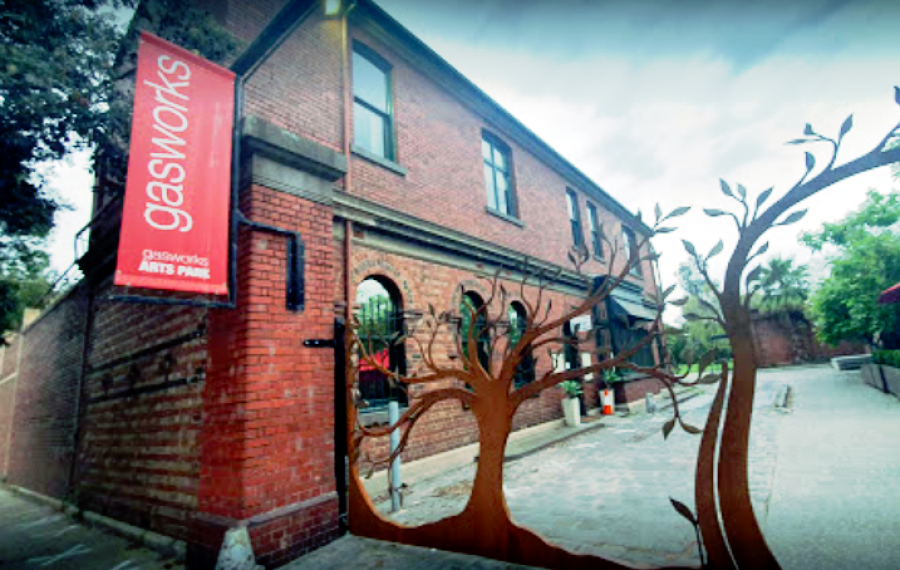
Gasworks Arts Park compte seize artistes visuels résidents et une petite équipe de professionnels qui travaillent pour présenter un programme annuel de festivals et d'événements, y compris des saisons avec certains des principaux festivals d'arts de Melbourne, des marchés de producteurs, des cours et des ateliers, des opportunités de développement créatif et professionnel pour artistes, émissions pour enfants et plus encore. De plus, plus de 200 événements d'arts de la scène et 30 expositions d'arts visuels sont présentés dans le lieu chaque année.
Gasworks est situé à Albert Park, Melbourne, sur le site de l'ancienne usine à gaz de South Melbourne. Il se trouve à trois kilomètres du CBD et l'enceinte abrite quatre hectares de parc, deux théâtres, trois espaces de galerie, un café, ainsi que des espaces de réception et d'atelier.
Quoi de neuf https://www.gasworks.org.au/whats-on
Référence Google Map : -37.843317, 144.946260
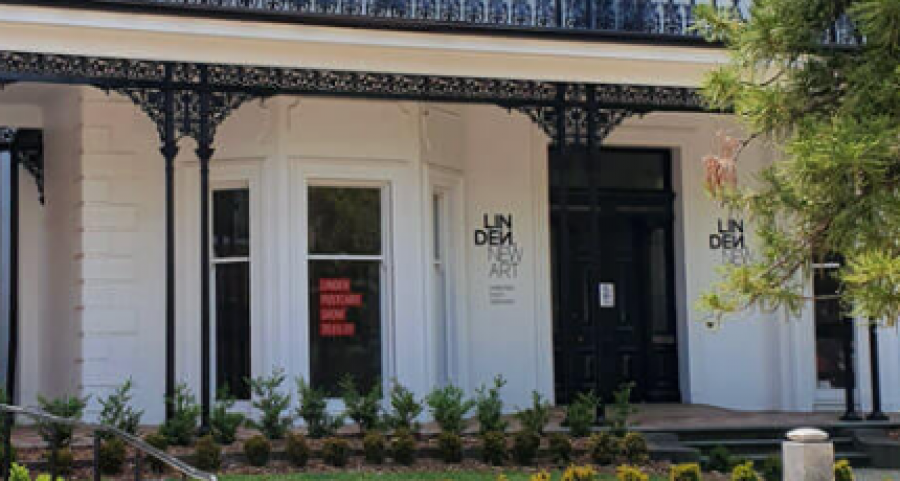
Ils sollicitent régulièrement des candidatures d'artistes et de conservateurs pour postuler à des expositions de groupe ou en solo et donnent la préférence aux artistes et aux conservateurs vivant et travaillant dans la ville de Port Phillip.
"Le terrain où se trouve maintenant Linden New Art a été acheté en 1870 par l'immigrant juif Moritz Michaelis (1820-1902). Le manoir victorien a été construit en 1871 par le célèbre architecte Alfred Friedrich Kursteiner (1829-1897) et les jardins environnants ont été conçus par paysagiste et botaniste, William Guilfoyle (1840-1912), qui a également conçu les jardins botaniques royaux de Melbourne. Michaelis a nommé la maison Linden, ce qui signifie « Tilleul » en allemand. » - https://www.lindenarts.org/about-us/


« Nous ne sommes pas seulement les athlètes. Nous sommes des gens après tout, et parfois vous devez prendre un pas en arrière », a déclaré américain gymnaste Simone Biles mardi comme elle a quitté l'arène des Jeux olympiques de Tokyo.
Ce mercredi, Biles a également démissionné de la participation à la première finale individuelle de gymnastique artistique à Tokyo 2020, qui se tiendra jeudi.
Il n'a pas encore confirmé s'il participera les prochains jours à l'autre finales à ceux qui se sont qualifiés à Tokyo. saut et aux barres asymétriques (le dimanche 1er Août), solitaire (le lundi 2 Août) et poutre d'équilibre (le mardi 30)
Bien que pas tous les le monde a la visibilité de Biles ou vit sous la pression que les athlètes sont soumis à la plus importante compétition dans le monde, le geste de l'athlète peut servir de leçon et de réflexion pour tout le monde, selon les spécialistes de la santé mentale interrogés par la BBC Nouvelles Brésil.
"Aujourd'hui, on parle plus de santé mentale dans le sport, la musique, l'éducation... et le fait ho qu'il soit discuté démystifie la question ", déclare la psychiatre clinicienne Lívia Castelo Branco.
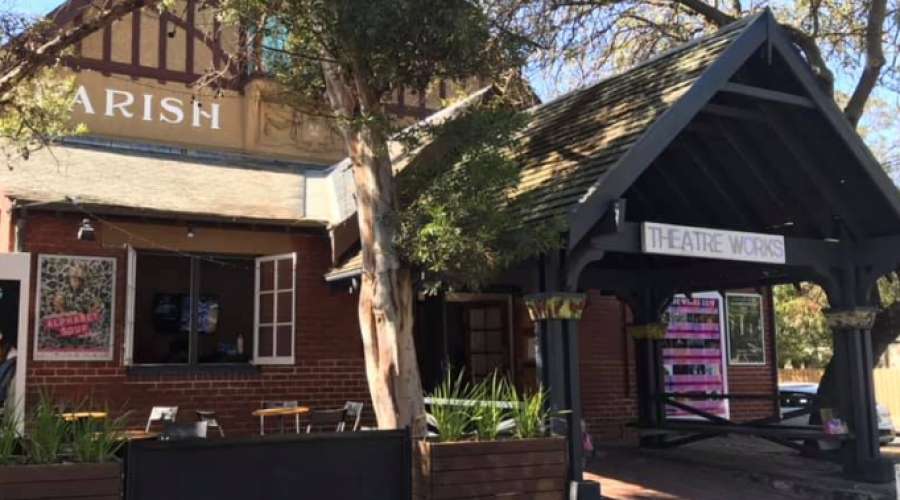
Quoi de neuf sur https://www.theatreworks.org.au/now-playing/2021-season-program/
Google Map Réf: -37.86419612298049, 144.9760729411019

Heather Cunsolo 0466 227 014
Heather.Cunsolo@portphillip.vic.gov.au
Catherine Copsey 0466 478 949
Katherine.Copsey@portphillip.vic.gov.au
Pierre Martin 0435 390 821
Peter.Martin@portphillip.vic.gov.au
Louise Crawford 0466 514 643
Louise.Crawford@portphillip.vic.gov.au
Tim Baxter 0466 495 250
Tim.Baxter@portphillip.vic.gov.au
Cinq conseillers déconnectés - Cunsolo, Baxter, Copsey, Martin et Crawford - ont fait preuve de mépris pour les résidents et les contribuables.
Cinq conseillers - ont voté contre un gel des taux en ces temps difficiles de Covid. Cela n'a coûté que 1,98 million de dollars.
Cinq conseillers - ont refusé un gel des tarifs, malgré le fait que le conseil prévoyait un excédent de trésorerie de 4,4 millions de dollars plus 2,3 millions de dollars de nouvelles propriétés.
Cinq conseillers - ont ensuite augmenté les dépenses de 1,35 million de dollars en cadeaux et projets pour animaux de compagnie pour les groupes minoritaires, offrant peu à l'ensemble de la communauté.
NOUS DISONS
Gardez la politique hors de Port Phillip. Les résidents reçoivent très peu pour les tarifs exorbitants que nous payons. Il est temps de pointer du doigt les conseillers qui augmentent nos tarifs, gaspillent de l'argent et travaillent contre les intérêts des résidents et des contribuables. Si ces cinq conseillers ne peuvent pas voter pour un gel des tarifs pendant COVID, quand le feront-ils ?
UPDATE 15 AUGUST 2020: RoPP campaign successful in delaying new Bin Tax
We are pleased to see that the Bin Tax will not be introduced this financial year, according to Port Phillip’s updated web page.
Thanks to all for your help with our Bin Tax campaign!
The best way to ensure your rates are reduced to be in line with neighbouring councils, is to vote for a RoPP endorsed candidate at the upcoming October election. We will be releasing the exciting news about our endorsed candidates soon, so stay tuned.
- At the 4th December 2019 Council meeting, a “Waste and Amenity levy” was proposed to address the waste crisis, forecasted to add $64 million over the next 10 years to Council’s “rate cap challenge”. RoPP spoke at that meeting in opposition to the new Tax, unless the Council could provide more information.
- We finally received a written response from the CEO on July 2nd 2020, confirming that Council were considering options of how to fund the Bin Tax, including the levy being additional to existing rates.
- Our poster and leaflet campaign to stop the Bin Tax commenced on 30th July 2020.
- Council’s website still detailed the impending Bin Tax. Now those details have been removed, replaced instead with a statement about the deferral.
- Why would Council remove the details from their website? As of writing this, the minutes of the 4th December 2019 Council meeting where the Bin Tax was voted on, are also no longer available on their website. Further, we have discovered that almost 20 years of Council meeting agendas & minutes have been removed in the last week.
- Please refer to the end of this webpage for details of the Essential Services Commission’s role in waste levies.
The facts and our transparency speak for themselves. The Council’s backdown on a new Bin Tax shows that our campaign has had an impact. Council have rightly recognised the harshness of introducing a new tax on top of the burden of existing rates, in a time of economic crisis.
Port Phillip Council is one of the highest spending councils in the state and are now proposing to introduce an additional Waste and Amenity levy on top of the exorbitant rates you already pay.
See https://ropp.org.au/fact-check-how-high-are-port-phillip-rates-compared-to-neighbouring-councils/
So in addition to a 2% increase to total rates collected this year (the maximum allowable under the State government’s rate cap system), you would have to pay a levy for ‘Waste and Amenity’, “A BIN TAX” on this fundamental service. This would severely impact both ratepayers and residents at a time when many have lost their livelihoods, incomes and ability to pay.
Council claims that the reason they need to charge a new levy is because waste costs are rising at a greater pace than inflation. There are two issues with this:
1. Waste management, a core service of council, only accounts for 5.3% of the Port Phillip budget[1], meaning that even if this component increased by 10% per year, the effect on the overall budget would only be around 1-1.2%, well within the 2% rate cap.
2. Competent management should be able to absorb this fundamental service easily, by forecasting these cost issues and re-prioritising their budget accordingly. Instead, the majority of the 2% increase in general rates will go towards wage rises for staff, which council has stubbornly refused to address (or even acknowledge).
Council wants to take the easy way out yet again, by charging ratepayers a new BIN TAX instead of doing the hard work necessary to manage the budget.
The waste and amenity levy (BIN TAX) would sit outside the 2% annual rate cap imposed by the Essential Services Commission. This gives council the option to increase the levy by whatever amount it wishes, and you can be sure it will – council will use the levy to fund its inability to manage its own budget. Council describes this inability to live within their own means the ‘rate capping challenge’.
IT’S A NEW TAX ON TOP OF YOUR EXISTING RATES
Councillors did not want to be held accountable at the ballot box for introducing a new tax this year, so have deferred its introduction until after the election. We are here to highlight the issue so that you have the chance to stop council by voting for an independent candidate that will vote against the BIN TAX and hold the council to account. Keep an eye on our website for an independent review of candidates running in the October election.
We say:
1. ROPP does not support the introduction of a Waste and Amenity Levy in addition to the burden of existing rates. Council need to get the budget under control instead of taking the easy way out: a new Bin Tax
2. Now is not the time to impose new taxes on a struggling economy. It’s not fair and it needs to be stopped.
Essential Services Commission’s role in waste levies
Council can levy a new charge in addition to existing rates, just like two councils did in 2018-19. This is subject to the oversight of the Essential Services Commission, however Councils retain full autonomy to introduce new charges. Council can opt to introduce a waste levy in a revenue neutral way, reducing general rates by the same amount that the new levy raises. This is what Maribyrnong did in 2019-20.
As Port Phillip Council said themselves on the now removed ‘waste challenges’ webpage :
“Council is also considering a proposal to introduce a waste and amenity levy, which would be a payment separate to Council rates to cover some, or all, of the costs incurred by council to deliver waste, recycling and cleansing services. This would enable Council to set a service rate or charge (levy) that’s in line with the true cost of the service.
Demandez à ces 5 conseillers 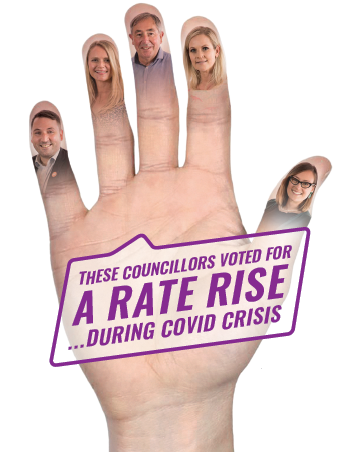
Heather Cunsolo 0466 227 014
Heather.Cunsolo@portphillip.vic.gov.au
Catherine Copsey 0466 478 949
Katherine.Copsey@portphillip.vic.gov.au
Pierre Martin 0435 390 821
Peter.Martin@portphillip.vic.gov.au
Louise Crawford 0466 514 643
Louise.Crawford@portphillip.vic.gov.au
Tim Baxter 0466 495 250
Tim.Baxter@portphillip.vic.gov.au
Cinq conseillers déconnectés - Cunsolo, Baxter, Copsey, Martin et Crawford - ont fait preuve de mépris pour les résidents et les contribuables.
Cinq conseillers - ont voté contre un gel des taux en ces temps difficiles de Covid. Cela n'a coûté que 1,98 million de dollars.
Cinq conseillers - ont refusé un gel des tarifs, malgré le fait que le conseil prévoyait un excédent de trésorerie de 4,4 millions de dollars plus 2,3 millions de dollars de nouvelles propriétés.
Cinq conseillers - ont ensuite augmenté les dépenses de 1,35 million de dollars en cadeaux et projets pour animaux de compagnie pour les groupes minoritaires, offrant peu à l'ensemble de la communauté.
NOUS DISONS
Gardez la politique hors de Port Phillip. Les résidents reçoivent très peu pour les tarifs exorbitants que nous payons. Il est temps de pointer du doigt les conseillers qui augmentent nos tarifs, gaspillent de l'argent et travaillent contre les intérêts des résidents et des contribuables. Si ces cinq conseillers ne peuvent pas voter pour un gel des tarifs pendant COVID, quand le feront-ils ?
UPDATE 15 AUGUST 2020: RoPP campaign successful in delaying new Bin Tax
We are pleased to see that the Bin Tax will not be introduced this financial year, according to Port Phillip’s updated web page.
Thanks to all for your help with our Bin Tax campaign!
The best way to ensure your rates are reduced to be in line with neighbouring councils, is to vote for a RoPP endorsed candidate at the upcoming October election. We will be releasing the exciting news about our endorsed candidates soon, so stay tuned.
- At the 4th December 2019 Council meeting, a “Waste and Amenity levy” was proposed to address the waste crisis, forecasted to add $64 million over the next 10 years to Council’s “rate cap challenge”. RoPP spoke at that meeting in opposition to the new Tax, unless the Council could provide more information.
- We finally received a written response from the CEO on July 2nd 2020, confirming that Council were considering options of how to fund the Bin Tax, including the levy being additional to existing rates.
- Our poster and leaflet campaign to stop the Bin Tax commenced on 30th July 2020.
- Council’s website still detailed the impending Bin Tax. Now those details have been removed, replaced instead with a statement about the deferral.
- Why would Council remove the details from their website? As of writing this, the minutes of the 4th December 2019 Council meeting where the Bin Tax was voted on, are also no longer available on their website. Further, we have discovered that almost 20 years of Council meeting agendas & minutes have been removed in the last week.
- Please refer to the end of this webpage for details of the Essential Services Commission’s role in waste levies.
The facts and our transparency speak for themselves. The Council’s backdown on a new Bin Tax shows that our campaign has had an impact. Council have rightly recognised the harshness of introducing a new tax on top of the burden of existing rates, in a time of economic crisis.
Port Phillip Council is one of the highest spending councils in the state and are now proposing to introduce an additional Waste and Amenity levy on top of the exorbitant rates you already pay.
See https://ropp.org.au/fact-check-how-high-are-port-phillip-rates-compared-to-neighbouring-councils/
So in addition to a 2% increase to total rates collected this year (the maximum allowable under the State government’s rate cap system), you would have to pay a levy for ‘Waste and Amenity’, “A BIN TAX” on this fundamental service. This would severely impact both ratepayers and residents at a time when many have lost their livelihoods, incomes and ability to pay.
Council claims that the reason they need to charge a new levy is because waste costs are rising at a greater pace than inflation. There are two issues with this:
1. Waste management, a core service of council, only accounts for 5.3% of the Port Phillip budget[1], meaning that even if this component increased by 10% per year, the effect on the overall budget would only be around 1-1.2%, well within the 2% rate cap.
2. Competent management should be able to absorb this fundamental service easily, by forecasting these cost issues and re-prioritising their budget accordingly. Instead, the majority of the 2% increase in general rates will go towards wage rises for staff, which council has stubbornly refused to address (or even acknowledge).
Council wants to take the easy way out yet again, by charging ratepayers a new BIN TAX instead of doing the hard work necessary to manage the budget.
The waste and amenity levy (BIN TAX) would sit outside the 2% annual rate cap imposed by the Essential Services Commission. This gives council the option to increase the levy by whatever amount it wishes, and you can be sure it will – council will use the levy to fund its inability to manage its own budget. Council describes this inability to live within their own means the ‘rate capping challenge’.
IT’S A NEW TAX ON TOP OF YOUR EXISTING RATES
Councillors did not want to be held accountable at the ballot box for introducing a new tax this year, so have deferred its introduction until after the election. We are here to highlight the issue so that you have the chance to stop council by voting for an independent candidate that will vote against the BIN TAX and hold the council to account. Keep an eye on our website for an independent review of candidates running in the October election.
We say:
1. ROPP does not support the introduction of a Waste and Amenity Levy in addition to the burden of existing rates. Council need to get the budget under control instead of taking the easy way out: a new Bin Tax
2. Now is not the time to impose new taxes on a struggling economy. It’s not fair and it needs to be stopped.
Essential Services Commission’s role in waste levies
Council can levy a new charge in addition to existing rates, just like two councils did in 2018-19. This is subject to the oversight of the Essential Services Commission, however Councils retain full autonomy to introduce new charges. Council can opt to introduce a waste levy in a revenue neutral way, reducing general rates by the same amount that the new levy raises. This is what Maribyrnong did in 2019-20.
As Port Phillip Council said themselves on the now removed ‘waste challenges’ webpage :
“Council is also considering a proposal to introduce a waste and amenity levy, which would be a payment separate to Council rates to cover some, or all, of the costs incurred by council to deliver waste, recycling and cleansing services. This would enable Council to set a service rate or charge (levy) that’s in line with the true cost of the service.