Original 1st Heading
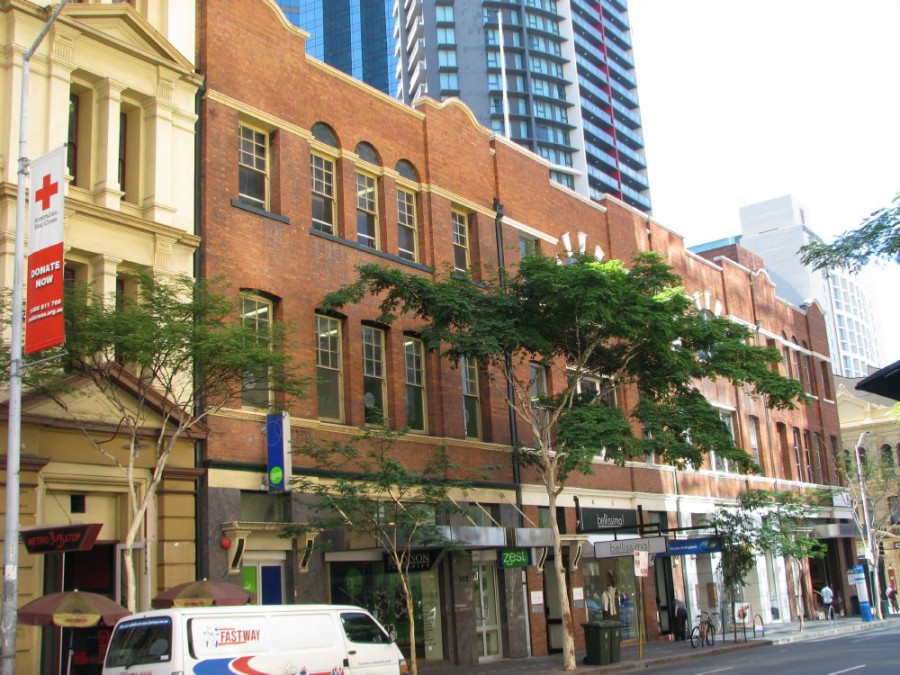
This building was constructed in 1910. Recognising the investment potential of this warehouse precinct, Horace Edwin Broughton Young and Charles Ernest Young purchased the site of the Commercial Hotel for redevelopment in July 1909. The Young family founded the Fairymead Sugar Company Limited in 1879 which by 1912 was one of the largest mills in the Southern Hemisphere.

The timber framed brick warehouse constructed on this site in 1910, at a cost of £16 000, was three storeys high, with a basement, and a fourth storey on the corner section. The building was leased the same year to Queensland Agency Company (merchants), Kronheimer Ltd (tobacco and cigar merchants) and Gregory and Davidson (merchants and arrowroot manufacturers). On 30 April 1912 fire broke out in the corner section of Youngs Building, occupied by the Queensland Agency and caused considerable damage to parts of the building and much of the stock kept on the premises. The fourth floor collapsed and was never rebuilt, leaving the repaired building three storeys throughout.

In 1923 the property was subdivided. Subdivision 1 was acquired by W. D. Wills and HO Wills (Australia) Ltd (tobacco merchants) and John Simon Goldman and Ernest Victor Goldman, warehousemen, purchased subdivision 3. After Horace Young's death in December 1925, the remaining subdivisions were sold to Taubmans (Qld) Ltd and Arthur Cocks and Co, merchants. Change of ownership occurred in 1968 and subsequently the building has provided office space for numerous commercial tenants.
...di più

Ron's Rant by Ron

Don't get me started . . . . I am sick and tired of our media always referring to “The Government” whenever they set out to blame some lame politician or political party. "The Government" has done this wrong or “Our Government” has done that wrong, this or that minister should be sacked. Our media pointing their bony fingers at the political party or politician rather than scratching the surface and digging a little deeper looking for the real culprits. The truth is that politicians are here today and gone tomorrow. While they are seen as the power that is steering our ship, they actually only have a short time at the wheel and are only in it for an opportunistic politically motivated ego manic good time... Not a long time. Driving our nation forever forward are our Public Servants. 

When people refer to “The Government’ what they are often referring to is our public service system. The real engine room of our country that is tasked with running our nation for the long term, navigating and planning for our future, implementing changes and identifying and planning for future challenges, proactively defending our nation from potential threats and embracing potential opportunities. 

Unfortunately this engine room has broken down. It is no longer fit for the purpose it was conceived for. The ongoing COVID fiasco has highlighted the shortfalls of our Public Service. It has become a moribund, dumbed down and bloated entity that does very little, very slowly. Brain dead and rotting, this system feeds off our taxes, unable to predict the future needs of our nation, unable to make decisions and is totally bogged down with indecision and an no ability to efficiently implement change. At every level, Federal, State and Local, the system is overpaid, underworked and not providing our community the value that it rightly deserves. Our public service operates in a parallel universe to the rest of us hardworking taxpaying soldiers. They live in a world so devoid of commercial reality, they run to their own tune at a glacial pace. They are hindered by their own internal politics, overloaded with meetings, stifled by internal systems and neutered with growing political correctness that slows activity by binding any action for fear of offending anyone or anything.

Where has our brains trust gone? We once were a self sufficient nation where our public service actually produced goods and services. The Gas and Fuel, PMG, Comm Bank, Board of Works, SEC to name a few government run institutions that looked after its people by providing the necessary basic services that made our country great, only to be sold off piecemeal for a pittance to fund the short-term whims of greedy politicians. In turn, we lost a lot of clever, proactive and talented public servants that cared for the good of their fellow community and were not motivated by greed and political point scoring.They had important jobs to do that benefited our nation at every level Federal, State and locally. These Public Servants were doers that had a job to do and did it well. 

Our system is now broken and is a bureaucratic, paper shuffling, do little, bloated rats nest of overpaid hordes, who shuffle around creating useless reports, doling out billions to the snouts in the trough private sector that actually do the work … even report writing. Our Public Servants can't even manage these projects without blowouts costing taxpayers billions more that they should be paying, with little concern for this mismanagement. In the private sector this would not happen and heads would roll, but our untouchable and unaccountable Public Servants don't suffer the same fate and live in their own rarefied air of impunity. They simply protect themselves by pointing the finger at their here today, gone tomorrow “Political Masters”. 

Why do we put up with this? Where is the accountability? I say to our media stop being so lazy and do your job by digging a little deeper and finding the real truth rather than some superficial headline grabbing puffery.  Without seeking to be protective of our politicians let's be realistic about who is really running our country and call out the real culprits. 

From a local perspective I have seen how our own Councillors are manipulated and used to rubber stamp agendas and initiatives of our local government. Councillors are only there to protect the jobs of the 900 or so employees of The City of Port Phillip serving as their scapegoats. They have their own self serving internal agendas and political biases… Rather than serving their communities needs and wishes they follow their own path. Having stacked the deck in their own favour they make up their own rules to how things should be run. Did you know that a Councillor cannot even talk to a council employee and is mandated to go through the CEO or senior management? The system has evolved to "go slow” and do very little more. Is it any wonder why things take so long through council?

Don't get me started but our PUBLIC SERVICE is broken. They should be providing service to the public. Not the other way around.

...di più

In Melbourne’s evolving landscape, the Council of Port Phillip’s recently proposed Inkerman Safety Improvement Project offers a significant, albeit contentious, addition to the city’s infrastructure. Although there are safety concerns that need to be addressed, there is little or no consideration of the impact of reduced carparking on residents and businesses on Inkerman Road and side streets. While the initiative aims to enhance road safety and pedestrian well-being, it also joins a lineage of road and bike lane projects that have sparked heated debates and policy reversals.

The immediate concern tied to the Inkerman Project is the apparent oversight concerning its impact on residential and business car parking. While there are valid safety concerns that demand redressal, the project seems to give little to no consideration to the reduction in parking availability on Inkerman Road and adjacent streets. Such an omission reflects a pattern seen in previous council projects, where practicalities affecting daily life are often sidelined.

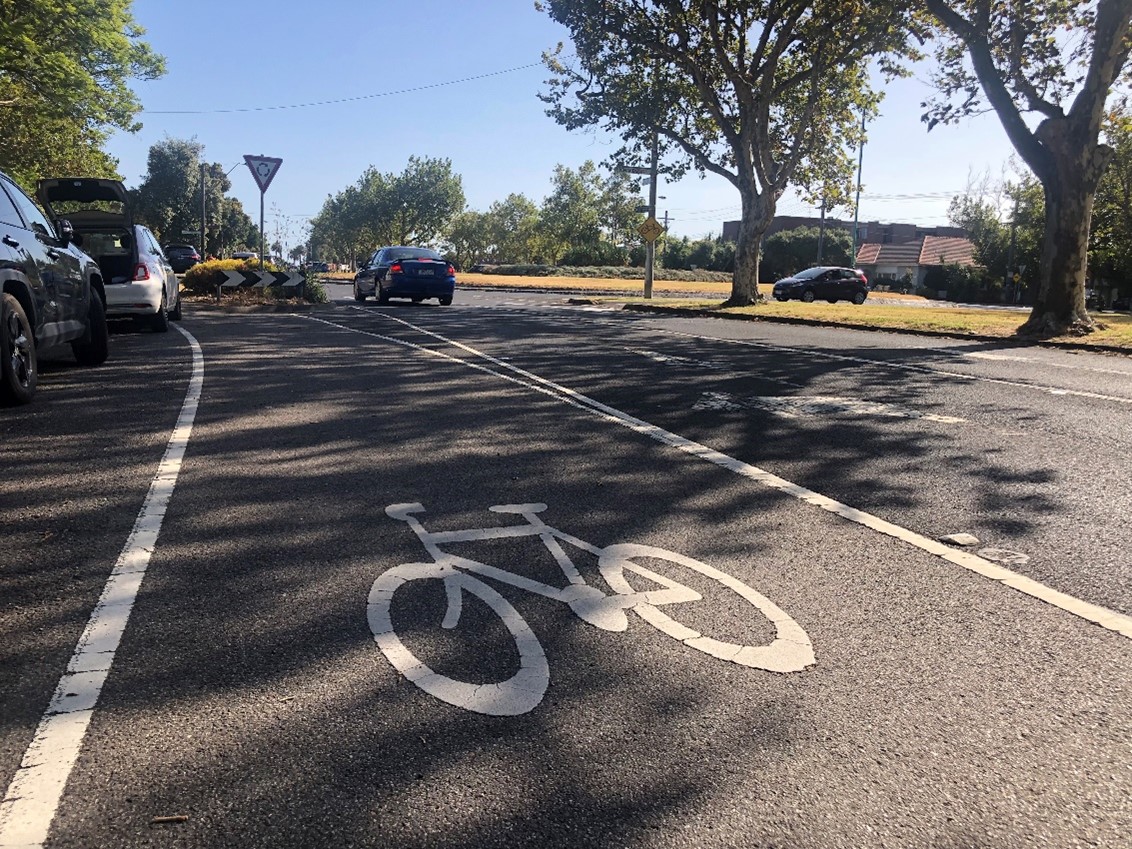
Moreover, the council is currently soliciting feedback on two design options for bicycle lanes on Inkerman Road between St Kilda Road and Hotham Street. Option A is a physically protected bike lane which results in the removal of 116 carparks between St Kilda Road and Hotham Street and Option B is a painted bike lane with the loss of 20 carparks.

However, given its track record of nebulous consultation processes, one can’t help but question the efficacy of this outreach. Is this a genuine attempt to integrate community input, or another box-ticking exercise in public engagement?

A glaring example of such oversight is the Council’s recent misadventure with the Kerferd Road plan, a project that faced vehement community opposition and was eventually rescinded. As a resident astutely noted, the council seemed to be “wilfully ignoring” the populace who had earlier advocated against poorly designed bike lanes. The council’s decision to reintroduce the Kerferd Road proposal, despite known public opposition, raises unsettling questions about the Inkerman Project’s community engagement process.

Furthermore, much like the contentious Kerferd Road proposal, the Inkerman Project aims to introduce new bike lanes and reconfigure existing ones. While promoting cycling is commendable, the Council’s previous floundering with similar initiatives calls for a more considered approach. Past projects like “Shrine to Sea” and pop-up bike lanes have been discontinued, creating a state of “bike lane fatigue” among residents. This turbulent history makes it difficult for any new proposals, such as the Inkerman Project, to be met with enthusiasm.

The Inkerman Safety Improvement Project presents a complex challenge. Its laudable goals are overshadowed by a history of failed community engagements and inadequate planning. From overlooking basic necessities like parking to erratic stances on bike lanes, the Council of Port Phillip must rethink its strategy if the Inkerman Project is to avoid becoming yet another footnote in a string of well-intentioned but poorly executed initiatives.

As the adage goes, those who cannot remember the past are condemned to repeat it. The Council finds itself at a crossroads: learn from past failures or proceed on a course that may lead to another planning debacle.


Council is currently asking residents for feedback on two design options for bicycle lanes in Inkerman Road between  St Kilda Road and Hotham Street, St Kilda East”. Provide your feedback https://haveyoursay.portphillip.vic.gov.au/help-improve-road-safety-inkerman-street


...di più
Preparing for 2 Squadron RAAF

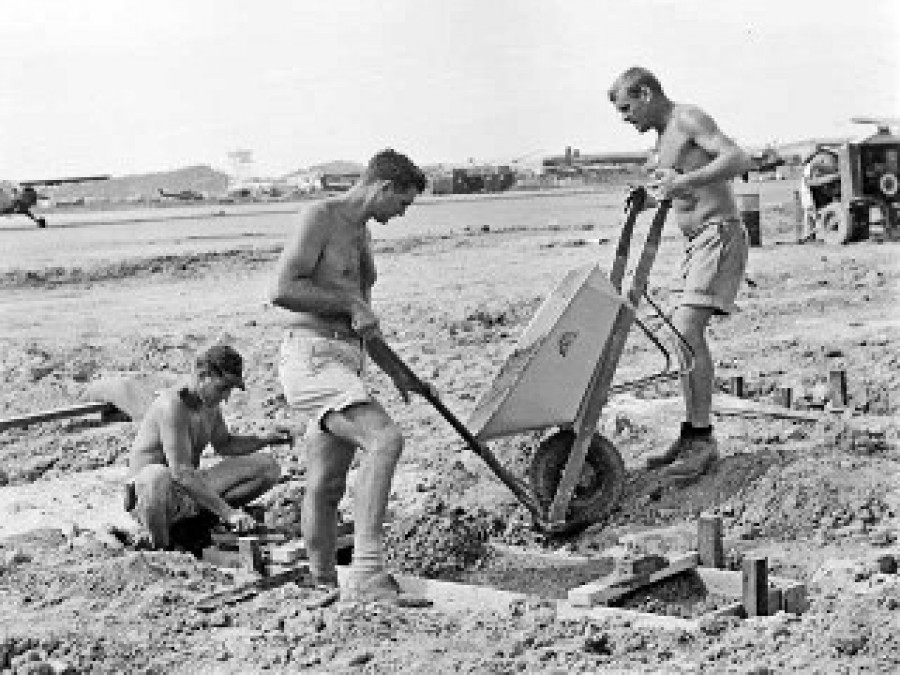
In February 1967 a detachment from 5 Airfield Construction Squadron along with a small 2 Squadron advance party arrived at Phang Rang Air Base, 250 km north-east of Saigon to prepare for the Squadrons arrival. The Australians were welcomed to Vietnam (on radio) by "Hanoi Hanna".

In the words of former RAAF Sergeant Robert ‘Ron’ Campbell, who served with 5 ACs and 2 Squadron in Vietnam: "The 5ACS detachment arrived in Saigon from Singapore where we were ushered straight onto a Caribou to Vung Tau. At Vung Tau we were given a quick meal,
issued with weapons, loaded back onto the Caribou and flown to Phang Rang. You can imagine the look on the faces of the Americans who were waiting with movie cameras rolling to welcome the Aussies in their slouch hats, only to be greeted by a group of people, dressed in new suits (purchased) in Singapore) with rifles over their shoulders!"

The airfield construction men worked in cooperation with American troops. They worked long hours to construct 2 Squadron's living quarters, messes, dining hall, headquarters and maintenance hangar.

Information supplied by Brendan Lynch, Secretary of the RAAF Vietnam Veterans Association
...di più
Last Week
There are good reasons for not implementing this and other road closures

By a concerned Mills Street Resident

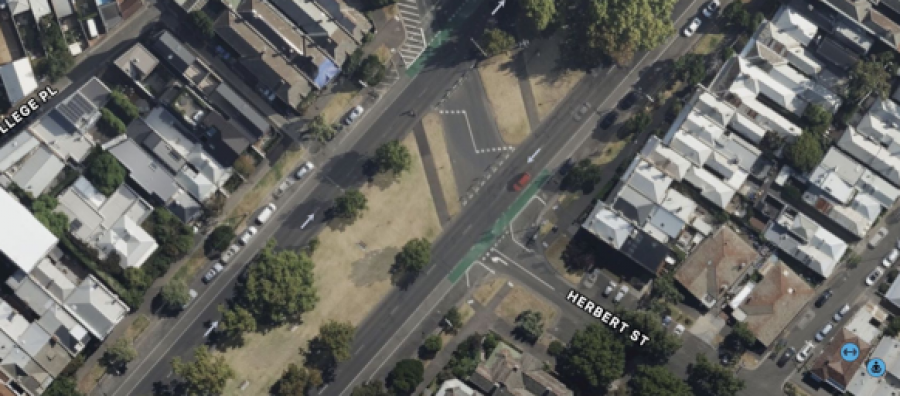
Image attribution: Google Image of Herbert-Montague Street and Kerferd Road intersection

There is increasing concern regarding the proposed Shrine-to-Sea Avenue proposed by the Victorian Government in partnership with the City of Port Phillip. Residents are concerned the project may not only divide Port Phillip but also divide the Albert Park locality. The path to Beaconsfield Parade from Kingsway along Albert Street and Kerferd Road is already clearly delineated.  Source

Many residents have voiced their concern that a dedicated path with intersecting side roads blocked off will seriously and permanently create a barrier that will have an effect similar to that which occurred when the enforced Kingsway was forged through the middle of South Melbourne – creating a freeway dividing the then city into two distinct areas with little communication between.

Residents are concerned that the closure at Herbert-Montague Street and Kerferd Road, Albert Park may be the beginning of a series of Council planned closures to implement this divisive community policy. 

The Herbert and Montague Streets closure now appears to be permanent following extensive delays of the trial that started in February 2021, with the traffic data collection. The Council website states  ‘Due to Covid-19 restrictions, we have been unable to record the final traffic data counts and will conduct these as soon as restrictions ease. Until this time the trial will remain in place’. Source

There are good reasons for not implementing this and other road closures:

1. An inconvenient barrier to the Albert Park shopping centre from the east of Kerferd Road and to Middle Park from the Albert Park side.

2. All street closures have negative impact on other surrounding streets by re-directing and increasing traffic in an abnormal pattern. Traffic will be increased on: 

  • a. Canterbury Road
  • b. Hambleton Street
  • c. Richardson Street
  • d. Merton Street
  • e. O’Grady Street
  • f. Little O’Grady Street
  • g. Finlay Street

3. Inhibits community interaction for an ageing population

4. It is not any safer for pedestrians or cyclists

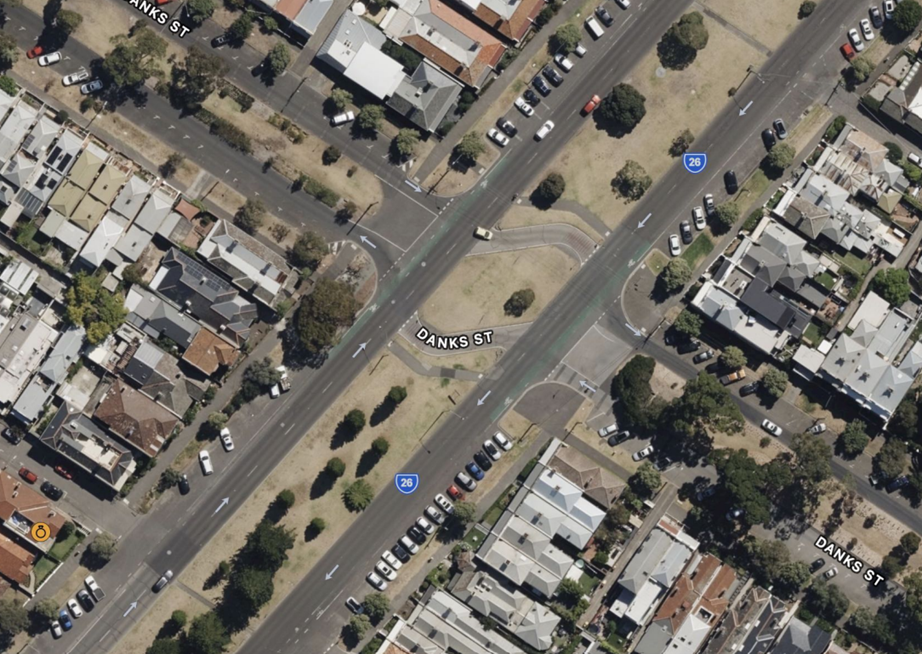
The traffic management solution at Danks Street where it crosses Kerferd Road (see Google image below) has worked well to remove the vehicle danger of the intersection. If prevention of vehicle accidents is the concern, then a similar solution can easily be implemented at the Montague-Herbert Street intersection with Kerferd Road.


...di più
Good MorningImage Caption
The article provides information about activities and events as well as links to relevant third-party websites.
Image Caption


...di più
Like many buildings of its age, Cooper’s Inn has served a variety of purposes. Built in 1853 in has been in turn a lodging house, a Chinese factory and Melbourne City Mission.
...di più
The more people we help the more friends we make

ROPP is a community focused association that advocates for all residents, businesses, and ratepayers on local matters. ROPP are here for you, and they have a name refresh.

Campbell Spence, President of ROPP said “We are passionate about maintaining our heritage, diverse community, and we want Council to serve their community rather than serving the Port Phillip bureaucracy, minority vested interests and political parties”. 

We are active informing and assisting the community on issues often related to council matters as they happen, and as such the more people we help the more friends we make.

When ROPP was first established in 2018 we advocated for affordable rates, better core services, less wasteful spending by our Council. We represent a broader community, which while seldom heard or seen, are also often in the majority on many council matters.

Frequently members of our community need assistance and feel alone and helpless when faced with a council that will not help them.   These are ratepayers, businesses, residents, and property owners that are not resident.

As such ‘Residents of Port Phillip’ better reflects the assistance we offer all those who reside here in one form or another.

If you would like to help or contribute or learn more 

Email: mail@ropp.org.au

Web: https://ropp.org.au/

Facebook: https://www.facebook.com/groups/RoPP


...di più
Ask questions of three elected Victorian Government representatives

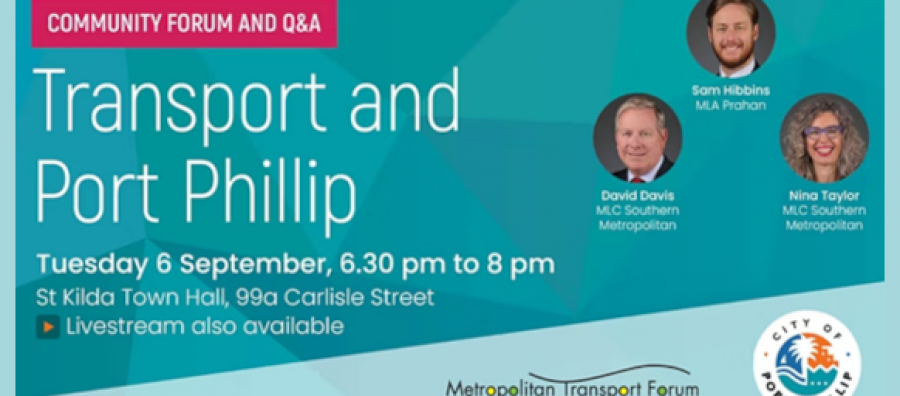
A Community Forum scheduled for Tuesday 6th September hosted by the City of Port Phillip and the Metropolitan Transport Forum and chaired by Mayor Marcus Pearl promises to be a lively discussion following the massive community backlash against the newly installed bike lane infrastructure.

The Forum is an opportunity for residents to listen to the policy commitments and ask questions of three elected Victorian Government representatives including Nina Taylor, MLC Southern Metropolitan who has nominated to contest the lower house seat of Albert Park, Sam Hibbins MLA, Prahran and David Davis MLC, Southern Metropolitan.  

Whilst the event covers all transport modes, this is an excellent opportunity to ask questions about the newly installed pop-up bike infrastructure with your elected Vic Gov representatives.

Register to attend by clicking on the link: Transport and Port Phillip: Community forum. 


...di più
Previously Council had decided to sell the three centres

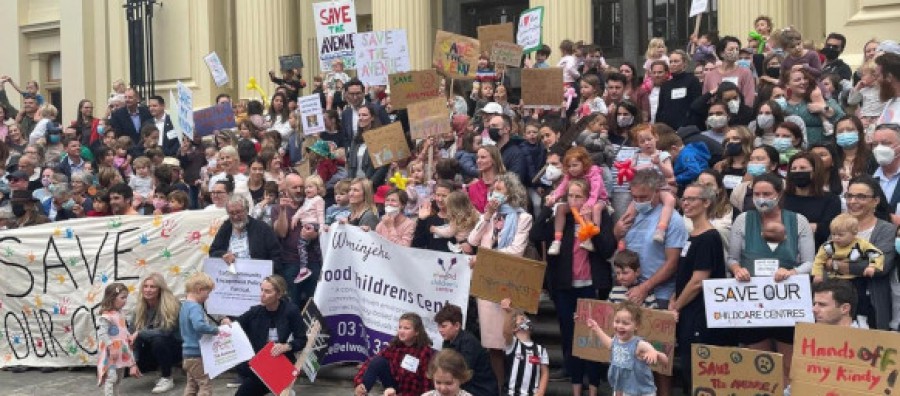
Image of parent’s rally in March 2022 to protest planned childcare centre sale in Port Phillip (Source: Herald Sun) 

Following a community backlash earlier this year, Councillors decide against selling three childcare centres subject to Victorian Government financial support. Mayor Marcus Pearl announced on 18 August 2022, ‘Our Council last night decided against selling three community-run early years education and care centres, subject to finalisation of funding arrangements’.

The announcement follows community consultation about the future of these centres - at 17 Eildon Road, St Kilda, 39 The Avenue, Balaclava, and 46 Tennyson Street Elwood. Council will seek to rebuild or renovate these centres if Vic Gov funding is received.

Whilst discussions for funding support with the Victorian and Australian Governments are ongoing the Port Phillip Mayor has released this update for transparency. Mayor Pearl said ‘We can report there have been productive conversations with the Victorian Department of Education and Training about long-term early childhood infrastructure needs across our city, including at those three centres. Discussions with the Department about potential co-funding arrangements under the Building Blocks Partnership program are progressing well’.

Previously Council had decided to sell the three centres after the Victorian Government advised Port Phillip that it was not eligible for state funding because of certain eligibility hurdles. After the issued blew up the state government has corrected their earlier advice and will accept an application for funding. 

There has been an overwhelmingly positive response to the Council’s commitment to continue supporting community run childcare across Port Phillip which is conditional on assistance from the Victorian and Australian Governments who are responsible for funding early learning. The City of Port Phillip own 17 facilities which provide over a third of our city’s licenced childcare places. 

The Council has committed to update the community on this important issue as soon as they can but cannot provide further details due to the confidentiality of the continuing discussions.


...di più
Membership in Rotary continues one’s growth and education in human relations

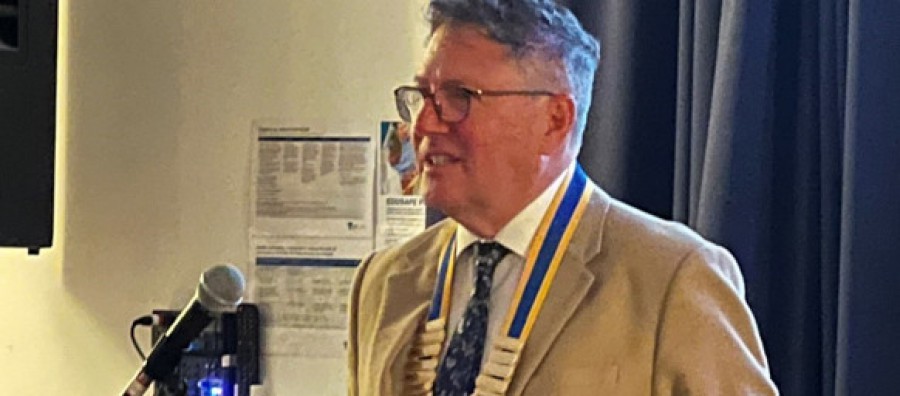
In line with Rotary protocol a new President is appointed every twelve months, Warwick Lloyd is Rotary Port Phillip’s new President and one of his primary objectives is to recruit new members to help service the many projects Rotary is looking to deliver. 

As a demonstration of the powerful community of Rotarians, over 20,000 people from across the globe will be visiting Melbourne next May, to listen and talk about how Rotary can make a difference. Rotary's theme of Imagine is very appropriate.

So, if you’re interested in finding out more the Rotary website is  Portphilliprotary.org.au and here are the reasons why you should join Rotary. 

WHY JOIN ROTARY

Friendship: In an increasingly complex world, Rotary provides one of the most basic human needs: the need for friendship and fellowship. It is one of two reasons why Rotary began in 1905.

Business Development: The second original reason for Rotary's beginning is business development. Everyone needs to network. Rotary consists of a cross section of every business community. Its members come from all walks of life. Rotarians help each other and collectively help others.

Personal Growth and Development: Membership in Rotary continues one’s growth and education in human relations and personal development.

Leadership Development: Rotary is an organization of leaders and successful people. Serving in Rotary positions is like a college education. Leadership: - learning how to motivate, influence, and lead leaders.

Citizenship in the Community: Membership in a Rotary club makes one a better community citizen. The average Rotary club consists of the most active citizens of any community.

Continuing Education: Each week at Rotary there is a program designed to keep one informed about what is going on in the community, nation, and world. Each meeting provides an opportunity to listen to different speakers and a variety of timely topics.

Fun: Rotary is fun, a lot of fun. Each meeting is fun. The club projects are fun. Social activities are fun. The service is fun.

Public Speaking Skills: Many individuals who joined Rotary were afraid to speak in public. Rotary develops confidence and skill in public communication and the opportunity to practice and perfect these skills.

Citizenship in the World: Every Rotarian wears a pin that says “Rotary International.” There are few places on the globe that do not have a Rotary club. Every Rotarian is welcome – even encouraged – to attend any of the 29,000 clubs in 194 nations and geographical regions. This means instant friends in both one’s own community and in the world community.

Assistance when Travelling: Because there are Rotary clubs everywhere, many a Rotarian in need of a doctor, lawyer, hotel, dentist, advice, etc., while travelling has found assistance through Rotary.

Entertainment: Every Rotary club and district has parties and activities that provide diversion in one’s business life. Rotary holds conferences, conventions, assemblies, and institutes that provide entertainment in addition to Rotary information, education, and service.

The Development of Social Skills: Every week and at various events and functions, Rotary develops one’s personality, social skills and people skills. Rotary is for people who like people.

Family Programs: Rotary provides one of the world’s largest youth exchange programs; high school and college clubs for future Rotarians; opportunities for spouse involvement; and a host of activities designed to help family members in growth and the development of family values.

Vocational Skills: Every Rotarian is expected to take part in the growth and development of his or her own profession or vocation; to serve on committees and to teach youth about one’s job or vocation. Rotary helps to make one a better doctor, lawyer, teacher, etc.

The Development of Ethics: Rotarians practice a 4-Way Test that governs one’s ethical standards. Rotarians are expected to be ethical in business and personal relationships.

Cultural Awareness: Around the world, practically every religion, country, culture, race, creed, political persuasion, language, colour, and ethnic identity is found in Rotary. It is a cross section of the world’s most prominent citizens from every background. Rotarians become aware of their cultures and learn to love and work with people everywhere. They become better citizens of their countries in the process.

Prestige: Rotary members are prominent people: leaders of business, the professions, art, government, sports, military, religion, and all disciplines. Rotary is the oldest and most prestigious service club in the world. Its ranks include executives, managers, professionals – people who make decisions and influence policy.

Nice People:  Rotarians above all are nice people - the nicest people on the face of the earth. They are important people who follow the policy of it is nice to be important, but it is important to be nice.

The Absence of an “Official Creed”: Rotary has no secret handshake, no secret policy, no official creed, no secret meeting or rituals. It is an open society of men and women who simply believe in helping others.

The Opportunity to Serve: Rotary is a service club. Its business is mankind. Its product is service. Rotarians provide community service to both local and international communities. This is perhaps the best reason for becoming a Rotarian: the chance to do something for somebody else and to sense the self-fulfilment that comes in the process and return of that satisfaction to one’s own life. It is richly rewarding


...di più
Originally conceived as a boutique event,

By a long-time St Kilda resident

In the 1980’s, St Kilda was perceived as a seedy suburb of Melbourne that attracted society’s undesirables and activities.  St Kilda was described as “a dynamic place where good and evil worked alongside” according to the late Albert Tucker.

In the 60’s and 70’s Melbourne media ran headlines describing the St Kilda area as streets of hell, the devil’s triangle and documentaries were made showing people buying drugs in Fitzroy Street. Mary Lou Jelbart, a former resident and Councillor of the City of St Kilda felt that a festival celebrating all the actors, writers and creative people living in the area would change these negative perceptions and reassure people that “they were living in a good community, with very good neighbours around”.

The St Kilda festival was introduced in 1980 to change the public perception of the area and to showcase that there are some beautiful and very positive aspects to community life in St Kilda.  In the 80’s the intention was only to celebrate the local area but today, music is the central programmatic driver of the festival.

In an interview for U3A Port Phillip, Jelbart offered the following summary of the first festival:

“We had the first St Kilda Festival in February or March 1980. It was absolutely wonderful. The council blocked off the Upper Esplanade. We celebrated St Kilda’s history. We had a revival of Frank Thring films – not Frank Thring the Hollywood actor but his father who was a St Kilda based film producer in the 1930s. We showed the films at the Palais. We had ice-skating at St Moritz which was still in existence. George Dreyfus conducted a mass, a non-religious mass. Mirka Mora, who was living in St Kilda at that time, drew a mural on masonite and children came and coloured it in. In fact, she did three murals, for three successive festivals. One has disappeared, but one is in the St Kilda Library. At Christ Church in Acland Street the vicar and his wife provided Devonshire teas under the trees. It was really enchanting. The weather was perfect. Everything was just beautiful. The two days ended with 15 minutes of fireworks over the bay. The Esplanade was crowded with very happy people. It was wonderful to see the community celebrate together.”

Things have certainly changed…

The festival has seen many formats since its inception over 40 years ago.  With an attendance of a mere 5,000 in 1980, today around 400,000 people flock to the foreshore to witness Australian musicians entertaining the crowds. The St Kilda Festival is known as Australia’s largest free community festival – a celebration of community spirit, Australian talent, and the beautiful St Kilda foreshore.

According to the 2021/22 Council Plan and Budget, the Council paid $1.7M as a contribution towards the costs of the festival (compared to a $159K contribution towards the St Kilda Film Festival).  These costs are included in the Council’s $4.3M annual budget for all festivals, major events, Esplanade market and Indigenous arts programs, including the Yaluk-ut Weelam Ngargee event.

Many people have commented on the perceived unfairness of St Kilda as the focus of these events (and therefore festival funding being focused on St Kilda).  They believe that other areas including Elwood, Port Melbourne, Albert Park, South Melbourne and Middle Park should all receive funding for similar local events.

Other residents have complained of poor behaviour from Festival patrons, some of whom believe that, because it’s St Kilda, they can behave in any manner they please showing no respect for the local community.  In 2012, a Festival patron was jailed for 34 months (15 months without parole) after he detonated 2 homemade devices in separate incidents at the Festival.  Five people were injured, 2 seriously, despite the defendant’s claims he ‘just wanted to have some fun’.

During the 2013 Festival, a man was charged over the bashing of a 23-year-old New Zealand man as he walked along Jacka Boulevard.

Others, including Councillor Andrew Bond, staunchly support the Festival and claim that delivery of the St Kilda Festival has the potential to bring economic, social and cultural benefit to the community.

Over the years, the suburb of St Kilda has transformed itself into a highly desirable place to visit, live and work and embodies our deep connection to beach culture.

So, do you believe there is still a need for the St Kilda Festival?  How do you, as a ratepayer, feel about the financial support given to the festival on your behalf?  We would be interested to hear your comments, opinions and ideas.

In the meantime, we will leave you with some recent comments from Mary Lou Jelbart at whose instigation and initiative, the Festival was founded.

“The St. Kilda Festival was originally conceived as a boutique event, promoting the talents of local artists, musicians, writers and performers who had been attracted to the bohemian and cosmopolitan character of the area.  But the magical quality of the first Festivals has been eroded by its transformation into a major rock event, swamping the foreshore with tens of thousands of fans who do nothing to add to the amenity of local residents.  Many have told me they feel prisoners in their homes during the Festival.  I continue to regret that I wasn’t able to persuade fellow Councillors to let the Festival come to a natural end after a decade.  In the case of more recent Festivals, bigger has not been better.”

...di più
Previously
CEOs are not elected and control $12 billion our money every year.

By Dean Hurlston, Ratepayers Victoria, Inc. 

It is well established that Council CEOs move around the industry to advance their careers.

The vast majority of Large Council CEOs come from smaller Councils or roles within the local government sector. A review of CEO profiles on LinkedIn shows just how mobile Council Executive staff and CEOs are. They are always on the lookout for larger roles and larger pay packets.

Across Victoria there is an immeasurable talent pool from Private industry , but you will rarely, if ever, see any of the Private sector talent running our 79 Councils.

Local Councils do not have a definition in law that constrains them to rubbish, roads and rates which is what most people expect Councils to deliver on.

The Local Government Sector is awash with CEO’s and Executive staff that are in it for one reason and one reason only – to resume build, and they don’t want competition from the private sector.

When the Local Government Act was updated in 2020, the CEOs and their union (The MAV) took absolute exception to the Minister at the time (Adem Somyurek) inviting ratepayer organisations to make suggestions on what needed to be changed. 

It was no accident, but it was a defining moment.

For me, it was the start of a study of the Local Government Sector and why CEO’s did not want the end user, consumers (residents and ratepayers) being anywhere near the legislative changes.

Many good suggestions made it into the original draft legislation, only to be removed by intense lobbying by the MAV and Council CEOs. Some of the changes sought to address the power imbalance the public has when dealing with the CEO and executive staff.

When power does not want to be accountable and is fastidious in lobbying against any resident and ratepayer protections, you know there is cartel behaviour behind it.

So what is this cartel?

Quite simply CEOs preside over budgets of hundreds of millions of dollars. They also have very high delegated spending limits (some as high as $2M). These delegations mean the CEO can spend this money without ANY accountability. Only if a spend goes over do they need Councillor permission.

There is a long established pattern in Councils (uncovered by the Victorian Auditor General VAGO, and the Ombudsman) of getting around delegated authority limits by breaking spends into smaller amounts to avoid scrutiny. This has been raised for many years by VAGO as a corruption risk, yet still nothing changes.

Further to this, CEOs use Council projects as the money makers to progress their own careers. These projects have slim, rhetoric-based business cases, if at all. They also use large swathes of ratepayers’ money or enormous amounts of borrowings. Either way, it is long known amongst the CEO group that the way to grow your career is to “BUILD STUFF”. CEOs often go to councils where there is a significant build pipeline because this is what motivates them. 

It is of course these projects that build ones resume and career opportunities. 

The boring stuff of council, running an efficient and lean business is absolutely not on the agenda.

Any listed public company director knows that a good CEO is able to do two things – run an efficient and cost-effective business and innovate to drive transformation that better serves its customers or stakeholders. Yet why is this the antithesis of Council CEOs?

Self Interest. If there is one thing all CEOs have learned in the political machinations of Councils, it is of their self-interest. They are not responsible to industry KPI’s, or standards and they can pretty much make anything up as they go. There are horrific stories across the industry of fraud, politicisation, and cost blows outs, but rarely if ever does a CEO get fired. If they find themselves in a position that is untenable, they are easily able to move Councils and leave behind the trail of destruction, for the ratepayers to pay for yet again.

The Council CEO industry is awash with Ego and hubris. They all regularly inform the government and ministers about their views of what needs to happen in the industry and so far we have a government hell bent on protecting the CEO culture instead of holding them accountable.

Let’s be clear here, many Council CEOs wouldn’t last a month in the private sector, accountable to a real board of directors. They don’t have the business acumen to run a lean and efficient organisation.

On the topic of building, we have seen so many communities oppose large projects and offer alternative cheaper models over the years. Every time they have been outmanoeuvred and outsmarted by CEOs and executive groups who have access to top lawyers, top experts and advisors who will do and say anything to defeat well-meaning residents and ratepayers.

This is the dilemma of Councils. A corporation, run by CEOs who do not have to answer Councillors questions, who keep councillors stage managed with only the information they want to share.

CEOs who have unfettered power. CEOs who can hide community grant recipients connected to Councillors. CEOs who can command internal reviews when things go wrong, but nothing changes. CEOs who buy luxury cars to keep mayors happy. CEOs who know that ultimately, they run this show and they call the shots. CEOs who know that building large projects keeps councillors happy too. These projects help their favourite councillors get elected and re-elected. CEOs who know that they can do things politically for Councillors that will keep them in a job. CEOs who can sit on boards and regularly be keynote speakers in businesses that profit from the sector.

CEOs who wouldn’t dare go to the public sector because that would be an impossible transition.

CEOs who know the sector doesn’t hire from outside, so they are always a protected species.

So next time you drive past a Council project worth tens of millions of ratepayer dollars, whether it be a pool, an indoor stadium, a multi-level carpark, a retail precinct, or a new Town Hall, just remember that this is the legacy of Council CEOs. Their only purpose. To build stuff for their resume and continue to grow the ever-ballooning number of staff at their beck and call.

While they are at it, they command salaries of $300,000 - 700,000 per annum. More than our highest paid state politicians, yet the CEOs are not elected and control $12 billion our money every year. 

A Cartel, you bet!

...di più
CoPP ratepayers are already contributing funds as a "co-funder” of the design stage

by a St Kilda Elder

Friends in Brighton are astonished when I tell them what I pay for rates in City of Port Phillip - for a small house and frontage… oh and the couple of hundred dollars extra I have to pay, so I get to park on my street and to allow my 96 year old Dad a visitor parking permit if he visits.

So imagine my surprise, and my indignation when I recently discovered that CoPP is planning to kick in financially, to assist to our wealthier Bayside neighbours to upgrade parts of Elsternwick Park; including an Urban Forest and Wetland. It is only a few years ago that I tied myself to a tree on the old Beachcomber Marine Parade site, as I saw men with chainsaws arriving to cut down a bunch of very old (probably over 100 years) Washingtonia Palms (the very tall skinny ones) which had adorned the site. I thought CoPP was the greenie Council, with respect for “significant trees”. Yet these grand old graceful palms were hacked down, all over the block to make space for the 23 apartments which now stand there.  Before the police came to escort me off the site, someone showed me a piece of paper which indicated the trees "were or would become unstable". Well yes, if you dug foundations or basements under them, of course they would become unstable! God forbid the architects could consider a slightly lower density urban French approach, seen all over central Paris, where apartments are built around enclosed gardens containing… trees! 

Ok that’s one gripe off my mind! But now an “Urban Forest and wetland” in Elsternwick Park? I've walked a dog all around that park. I've played golf on the course. Seemed like there were plenty of trees and ponds to make my terrible golf game even crappier. Ducks and other birds abounded. Even frogs. It was a bit rough and ready in places - but then...that’s nature!!

On 21 March 2018 CoPP met to discuss “the development of an Urban Forest and Wetland in Elsternwick Park North, subject to confirmation that the Urban Forest would reduce flooding, improve public amenity and water quality, includes water harvesting and distribution and protects and enhances biodiversity.” [Meeting minutes Port Phillip Council 16/3/22: Exec Summary para 2.1]

Wetlands make sense, but so do composting toilets and I don’t see any of them around St Kilda/Elwood/Elsternwick. Perhaps the well-paid Council workers would prefer not to have to distribute humanure. Biodiversity, stormwater harvesting, and public amenity are all fab aspirations - on my teeny block I have water tanks and possum houses and amenity galore. However, the goal of the upgrade had as its first cited aspiration “...reduce flooding…” Having experienced firsthand the 1984 Kilda/Elwood flood, when canoes were paddling down Wordsworth Street outside my house and water was tiptoeing up to my veranda, I thought the flood mitigation plan, albeit in an adjacent Council, might be worth something to St Kilda/Elwood areas. 

But the first part of the Masterplan to bite the dust was - yes you guessed - the “flood retention basin” as Melbourne Water “chose to instead pursue an alternative flood mitigation option.”

The cost to Bayside (without the flood mitigation basin) is to be around the $20 million dollar mark, of which $12 million is for the wetlands construction and stormwater harvesting components. Estimated costs for transporting water to Point Ormond, MO Moran Reserve are estimated to cost CoPP ratepayers $300k-600k and if transported further to St Kilda Botanic Gardens and the Peanut Farm  - $3-5million. Wait for that Ratepayers!!!

Currently the CoPP ratepayers are already contributing funds as a "co-funder” of the design stage “...in the 2022/23 financial year …approximately $320,000 is required to project manage the design and engage consultants to complete the design.” [CoPP Minutes 16/3/22 para2.7] 

And of course, it won’t stop there… So put your hands up Ratepayers of CoPP - who wants to kick in for yet another eco education centre, the urban forest which might not have been necessary but for CoPP block clearing for more high-density development meaning additional rates for them. Oh and increased amenity for a park that is not even in our Local Government Area. 

...di più
Cr Louise Crawford response to Dean Hurlston’s article re Scrutiny of Council

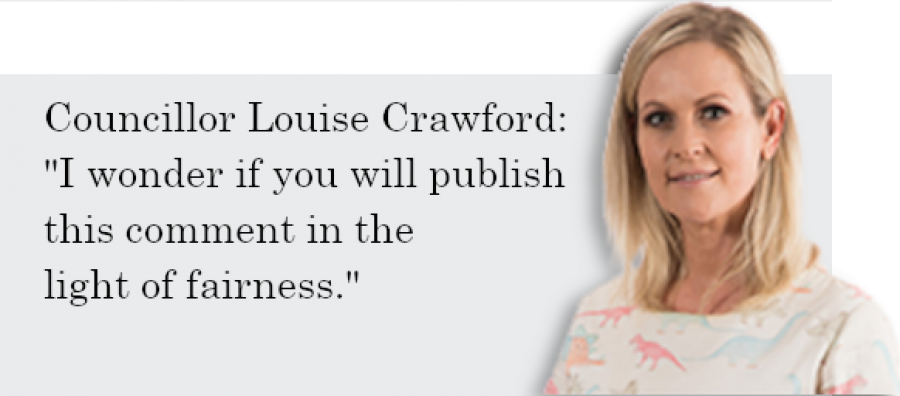
Image of Cr Crawford sourced from the City of Port Phillip's website.

Publisher Port Phillip Matters received the following statement from former mayor, Cr Louise Crawford in response to Dean Hurlston’s article in PPM “Why Council Officers Need and Deserve More Scrutiny”. Dean is the President of Ratepayers Victoria, Inc. Cr Crawford and Dean Hurlston have completely opposed views on the role of a Councillor and the performance of local government. 

Cr Crawford said “So disappointing to see misleading articles being posted about council officers. Many of the statements and assertions made are baseless or not evidenced. There are many many good people who care about their community who work at councils ( and also live in the local area) despite the inappropriate and false aspersions made by some members of the community. In the end though, Councillors make the decisions so pretend otherwise is to demean Councillors' abilities and intelligence. And heavens above, a code of conduct so that councillors speak respectfully to officers and vice versa - just as you would expect in any modern workplace and as a way of ensuring the safety of any employee - what will they suggest next? Maybe it’s time to instead acknowledge the hard work of officers and councillors who are always looking to listen, consult, innovate, improve. I don't know anyone who likes being constantly bagged for just doing their job so perhaps we need to remember that we are all just people doing our best and kind constructive conversations go along way rather than just flinging unsubstantiated and misleading accusations”.  

Dean Hurlston said in response to Cr Crawford’s statement “I disagree wholeheartedly. The evidence is clear from the Victorian Auditor-General's Office (VAGO) and the Ombudsman that Council officers' work is frequently inaccurate and based on little evidence. Council officers do not receive public scrutiny and are easily influenced by those with an agenda, sometimes including Councillors. Many councils are bloated with staff that do little for the community. The current model for councils appears to be 'consult little’. When a rare community consultation does occur, and the outcome does not agree with Council officers' views, the final recommendation to Councillors most often supports the officer’s recommendation, not the community’s.

For a Councillor to suggest this is not happening is proof that they are part of the problem. The role of a Councillor is to represent the community, not to simply agree with council staff. The job entails challenging council officers, assessing the evidence presented, and consulting extensively with community members to ensure decisions are best for the local community. Instead, what we have is a broken system, where Councillors think that asking hard questions of Council officers on hundreds of thousands a year is disrespectful. I put it to Councillor Crawford that not only is this not disrespectful, it’s actually your job. Perhaps, if the community (those who elected you and those who didn’t vote for you but you are still meant to represent) saw good outcomes (ones that didn’t always diminish the rights of residents and businesses) then Council might receive the appreciation and respect for the role they perform.

Far too many council officers actually do little. I have spoken to many Council whistle blowers in Victoria and they all say the same thing. Officers have meetings for meeting sake, develop policy with little evidence, and then produce recommendations they know will not be challenged by Councillors and almost always push the recommendations though Council chambers.

Public servants should be questioned. They are paid with public money and the public, via their Councillor representatives, deserve to know the truth, have good governance, and have community-minded decisions, for which they pay a pretty penny. Officers do not have the right to perform poorly, prosecute their own agendas, or ignore the community all while being handsomely remunerated. We need an apolitical professional public service, with state wide standards of performance and public accountability.

If you don’t believe that then perhaps you shouldn’t be a Councillor.”

...di più
Other council-run toilets in St Kilda are a focus for anti-social behaviour.

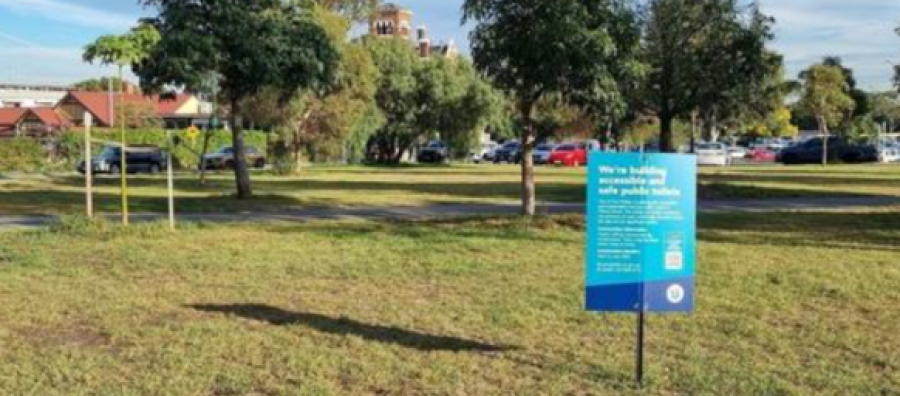
St Kilda Park Primary School are concerned about City of Port Phillip Council plans to build public toilets metres away from the school. Mr Neil Scott, Principal said “Whilst we understand the need for public toilets, other council-run toilets in St Kilda are allowed to be dirty, poorly maintained and a focus for anti-social behaviour. If this happens next to a primary school, our students, families, and whole community will be less safe”.

Mr Scott has asked resident to please consider signing our petition to find a better spot for public toilets on the street.

Petition · Reconsider the plan to build public toilets next to St Kilda Park Primary School · Change.org

The petition states the following: 

The City of Port Phillip Council has released plans to construct a public toilet facility in the parkland facing Fitzroy Street, immediately in front of St Kilda Park Primary School. Based on the track record of the Council in not being able to provide clean, safe and well looked-after public toilet facilities, the School Council is very concerned that these toilets would present a safety risk to our students, families and wider community members.

Elsewhere in St Kilda, public toilets have become dirty, unsafe spaces that attract drug users and other anti-social behaviours. We believe that the risks of this happening within 15 metres of our driveway are unacceptable. 

The Council has accepted that these risks exist but are determined to build new public toilets, believing that this location is the only option on Fitzroy Street.

We believe public toilets are important but that a facility located further down Fitzroy Street would remove the risks of placing it next to a primary school and also better meet the Council's stated aim to serve the needs of shoppers and bar and restaurant users, the majority of which are located between Grey Street and the Esplanade. 

Through this petition, we seek to show the widespread opposition to this risky project in an inappropriate location and to urge Council to go back to the drawing board and find a better location for this facility.


...di più
We support making Kerferd Road safer for bike riders

In a win for residents, Department of Transport (DoT) has announced the withdrawal of proposed designs for the pop-up bike lanes on Kerferd Road following extensive community consultation and based on the feedback received. This means DoT will no longer make any changes to Kerferd Road as part of the Pop-up Bike Lanes Program.

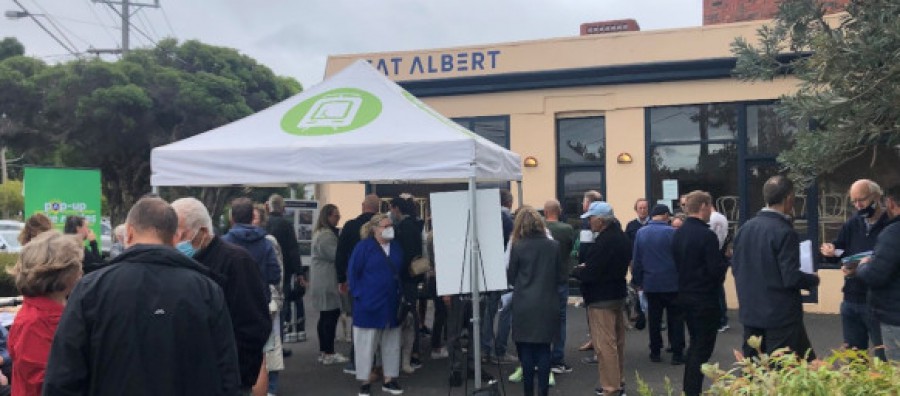
The decision is a win for residents who actively campaigned against the proposal. Heidi Ireland, a resident on Kerferd Road, together with her neighbours, obtained signatures from the majority of residents specifically impacted by the ‘parking separated bike lanes’ and organised residents to provide feedback to DoT officers at a marquee set up on the corner of Montague Street and Kerferd Road on Saturday 2 April. Residents objected to the ‘floated parking’ design, removal of car parking in front of their properties and loss of two lanes of car traffic which would have would have diverted traffic to local streets and worsened the rat run. 

Heidi said “we are absolutely in support of making Kerferd Road safer for bike riders, however not at the cost of pedestrian safety, in addition to reduced access to homes. We believe there is a practical solution here - but unfortunately so far there has only been an all or nothing approach considered. We are still concerned plans for parking separated bike lanes and removal of two lanes of traffic will be revisited when Department of Environment, Land, Water and Planning (DELWP) construct their $13 million ‘Shrine to Sea’ project”.

DELWP’s website indicates the new boulevard connecting Domain Gardens to Port Phillip Bay along Albert and Kerferd Roads, will consider ‘improving safety and experience for people walking and bike riding’ and they have foreshadowed the ‘use landscaping to define a separate bike pathway on Kerferd Road to isolate bikes from cars’ https://www.environment.vic.gov.au/shrine-to-sea 

It is concerning that the Department of Transport in relation to community consultation claim “Overall support for speed limit reduction, reconfiguration of Kerferd Road to one traffic lane and safety improvements” - source. Based on feedback from residents there is no support for reconfiguration of Kerferd Road to one traffic lane.


Greg, a resident who objected to the proposed pop-up bike lanes on Kerferd, objected to the plan to remove one-lane of car traffic in each direction at the Richardson Street Roundabout and on Albert Road under the light rail. Kerferd Road is a major arterial that connects Beaconsfield parade to Albert Road and Kingsway.  Removing the lane under the light rail would make it impossible to get families to sport events at MSAC. Greg said that “This is a very wide road, with existing bike lanes, and would easily accommodate a better design solution that meets the need of bike riders and other road users. I would like Vic Roads to retain the two lanes of car traffic, introduce a 50 Km/h speed limit on Kerferd Road, and together with separated bike lanes that continue through the roundabout, this should be sufficient to meet the safety needs of all road users.”


...di più

Image from the ROPP election campaign in 2020. 

According to a report paid for by Australian Services Union (ASU), the Victorian Government’s Fair Go rate cap has cost jobs in the local government sector. The ASU commissioned the Australia Institute’s Centre for Future Work to investigate the impact of the Victorian Government’s Fair Go rate cap which was introduced in 2016 to protect consumers from excessive increases in council rates. The cap limits increases in rates revenue to the Consumer Price Index (CPI). 

The report titled “Putting a Cap on Community, The Economic and Social Consequences of Victoria’s Local Government Rate Caps Policy” concludes “The Victorian State Government’s policy to cap the rates of local government has cost the Victorian economy 7,425 direct and indirect jobs in 2021-22” The report also states, “The rate cap policy, imposed by the Victorian state government on local governments, interferes with the mission of service delivery and expanded, secure employment”. (Source: https://australiainstitute.org.au/report/putting-a-cap-on-community

The ASU is the representative body for local government workers and is lobbying to abolish or amend the rate cap because it says their members “are increasingly overworked and underpaid in a way that is not in step with the broader public sector”. 

With its tongue firmly planted in its cheek, the Ratepayer of Port Phillip (ROPP) ran an election campaign in 2020 asking, “How many council staff does it take to change a light bulb?” The campaign reported that Port Phillip rates are excessive compared to neighbouring Councils. This is because Port Phillip Council spends more than its neighbouring councils and the largest cost is employees. Benchmarked against other councils, COPP has much higher staff costs per resident. Does anyone kid themselves that Port Phillip needs 48% more staff per resident than Stonnington, 63% more than Glen Eira and 94% more than Bayside?

Therefore, it is not surprising that the study commissioned by the ASU is being used by the ASU for the benefit of their members. The study argues for the abolition of the rate cap to grow more jobs. This is offensive to those who pay rates and enjoy the protection of the rate cap. If the ASU had its way and thousands of jobs were added to Victorian Councils’ payroll, it would mean ratepayers would have to cough up hundreds of millions of dollars in additional rates annually. 

Local government has been politicised by vested interested such as the ASU and political parties. ROPP was formed to elect Councillors to represent residents and businesses and not these vested interests. Since before the 2020 Council election, ROPP has set out to ensure ratepayers are armed with the facts about how their rates are spent. 

Let’s bust some myths that are floating around COPP:

Myth 1: Services will be cut if Councils don’t get enough rates.

Reality: Councils needs to learn to live within their means like ordinary businesses and residents do. If times are tough, they need to evaluate choices and put some ‘pet projects’ to bed.

Myth 2: Councils need more staff as they deliver services like roads, libraries, planning etc

Reality: Many Council employees are employed delivering services to residents. But a large number are employed to write reports, commission research or promote the Council.

Myth 3: Council costs are increasing more than the rates cap, and they need a rise to keep up with cost increases

Reality: Governments, businesses and households are facing a reality of higher cost of living pressures after a long period of a benign inflation environment. Other levels of Government, not to mention businesses and taxpayers, have had to adjust to these higher cost of living pressures and so should the City of Port Phillip. 

Myth 4: additional jobs can be created at no cost

Reality: They would require a huge additional tax burden in higher rates taken out of the pockets of local residents and businesses.

The ASU find the reality of budgeting and sound financial management to be an inconvenient truth. In response to our election campaign, the President of the ACTU, Michelle O’Neil, campaigned against ROPP endorsed candidates in a social media video during the 2020 Port Phillip Council elections. More recently the ASU is paying for research from the Australia Institute to confirms its desired outcome: more jobs for their members. 

What do you think? Do you think residents can afford an uncapped rates system that would allow Councils to get away with amassing an even larger number of staff? Let us know your views at ppm.editor@gmail.com .


...di più
Culture
From the Founder of The Heart Gardening Project

Author Emma Cutting

Hello Lovely Local!, My name is Emma Cutting and I have been a resident of City of Port Phillip for 20 years. I am also the Founder of The Heart Gardening Project, a community initiative that brings humans and nature together through street gardening. We turn barren, undernourished pieces of public land into gardens of wriggling, buzzing beauty for everyone to enjoy (around 70 so far and counting!).

I am writing to let you know (if you didn’t know already!) that the City of Port Phillip’s (CoPP) new draft Nature Strip Guidelines (NSGs) have just been released for community feedback and, if there isn’t a strong community response to change them, these would mean the end of street gardening for the vast majority of residents in the City of Port Phillip.

There are so many issues with this document but the main two are that…
• Tree squares are not allowed to be planted in
• ‘Clearance areas’ are so enormous that only a few plants at the most can be planted in even the hugest of nature strips

Not only that, but CoPP declares that gardens which don’t adhere to the new guidelines are also subject to removal. This means that, again, the vast majority of existing street gardens, many of them decades old, would be subject to removal at council’s whim.

While there is a definite need for updated, clear and safe Nature Strip Guidelines in the City of Port Phillip, CoPP has demonstrated overblown, short-term thinking around the safety of council assets. These new NSGs effectively deny residents the many positives that can come from street gardening including community cohesion, the ability to contribute to the natural beauty of our city and also individually respond to climate change and declining urban biodiversity.

We need to act now and tell our Councillors and Council Officers that this is not good enough. We need these draft NSGs rewritten to be inclusive, researched properly and empowering. Basically, if you love street gardening, are appreciative of your local street gardener, enjoy walking around your local street gardens, think that street gardening is more beneficial than not for your community, think we need more beautiful gardens, believe that increasing biodiversity is important and/or think we need to do more to fight climate change then please do the following…

• Read council guidelines at
  https://haveyoursay.portphillip.vic.gov.au/nature-strip-guidelines 
• Sign the petition at
   https://www.change.org/keepourstreetgardensgrowing 
• Contact your local ward Councillors directly
• Get out and create a street garden!!
• Place the small sign below (or something similar!) in your front window

Thank you! Love Emma

For more info on street gardening:
www.theheartgardeningproject.org.au 

For lots of pics of street gardens: Instagram
@theheartgardeningproject 

Email The Heart Gardening Project at:
info@theheartgardeningproject.org.au


...di più