Promotion








Terminology
Agenda – topics discussed at a meeting that has occurred or the topics proposed for discussion in an upcoming meeting.
Declaration of Conflict of Interest – a person who is voting on a decision notifies others that they have some form of interest (usually beneficial to them) on the outcome of the vote. In many cases a person who declares a Direct or Indirect Interest will not be permitted to vote or be involved in discussions on the topic.
Direct or Indirect Interest – a person who is voting on a decision notifies others that they have some form of interest (usually beneficial to them) on the outcome of the vote. In many cases a person who declares a Conflict of Interest will not be permitted to vote or be involved in discussions on the topic.
Minutes – a summary of the topics discussed, voted upon, approved or disapproved or requiring amendment or further consideration at a previous meeting.
Motion – generally means that one or more people involved in voting at the meeting should consider a specific matter and subsequently vote to approve or disapprove the matter or require amendment on the matter.
Purpose – generally describes the reason(s) the topic is being discussed and voted upon.
Recommendation – generally means the topic that is being considered by meeting officials to either approve, disapprove and require amendment.
Records of Meeting – often means the notation (writing down) of the discussion held at the meeting.
Second a motion – in some cases a topic that is to be discussed (or approved) requires that two officials present at the meeting agree to discuss the matter or approve it. To "second a motion" means that a second person at the meeting agrees the matter should be discussed or approved.
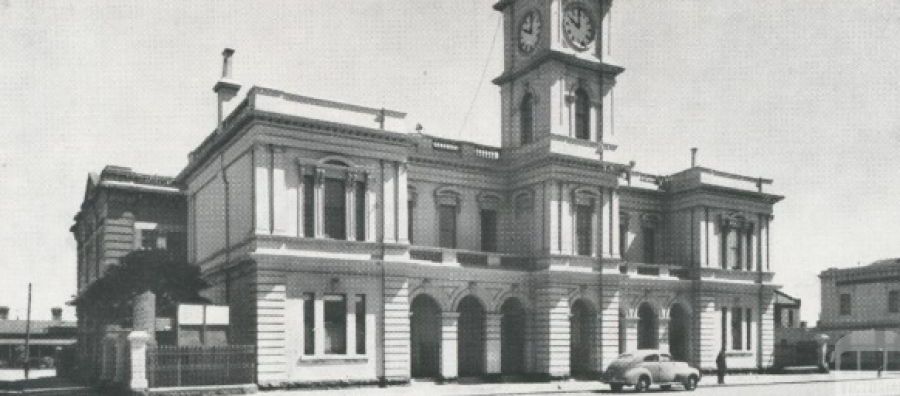
The City of Port Phillip website contains information on the history of Port Phillip. The following is an extract about the history of Port Melbourne
Port Melbourne was first called Sandridge after the ridge of sand dunes along the beach. In 1839 Wilbraham Frederick Evelyn Liardet arrived with his wife and family and set up home at the beachfront. Liardet has been called the father of Port Melbourne for his many innovative and entrepreneurial ventures which included building the first rudimentary jetty and providing a mail service to Melbourne from the port.
In 1850 the first land at Sandridge was sold, although the area had been surveyed as early as 1839. The most distinguishing feature of Sandridge at the time was the great saltwater lagoon as large as the settlement itself. The importance of Sandridge as the port for the metropolis was underlined when the first passenger railway in Australia was opened on September 12, 1854. It ran from Melbourne to Sandridge.
On 13 July 1860, after some agitation for self-government, Sandridge was proclaimed a municipal district. William Morley, a local coal merchant, became the first chair of the Council. Sandridge became a borough in 1863, and in 1884 changed its name to Port Melbourne. In 1893 Port Melbourne became a town and, on 14 May 1919, was proclaimed a city.
In June 1994 the City of Port Phillip was formed from the old municipalities of South Melbourne, St Kilda and Port Melbourne.
The first Council offices opened in 1861, located on the corner of Bay and Graham Streets, Port Melbourne. The first community hall was built in 1869 on the current site of the Port Melbourne Town Hall. In 1881 the addition of the grand building in front of the hall brought the council chambers and offices to the site.
Source: https://www.portphillip.vic.gov.au/explore-the-city/history-and-heritage/port-phillip-history
A team is at work researching and writing a history of Albert Park. The book will be the latest in a series published by The Middle Park History Group.
The first was THE HEART OF MIDDLE PARK: Stories from a suburb by the sea. It was designed to take readers on ‘ a voyage of discovery of iconic places, people and milestones in the life of an Edwardian suburb by the sea.’
It was followed by MIDDLE PARK: From Swamp to Suburb, a much larger volume tracing early history and the development of swamps and lagoons into the suburb that is Middle Park.
In the latest MIDDLE PARK: The way we were, the reader is introduced to daily life, as it used to be, in the area. This ranges from the milkman and his horse to small industries, clubs, corner shops (lots of them) memories of the Greek community, even violence and crime.
The Avenue Bookshop in Albert Park has long urged the publication of a history of that suburb prompted by interest in the Middle Park volumes. Now it is underway.
The Middle Park History Group comprises a dedicated band of amateur and professional historians, writers, researchers and enthusiastic local residents
https://middleparkhistoryg.wixsite.com/mphg
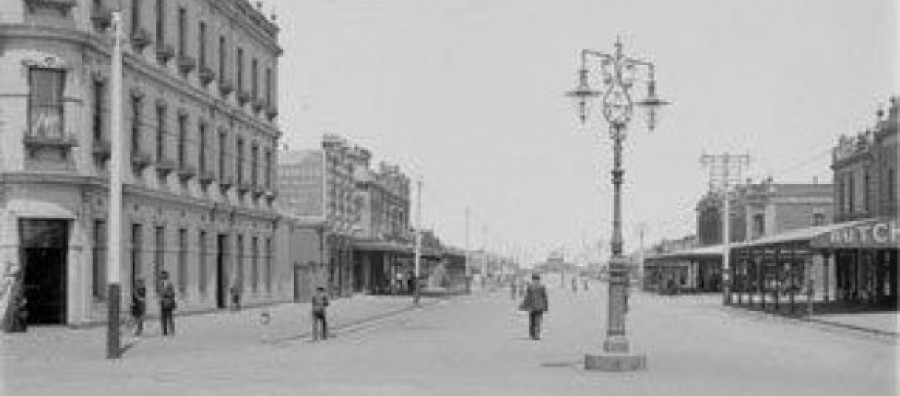
Image: courtesy of State Library of Victoria (Rose Stereograph Co. (1920). ARMSTRONG STREET, MIDDLE PARK, VICTORIA).
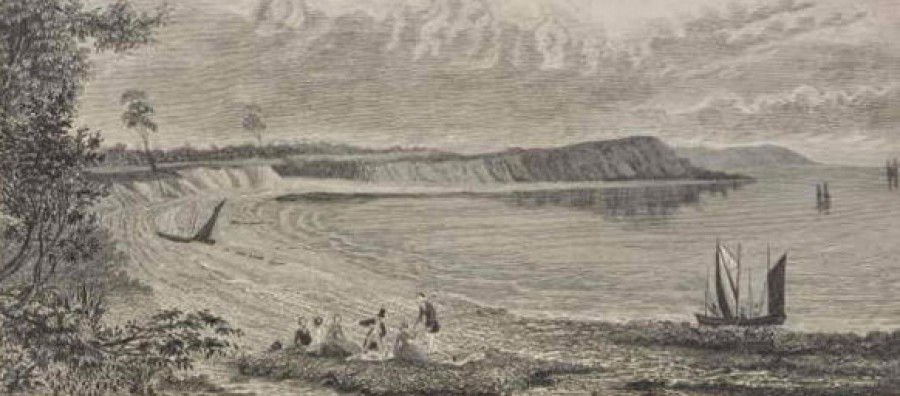
Sited at the western end of Glen Huntly Road, at Point Ormond in Elwood, Victoria, is the locale of Victoria’s very first quarantine station dating back to 1840 – not five years since John Batman proclaimed that “This will be the Place for a Village” on the 8th June 1835:
” . . . In looking over an old journal of my Predecessor, Dr Hunt, then stationed at Williamstown, I find that prior to November, 1852, the Quarantine Anchorage was off the Red Bluff, near Brighton, and that the Government Emigrant Ships Manata, Lady Evelyn, and Chance, were detained there in September and October the sick being transferred to a [?] Hospital . . . “ **
In fact, the suburb Glen Huntly, and the road that connects Point Ormond to this suburb being Glen Huntly Road – bear the name of the very first ship to arrive in Port Phillip Bay displaying the dreaded yellow flag in 1840 . . .
” . . . The first yellow-flagged ship arriving in Port Phillip was the ” Glen Huntley,” from Greenock, with immigrants, on the 17th April, 1840. Typhus fever had shown itself on the voyage, and out of 157 passengers there were no less than fifty on the sick list . . . “ ***
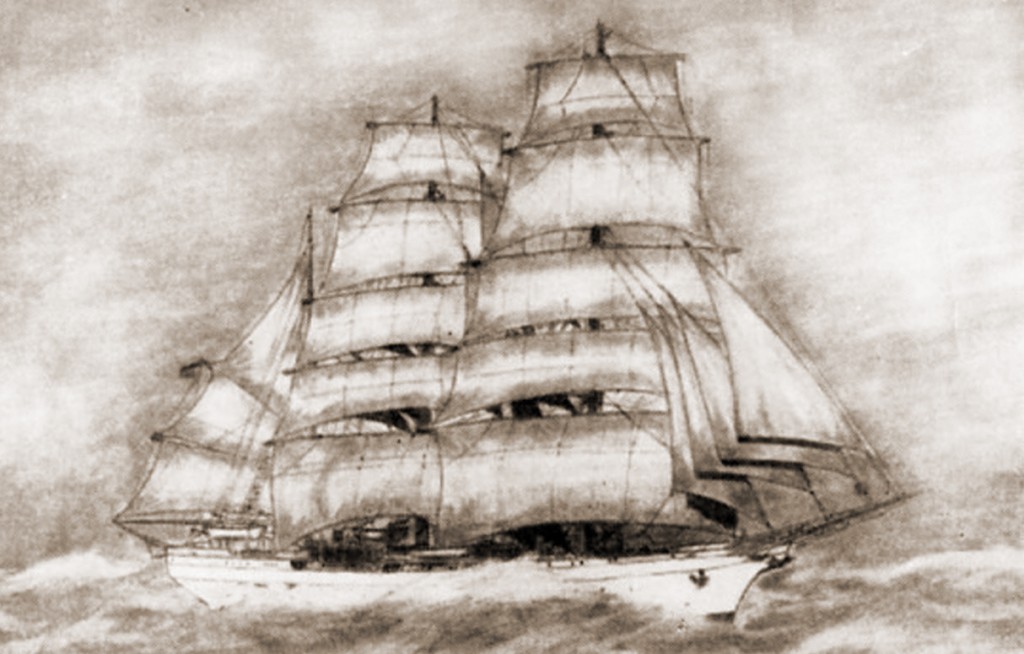
The barque ‘Glen Huntly’ was a 450 ton emigrant ship which left Greenock, Scotland in the December of 1839 under the charge of Captain Buchanan with 157 passengers on board. The voyage would prove to be ill-fated – beginning with a collision with a coaster during the very first night at sea. Hampered by thick fog which encased the English Channel, she then struck a submerged rock, straining her timbers even further. Whilst sailing the North Atlantic, she collided with an American Packet Ship which removed her figurehead and tore away her lower spars. Shortly after crossing the Equator, Typhoid Fever raged through the ship. It was common place for the merchants of the time to overcrowd their ships; provide minimal food, comfort and sanitation for their passengers. As is common place in history, the merchants were more concerned for their profit and those on board. Hence, it was easy for a plague to engulf the weakened physical state of these poor immigrants. Ten passengers died at sea, whilst at least a third of those on board grappled with the disease. When they arrived at Port Phillip on the 17th April 1840 with the yellow plague flag flying, the authorities directed the ship to anchor off the swamp where Elwood now stands.
” . . . Great was the consternation amongst the townspeople on the appearance of so unexpected and unwelcome an importation as a probable pestilence, and no time was lost in arranging for the establishment of a Quarantine Station. The then umbrageous, picturesque territory, now thoroughly civilized and known as St. Kilda, was designated by the Aborigines ” Euro-Yroke ” from a species of sandstone abounding there, by which they shaped and sharpened their stone tomahawks. Its first European appellation was the ” Green Knoll” (the eminence, then much higher, now recognized as the Esplanade), until Superintendent Latrobe named the country St. Kilda in compliment to a dashing little schooner, once a visitor in the Bay. St. Kilda was considered a smart walk from town, and adventurous pedestrians made Sunday trips there in the fine weather. About a mile further, looking out in perpetual watch over Hobson’s Bay, was a point known as the Little Red Bluff, afterwards improved into Point Ormond, and here some four miles from Melbourne, a pleasant enough spot, was organized our first sanitary station, where tents were pitched, and crew and passengers sent ashore. Ample precautions were taken to intercept communication with the interdicted world by land or sea, and Dr. Barry Cotter, Melbourne’s first practising medico, not being too full handed with patients in a small, healthy, youthful community, with a magnanimity that did him credit, volunteered his services to take charge of the newly-formed station. There was a military detachment located there, from which a guard was assigned to protect the encampment on the land side, whilst the revenue-cutter, ” Prince George,” from Sydney, was stationed seaward to shut off communication by boat or otherwise. The Surgeon-Superintendent entered upon his duties with a becoming sense of their importance. By an amusing perversion of terms he styled the place ” Healthy Camp,” and whilst lording it there, issued regular bulletins upon the condition of the invalids and convalescents consigned to his care. Three of the immigrants died there, and were interred near the Bluff. Their lonely graveyard was afterwards enclosed with a rough wooden railing, but has been destroyed by time, and from oversight or culpable neglect has not been replaced, and so their mortal remains have rested in peace, unprotected and undisturbed . . . “*****
**Source: Excerpt – ‘Queenscliff Sentinel, Drysdale, Portarlington and Sorrento Advertiser’ (Vic) – Article “Ye early history of the Quarantine Station, Point Nepean” – published 22nd January 1887
*** Source: Excerpt – ‘The Chronicles of Early Melbourne – 1835 to 1851 – Vol II’ – by Garryowen – published 1888
*****Source: Excerpt – ‘The Chronicles of Early Melbourne – 1835 to 1851 – Vol II’ – by Garryowen – published 1888
Extracted from page: https://poi-australia.com.au/points-of-interest/australia/victoria/elwood/quarantine-station-c-1840-point-ormond-elwood-melbourne-vic/#post_content