This Week
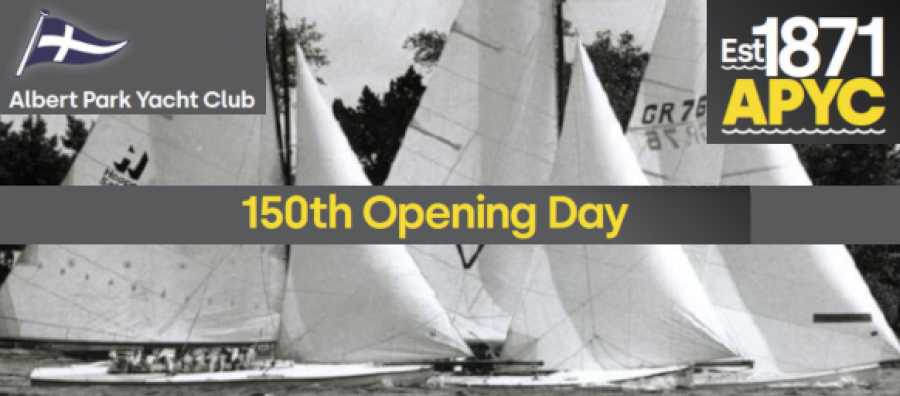
Congratulations to Albert Park Yacht Club on reaching their 150th year

Albert Park Yacht Club celebrated its 150th anniversary on 26 February. Celebrations included a Sail Past salute and Opening Day Bracelet Race and are anticipated to be a significant and memorable part of that history. 

Albert Park Yacht Club has a rich history of sailing on the lake since 1871 and is one of the oldest yacht clubs in Australia. It began when the Colony of Victoria was only thirty-five years old, and Melbourne was a collection of townships. Albert Park Yacht Club is the oldest continuing inland yacht club in Victoria. Many people have learned and developed their sailing at Albert Park Yacht Club. They have progressed to enjoy sailing socially; many to be good club level racing sailors; and in quite several cases state, national or international champions.

APYC is welcoming new members if you are interested in learning to sail. Applications forms are available on the website

Join the Club - Albert Park Yacht Club www.apyc.org.au 
...more
Promotion
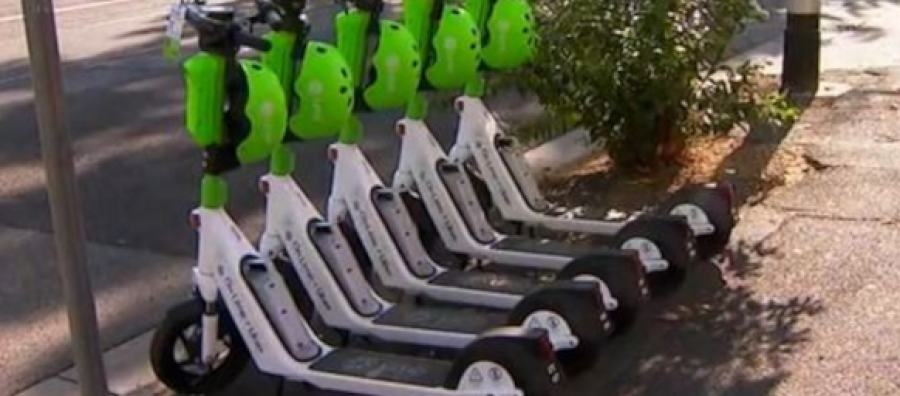
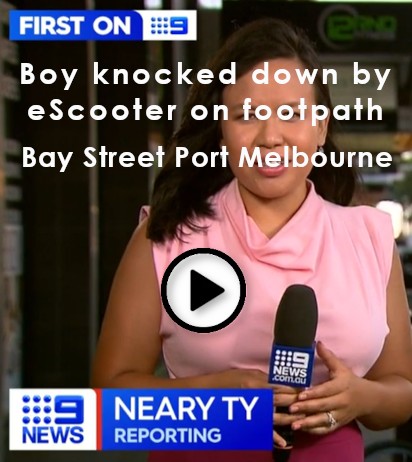
500 e-scooters distributed for use on bicycle lanes

From 1st February 2022, City of Port Phillip has signed up to the Victorian Government trial in partnership City of Yarra and City of Melbourne, with 500 e-scooters distributed across each city for use on bicycle lanes, bicycle paths, shared paths and roads. E-scooters will be contained to these metro areas through the use of geofencing and a 20km/h speed limit will apply.

Lime and Neuron Mobility will deliver the trial, and rides within the three municipalities will be made possible by downloading the Lime and Neuron apps. 

Riders must adhere to most of the same rules as bike riders, including wearing a helmet and slowing down to give way to pedestrians on shared paths.  

E-scooter riders should behave the same way as bicycle riders and slow down to give way to pedestrians. There will be special 'no go' and 'go slow' zones where speed limits are restricted in high-traffic shared areas. E-scooters are not permitted on footpaths and roads where there is a speed limit above 50km/h.

...more
Promotion
Your Neighbourhood
Diverse Cultural Backgrounds.

From City of Port Phillip website

The City of Port Phillip promotes positive community relationships and provides a range of services and advice to assist people from culturally and linguistically diverse backgrounds.

The City of Port Phillip is a vibrant multicultural city. This rich, cultural diversity is one of our greatest strengths and one we celebrate.

  • We are home to people from over 163 different birthplaces, speaking 114 different languages
  • One in three of Port Phillip’s 100,870 residents were born overseas
  • In our community, 51.8 per cent have at least one parent who was born overseas
  • Of our residents, 20.6 per cent speak a language other than English at home.

Cultural diversity in Port Phillip
If you would like to request the latest settlement and cultural diversity statistics, please contact the Diversity Officer.

Multicultural Advisory Committee
The Multicultural Advisory Committee (MAC) was established by the Port Phillip Council to provide advice and feedback on all issues that affect multicultural communities, refugees or asylum seekers in the City of Port Phillip. It is also active bringing matters of concern within the community to the attention of the Council.

Key objectives of MAC are to be the peak advisory and advocacy body on issues affecting multicultural, refugee or asylum seeker communities within the Port Phillip municipality.

  • Provide advice to Council on its policies, plans and services that impact our multicultural communities
  • Liaise with other organisations and networks that have a direct interest in advocating for or serving multicultural communities, refugees or asylum seekers in the City of Port Phillip.
  • Consider and provide advice on key Government initiatives, issues, programs and reviews.
  • Assist Council to promote the benefits of cultural diversity, social cohesion and inclusion of all residents within the City of Port Phillip and beyond.
  • Provide advice to Council on its communication, engagement and consultation with multicultural communities.
  • Celebrate the achievements of multicultural communities and raise awareness of their specific needs.

The term of the current Committee is until 7 May 2021. To view the Committee’s Terms of Reference, go to Special and Advisory Committees

We want to hear from you
Members have been selected so that the MAC encompasses a wide range of backgrounds, experiences and views. The Committee welcomes feedback from the community and anyone with concerns or suggestions is encouraged to contact the Diversity Officer. We are concerned to improve the lives of this city's multicultural population.

Let us know by contacting the Diversity Officer.

See source article: https://www.portphillip.vic.gov.au/people-and-community/multicultural-community 

...more
A Catholic school in the Edmund Rice tradition

(Go to All Schools Page)

St Mary's "Talk and Tours" help prospective students and their families become acquainted with the school community. These events ensure students and families have the opportunity to ask questions, engage with staff and students, and experience our campuses. Tours run for up to an hour. Dates for 2021 are now available.

To secure your place for the Talk and Tour please complete the registration form found here or contact the College Registrar or call +61 3 9529 6611.

Principal's Message *
St Mary’s College is a Catholic school in the Edmund Rice tradition. Previously called CBC St Kilda, our name and vision have changed as we embrace an authentically inclusive co-education for girls and boys.  We partner with our families to instil a deep sense of respect, justice and belonging in our students that transcends the classroom. Everything we do to teach and support students is built on the fabric of love, values, beliefs and habits each family instils throughout their child’s life and we welcome the involvement of parents and families in our school community. 

* https://www.stmaryscollege.vic.edu.au/a-school-for-all/principals-message 

...more
A forum for residents of Beacon Cove

The BCNA is a not-for-profit community association in Port Melbourne. It is the successor organisation of the Swallow Street and Bain Street Residents’ Association formed in February 1987.  It was formed out of fear that the Victorian Government would acquire their homes as part of an urban renewal project.  

Purpose:
BCNA’s purpose is shown in its Rules of Association.  It is to “… provide a forum for all residents of Beacon Cove and abutting neighbourhoods to discuss key local issues and thence to take appropriate action to preserve and enhance the quality of life for residents and visitors to the area…”.

How we operate:
BCNA representatives meet key people and organisations to find solutions to local issues. They include Members of Parliament, State Government departments, the City of Port Phillip, Victoria Police, developers, the Environment Protection Authority, and Ports Victoria.  

Current issues:
Some of the recent issues BCNA has been involved in are:
•    Hoon driving and excessive vehicle noise around Station Pier and Beacon Cove.
•    advocating for air quality monitoring near Station Pier.
•    advocating for the redevelopment of the Waterfront Place precinct.
•    the enforcement of planning controls.
•    protecting the foreshore from overshadowing from developments.
•    An upgrade of the Princes Street stormwater drain.
•    Port planning.

Communicating to members:
The committee reports on progress with current issues by short news items on the organisation’s Blog website at www.beaconcove.org.au.  Members can receive these news items by subscribing to an email news service. In addition, a hard copy newsletter, The Beacon, is prepared twice a year and delivered to about 2800 mailboxes in the area.  

Encouraging a sense of community:
In addition to the email news service, BCNA organises social events. Often these are dinners at local restaurants. The events are popular and attract around 60 plus attendees.  They are a good way for newcomers to meet neighbours and to hear about local news.    

Membership:
Membership is open to individuals. You do not need to live in the area. An application form is shown on the website at www.beaconcove.org.au.  Current membership stands at 461.  

Further information about BCNA can be found on the website www.beaconcove.org.au 

Or contact:
The President at president@beaconcove.org.au
The Secretary at secretary@beaconcove.org.au 


...more
Promotion
Your Say
It's about the balls

Did you know the ball with which one bowls in lawn bowls is “biased”. This means one side is flattened. As if life isn't hard enough!

The nuance of the physics in this distributed weight anomaly is beyond this author. But the result is that the bowl follows a curved horizontal trajectory when rolled, something like the curve of a banana laying down. 

Could it be that the inventor of bowls always bowled off to one side and so invented a non-spherical ball (termed bowl) to compensate? Subsequently, all those that followed had to deal with this. The ever dependable Encyclopedia Britannica informed me that a form of bowls was played in ancient Egypt. Moving forward a millennia or two, the ruling body of today's form of lawn bowls - the International Bowling Board - was founded in 1905. 

But back to the balls, or in this case the bowls. The concept of a biased bowl leaves this author somewhat discombobulated. Can you imagine the same physics being applied to ten pin bowling? The lanes would have to be three times wider. What about playing golf with a ball that is biased. One spends too much time looking for a ball the size of your eye as it is - whereas in squash one spends time avoiding being hit in the eye with a ball just the right size to replace it.

Some counties in England play a variation named Crown Green Bowls. In this version, a square area with a raised hump (aka crown) is located in the centre of the green. If that doesn’t add sufficient challenge, the surface of the green can also be uneven – just for a little more random excitement. At least here in AUS our greens are flat, true and generally surfaced with beautifully manicured grass or Astro turf. I must say the latter sounds a little like something the Jetsons would be using to play this game.

Whatever they were thinking (or drinking) when the governing body decided the rules, the result is a sport which is not only highly enjoyable but also very social. I tried my luck at bowls as did my children. We found ourselves engaged in what was for us initially a game of chance, largely due to the fact we had no skill in this discipline. But it was great fun from the first bowl to the last. And social! I cannot think of another ball game where one can equally enjoy the social aspect throughout the experience as well as the sporting competition.

All in all, can I recommend bowls to others? You bet! Would I recommend bowls as a family activity? You bet! So armed with this considered research, why not pick up the phone, call your local Middle Park Bowls Club on (03) 9690 4048 and give the casual “Barefoot Bowls” a try.

https://www.middleparkbowls.com.au/ 

Opposite the Middle Park Hotel - Canterbury Road, Melbourne VIC 3206

...more

When free information is not free.

In pursuit of a cause or action one typically requires information. Information is key to our understanding. Understanding oneself, others, the immediate world in which we immerse ourselves. Without information we can know that something exists, but not why. Without knowing why we are helpless in effecting change. Life is like this in many ways. The actions of those we encounter are generally based on information. If we are not privy to the relevant information, then causation is unknown, and we are left with baseless reactions as our only means of effecting change.

Now to the matter at hand: Some time back I attempted to change a decision made by the local council. To be successful in this endeavor my proposition had to be logical and substantiated by fact. I was going well until encountering a hurdle on the second point, substantiated by fact. I figured the council archives would hold the information I needed. So, I approached the council to supply me with the necessary information. Being a member of a family residing in their own home, within the same local government area as the council to whom I was to submit my FoI request, I figured this would be a no-brainer. But alas, no! This is where the “Freedom of Information” Act A.K.A. “FOI” comes in.

The FOI Act provides the public (me in this case) with certain rights. The rights to request and be granted access to documents about the operation of council, government departments, and documents in the possession of government Ministers or agencies, and by law the holders of the information must undertake to satisfy the request. At least as far as is possible?

But, as it turns out, Freedom of Information does not equate to the free provision of information. Only that an applicant is free to request it. Under the Act, the provider of information can charge the applicant (in this case me) for the free information. Hardly free is it? Here are two examples.

Port Phillip Council charges applicants a fee of:
$30.10 to process a request.

Casey charges applicants’ fees of:
$22.50 per hour (or part of an hour)
PLUS
Supervised viewing of documents fee: $5.60 per 15 minutes (if applicable)
PLUS
Photocopying: 20 cents per black and white A4 page

Here’s the thing, could council be seen here to be fiscally Double Dipping?
Surely, if you live and pay rates in the area subject to your FOI request, the council should not charge you FOI fees. After all, local ratepayers already finance council services through the rates they pay. The term fiscal double-dipping is the best way to describe this.

FOI Was Not Named “A tax on Information”.
To this author, it seems that FOI legislation was initially named “Freedom Of Information” for a reason. The act was not named “A tax on Information” or “Information for those who can afford it”.

In Summary.
The restriction of information to those who can pay only serves to obfuscate issues raised by the public. The unfettered, free provision of information is of benefit to all. Perhaps councils may read this article and reconsider their position by, at minimum, proving FOI services at no charge to local ratepayers.

Further FOI Act reading.
https://www.oaic.gov.au/freedom-of-information/the-foi-act
https://www.legislation.gov.au/Details/F2019L00348
Port Phillip FOI Fees: https://www.portphillip.vic.gov.au/about-the-council/governance-performance-and-advocacy/freedom-of-information
Casey FOI Fees: https://www.casey.vic.gov.au/make-freedom-of-information-request

...more
From the Founder of The Heart Gardening Project

Author Emma Cutting

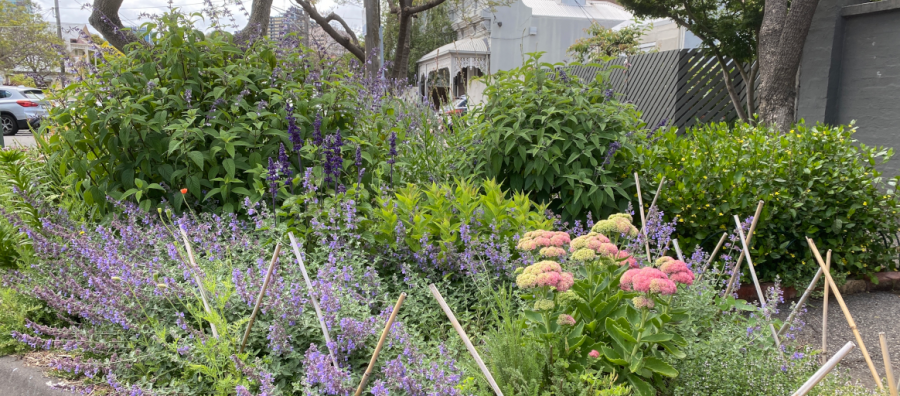
Hello Lovely Local!, My name is Emma Cutting and I have been a resident of City of Port Phillip for 20 years. I am also the Founder of The Heart Gardening Project, a community initiative that brings humans and nature together through street gardening. We turn barren, undernourished pieces of public land into gardens of wriggling, buzzing beauty for everyone to enjoy (around 70 so far and counting!).

I am writing to let you know (if you didn’t know already!) that the City of Port Phillip’s (CoPP) new draft Nature Strip Guidelines (NSGs) have just been released for community feedback and, if there isn’t a strong community response to change them, these would mean the end of street gardening for the vast majority of residents in the City of Port Phillip.

There are so many issues with this document but the main two are that…
• Tree squares are not allowed to be planted in
• ‘Clearance areas’ are so enormous that only a few plants at the most can be planted in even the hugest of nature strips

Not only that, but CoPP declares that gardens which don’t adhere to the new guidelines are also subject to removal. This means that, again, the vast majority of existing street gardens, many of them decades old, would be subject to removal at council’s whim.


While there is a definite need for updated, clear and safe Nature Strip Guidelines in the City of Port Phillip, CoPP has demonstrated overblown, short-term thinking around the safety of council assets. These new NSGs effectively deny residents the many positives that can come from street gardening including community cohesion, the ability to contribute to the natural beauty of our city and also individually respond to climate change and declining urban biodiversity.

We need to act now and tell our Councillors and Council Officers that this is not good enough. We need these draft NSGs rewritten to be inclusive, researched properly and empowering. Basically, if you love street gardening, are appreciative of your local street gardener, enjoy walking around your local street gardens, think that street gardening is more beneficial than not for your community, think we need more beautiful gardens, believe that increasing biodiversity is important and/or think we need to do more to fight climate change then please do the following…

• Read council guidelines at
  https://haveyoursay.portphillip.vic.gov.au/nature-strip-guidelines 
• Sign the petition at
   https://www.change.org/keepourstreetgardensgrowing 
• Contact your local ward Councillors directly
• Get out and create a street garden!!
• Place the small sign below (or something similar!) in your front window

Thank you! Love Emma

For more info on street gardening:
www.theheartgardeningproject.org.au 

For lots of pics of street gardens: Instagram
@theheartgardeningproject 

Email The Heart Gardening Project at:
info@theheartgardeningproject.org.au


...more
Promotion
Culture
Your Council
Promotion

Terminology

Agenda – topics discussed at a meeting that has occurred or the topics proposed for discussion in an upcoming meeting.

Declaration of Conflict of Interest – a person who is voting on a decision notifies others that they have some form of interest (usually beneficial to them) on the outcome of the vote. In many cases a person who declares a Direct or Indirect Interest will not be permitted to vote or be involved in discussions on the topic.

Direct or Indirect Interest – a person who is voting on a decision notifies others that they have some form of interest (usually beneficial to them) on the outcome of the vote. In many cases a person who declares a Conflict of Interest will not be permitted to vote or be involved in discussions on the topic.

Minutes – a summary of the topics discussed, voted upon, approved or disapproved or requiring amendment or further consideration at a previous meeting.

Motion – generally means that one or more people involved in voting at the meeting should consider a specific matter and subsequently vote to approve or disapprove the matter or require amendment on the matter.

Purpose – generally describes the reason(s) the topic is being discussed and voted upon.

Recommendation – generally means the topic that is being considered by meeting officials to either approve, disapprove and require amendment.

Records of Meeting – often means the notation (writing down) of the discussion held at the meeting.

Second a motion – in some cases a topic that is to be discussed (or approved) requires that two officials present at the meeting agree to discuss the matter or approve it. To "second a motion" means that a second person at the meeting agrees the matter should be discussed or approved. 

...more
Promotion
Promotion
Local History

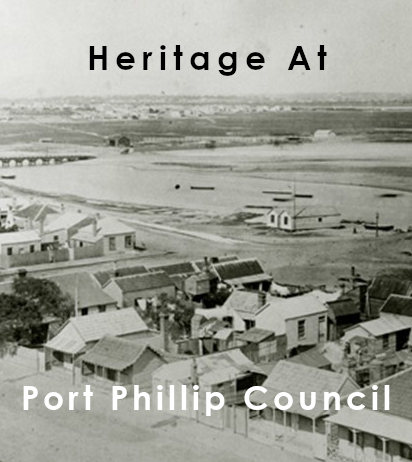
The City of Port Phillip website contains information on the history of Port Phillip. The following is an extract about the history of Port Melbourne

Port Melbourne was first called Sandridge after the ridge of sand dunes along the beach. In 1839 Wilbraham Frederick Evelyn Liardet arrived with his wife and family and set up home at the beachfront. Liardet has been called the father of Port Melbourne for his many innovative and entrepreneurial ventures which included building the first rudimentary jetty and providing a mail service to Melbourne from the port.

In 1850 the first land at Sandridge was sold, although the area had been surveyed as early as 1839. The most distinguishing feature of Sandridge at the time was the great saltwater lagoon as large as the settlement itself. The importance of Sandridge as the port for the metropolis was underlined when the first passenger railway in Australia was opened on September 12, 1854. It ran from Melbourne to Sandridge.

On 13 July 1860, after some agitation for self-government, Sandridge was proclaimed a municipal district. William Morley, a local coal merchant, became the first chair of the Council. Sandridge became a borough in 1863, and in 1884 changed its name to Port Melbourne. In 1893 Port Melbourne became a town and, on 14 May 1919, was proclaimed a city.

In June 1994 the City of Port Phillip was formed from the old municipalities of South Melbourne, St Kilda and Port Melbourne.

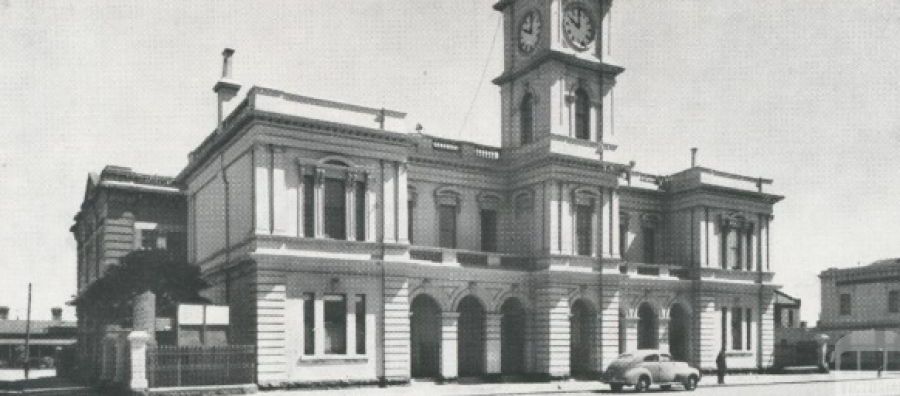
The first Council offices opened in 1861, located on the corner of Bay and Graham Streets, Port Melbourne. The first community hall was built in 1869 on the current site of the Port Melbourne Town Hall. In 1881 the addition of the grand building in front of the hall brought the council chambers and offices to the site.

Source: https://www.portphillip.vic.gov.au/explore-the-city/history-and-heritage/port-phillip-history

...more
Promotion

A team is at work researching and writing a history of Albert Park. The book will be the latest in a series published by The Middle Park History Group.

The first was THE HEART OF MIDDLE PARK: Stories from a suburb by the sea. It was designed to take readers on ‘ a voyage of discovery of iconic places, people and milestones in the life of an Edwardian suburb by the sea.’

It was followed by MIDDLE PARK: From Swamp to Suburb, a much larger volume tracing early history and the development of swamps and lagoons into the suburb that is Middle Park.

In the latest MIDDLE PARK: The way we were, the reader is introduced to daily life, as it used to be,  in the area. This ranges from the milkman and his horse to small industries, clubs, corner shops (lots of them) memories of the Greek community, even violence and crime.

The Avenue Bookshop in Albert Park has long urged the publication of a history of that suburb prompted by interest in the Middle Park volumes. Now it is underway.

The Middle Park History Group comprises a dedicated band of amateur and professional historians, writers, researchers and enthusiastic local residents

https://middleparkhistoryg.wixsite.com/mphg 

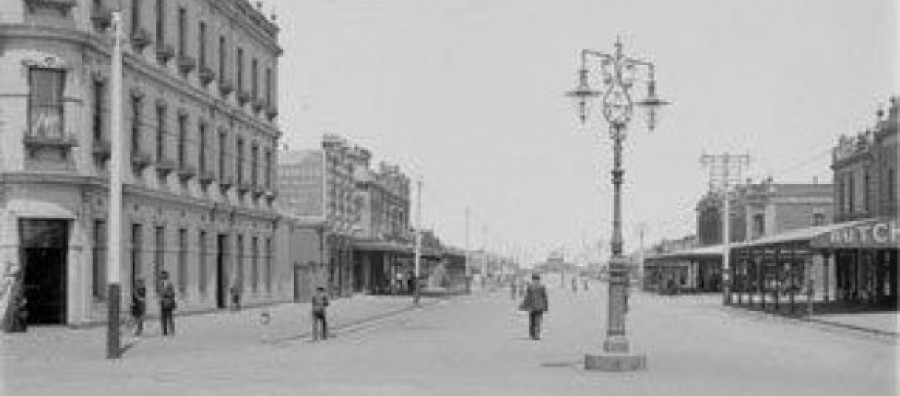
Image: courtesy of State Library of Victoria (Rose Stereograph Co. (1920). ARMSTRONG STREET, MIDDLE PARK, VICTORIA).

...more
Promotion
Relax ~ Laugh ~ Think
Promotion
Promotion
Promotion