The City of Port Phillip has published its CEO Report for Q3 of 2022/23, providing a summary of their performance, project updates, and prospective plans. The council report conveys an effort to prioritise governance, community engagement, fiscal prudence, and cultural development.
In line with its approach to transparency and accountability, the council introduced Councillor Robbie Nyaguy and incorporated new requirements for the Local Government Performance Reporting Framework. In the draft yearly Council Plan and Budget, a $65.3 million capital project investment was included.
In an attempt to take into account the increasing cost of living, a 2.8% rate increase was suggested, which is below the Victorian Government's cap and inflation rate of 3.5%. The council's report highlighted highlighted the identification of $1.1 million in operational savings for the 2023/24 Budget.
The council report talked about the two digital self-help platforms - Snap, Send, Solve, and My Port Phillip, in addition to the availability of online bookings for solid and green waste as well as events or venues. Since the last quarter, the total number of requests has shown a consistent rise every month, with a significant surge seen during the quarter. They highlighted a steady influx of at least 70% of community service inquiries, complaints, and online bookings by customers, of which 20% are received through Snap, Send, Solve, and more than half via My Port Phillip and other online reservation systems.
Significant initiatives in Q3 comprised the engagement of the community on important projects such as the draft Housing Strategy and the Positive Aging Policy, among others. The council also hosted the 16th International Toy Library Conference at Bubup Womindjeka, showcasing their local work.
In April, 46 affordable apartments in Balaclava were made available to tenants, a project realised in partnership between the Council and HousingFirst. This project received partial funding from the Victorian Government and the Australian Government, marking another step in addressing homelessness.
Concurrently, the council has been working on its social and community programs. A free community football event was held at Park Towers, and a special event acknowledging the contributions of multicultural seniors’ groups took place during the Cultural Diversity Week celebrations. Social connectedness among the elderly and disabled has seen a rise in interest post-COVID, with more clients desiring to partake in Social Inclusion Programs.
However, issues with recruitment have impacted children’s services, presenting obstacles to opening additional spots. The council also noted a reduction in state government funding for Enhanced MCH Service delivery, despite an increase in service hours for vulnerable families.
Going forward, the City of Port Phillip aims to enhance services such as children's services, community programs and facilities, families and young people, and recreation. Numerous initiatives are being planned, including professional development programs for staff, increasing family engagement, staff training on domestic violence-informed practice, and community consultations for projects.
The city's Public Space Strategy for 2022-32 continues, with projects such as the TT Buckingham Flying Fox and the Dickens Street Community Pop-up Park now completed. Meanwhile, Transport and Parking Management seeks to improve Port Phillip's “liveability” with strategies such as expanding bicycle parking infrastructure and trialling e-cargo bikes.
Though it encountered some challenges, such as complex VCAT hearings, Development Approvals and Compliance, Council reported a 100% uphold rate of planning decisions at VCAT. The report indicates lower than expected planning applications decided within the required time frames (sitting at a low rate of 39%) due to high profile and complex VCAT hearings.
Among the various tasks and initiatives, the city has given attention to environmental conservation. The South Melbourne Market initiated a recycling project in collaboration with The Nature Conservancy, and named the Shuck Don’t Chuck program, with a focus on reef restoration in Port Phillip Bay.
Other significant updates included the return of the Port Phillip Mussel and Jazz Festival, which was attended by over 50,000 patrons, and the launch of the Carlisle Street Urban Art Project aimed at addressing graffiti and stimulating the local economy.
- Despite the extra costs each year we see a decline of services in the municipality
- Less parking availability
- More expensive parking fees and fines
- Shopping strips becoming dead zones
- An increase in the homeless and drug affected in the streets
- Represent the community
- Promote fiscal responsibility and
- Demand ratepayer funds are used for local Council services and amenity

It is no secret that ratepayers who largely fund the City of Port Philip (CoPP) have been concerned for some time about the lack of focus and discipline displayed by the Council. Recent data compiled by Council Watch, once again, tells a concerning story on Council largess that affects not only ratepayers but also the non-rate paying public.
Data released this week on the Melbourne metro councils show that the City of Port Phillip came in an alarmingly second place in terms of average salary costs at $129,174 with a staff complement of 847. This translates to a staff ratio of 8.6 staff to 1000 of population in the City of Port Phillip (third highest in Metro Melbourne) compared to the average of 6.0 staff per 1000.
Let’s consider the following: The City of Port Philip continually argues for higher rate increases, not for potential looming risks but for a continuation of a tax and spend mentality, including funding Councillor “pet initiatives”.
Last year through the efforts of the Residents of Port Phillip (community association), rate increases were reduced from the Victorian government designated maximum. Even with a hard-won rate increase reduction, the CoPP still sits in the bottom third of councils in terms of profitability. The CoPP is budgeting a $10 million surplus (profit) for 2023-24.
With the CoPP having excessive rate structures compared to our neighbouring Councils of Glen Eira, Stonnington and Bayside, the evidence suggests that this high-rate regime is being eaten up internally through higher salary structures and overstaffing. If you think 847 staff is too high for only 103,000 residents, then also consider the fact that many of the council services are outsourced! Rubbish removal is a core responsibility and is outsourced. Ask yourselves how that exercise has been going lately!
Ask yourself, have services improved with this high staff ratio to population? Where is the productivity dividend through greater use of technology? Is the council demonstrating a lean approach to its finances? Are core council responsibilities being met? Are our retail strips in good order? Is the City of Port Phillip growing or contracting as an economy? Clearly on nearly every metric, none of the above is being demonstrated. It could be argued that the CoPP is nothing more than mediocrity at its finest.
The concerning read of the Council Watch data adds weight to only one rational conclusion - that the CoPP is running an organisation that has excess staff, that is on average overpaid or structurally top heavy and anecdotally with ongoing poor productivity.
While this rarefied world of jobs for life on higher-than-average salaries (relative to the private sector) can continue at city hall because ratepayers are the mugs that are ultimately footing the bill, we forget a key word - RISK.
The CoPP is not currently fit for purpose, not pencil sharp on its core mandate and not ready for potentially major looming risks. In particular, the "almost certain" financial risks that CoPP will face due to Fishermen’s bend infrastructure funding shortfalls and potential development risks, and if the St Kilda Triangle moves into the construction phase, irrespective of a touted low cost private/public partnership.
If the City of Port Phillip was serious about financial responsibility, it should conduct a top-down review of all expenditures, staffing structures including staffing levels, and the elimination of all non-core, non-essential responsibilities. To continue business as usual is but a slap in the face to ratepayers and the broader community who are hit with heavy handed rates, poor service delivery and wasteful expenditure.
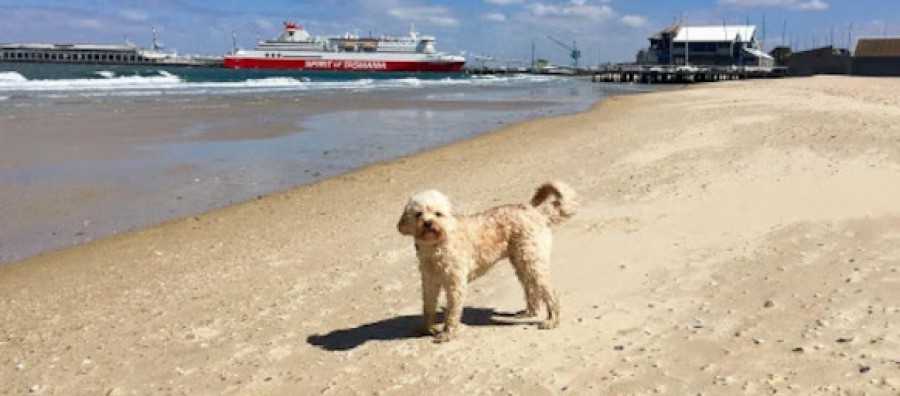
Councillors voted unanimously on 6th October to accept a petition from 10 Port Melbourne residents that requests Council consider opening Port Melbourne beaches to dog walkers before 10am during the November–March summer period. The petition coincides with drafting of a new Domestic Animal Management Plan (DAMP) and Council Officers will consider the merits of the petition when reviewing the current dog restrictions on Port Melbourne beaches along with all other community feedback. The final DAMP will be presented to Council in November for adoption.
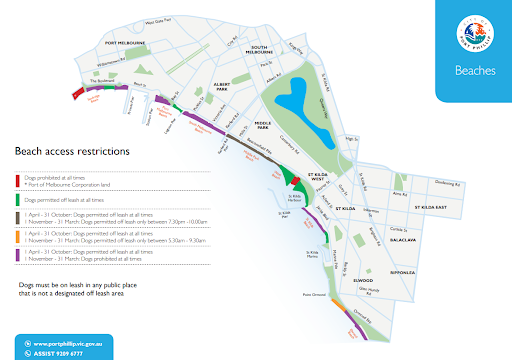
Presently, local laws restrict dog off-leash areas during summer. See the beach access restrictions map here: https://www.portphillip.vic.gov.au/media/u5lpmmay/beach-access.pdf
Current local laws allow dog access on the following beaches during the summer months, noting Middle Park Beach and Elwood Beach allow dog access in the early morning:
- Sandridge Beach: between the rock groyne opposite Barak Road and the rock groyne opposite Cumberland Road
- Port Melbourne Beach: between Port Melbourne Yacht Club and Lagoon Pier
- Middle Park: between Kerferd Road Pier and Langridge Street (7.30 pm to 10 am, 1 November to 31 March)
- St Kilda West: West Beach
- St Kilda Beach: Along Pier Road to the drainage channel at the north-west end of Pier Rd and between Brooks Jetty and the northern end of the car park towards St Kilda Marina
- Elwood Beach: between the rock groyne south of Point Ormond and the beach access ramp 35 metres south-east of Normandy Road (5.30 am to 9.30 am, 1 November to 31 March).
The Port Melbourne petitioners who spoke at the Council meeting advised that ‘dog numbers in Port Phillip have increased by approximately 1000 dogs’ with ‘the largest increase has been in Port Melbourne’. The petitioners also mentioned that ‘beaches are very empty in the early mornings and people generally walk their dogs ‘either early in the morning or in the evening’.
Brodie Mitchell said “We have limited public space in the city and many recreation grounds are taken over by Cricket and other sports in Summer. There are very few people on the beaches in Port Melbourne in the morning, and yet they are left largely empty due to this social deprivation being imposed upon our community”. Brodie went on to say, “We are just asking for reasonable access to public space at a time when few others are using it.”
Finally, if you have an opposing view about early morning access of dogs to Port Phillip beaches, we will welcome the opportunity to publish your article.
Simply click the “Got something to say button at the bottom on this page.
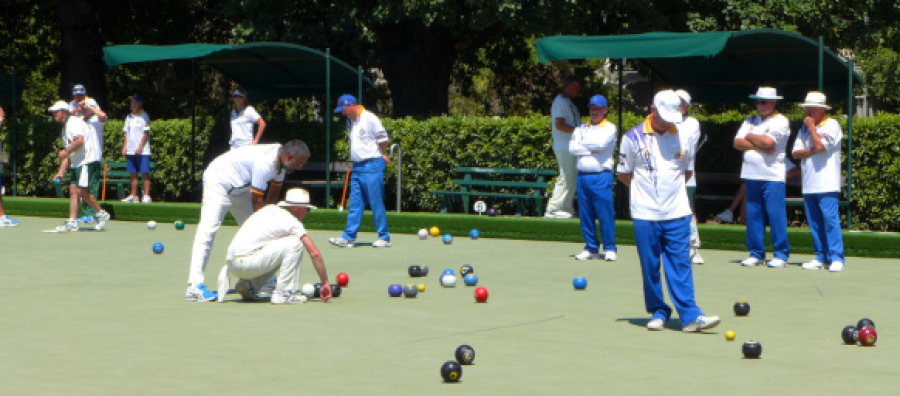
The Club
Established in 1873, the bowling club was created as the centrepiece of the beautiful St Vincent Gardens in the heart of the bayside suburb of Albert Park. The green itself is open year-round, permitting members to enjoy both casual and competitive bowling in all seasons.
The current club membership of about 150 (60/40 male/female) is a diverse community of men and women of all ages and bowling experience. New members are always welcome. The club, with its beautiful surroundings and friendly atmosphere, is the ideal place to while away a few hours. Members enjoy bowling in a variety of formats. Many a casual game of bowls will be followed by relaxed conversation in our licensed clubhouse. Rather more animated discussions typically follow the popular and highly competitive inter-club pennant matches on Tuesdays (2 teams) and Saturdays (4 teams).
Membership
Members of Albert Park Bowls Club enjoy bowling in one of the most attractive environments in the city on a green that is open year round. Other membership benefits include:
• Access to the clubroom and rinks
• Bowling opportunities ranging from casual social games to regional pennant competitions
• A club community that is welcoming and supportive
• Professional coaching
• Club bar at member prices
New memberships require a current member to propose, and another to second, the application, which must subsequently be approved by the Board of Management. Successful applicants will be advised by email. Membership is currently available, so please download and complete the membership application form here if you are interested in joining and forward it to the secretary (secretary@albertparkbowlsclub.com.au)
Covid Impacts
2020 was a surprisingly successful year for our club given the uncertainties we faced. Our seconds team on Saturday won the section pennant and was promoted as a consequence. Most of our other teams made it through to section finals. We are fortunate that we have retained most of our membership and have managed to minimise the impact on club finance in 2020, however revenue dropped by 30% from our main source of external income, corporate bowling days.
2021 has been a very difficult year for bowling clubs. We have been prevented from bowling for 3 months. The Pennant Season start has been delayed by the lockdowns and many major bowls competitions have been cancelled, including our own Muriel Powe Memorial competition. In addition, our club has seen a series of annoying acts of vandalism since the latest lockdowns took effect, including the "tagging" of our club house front and all our scoreboards and damage to one of our shade structures.
The summer of 2021 will be difficult financially, with the ongoing significant restrictions on social gatherings and density quotients on internal spaces we expect to see our external revenue base further eroded.
2023 - Our 150yr Celebration
We are 150yrs old in 2023! We are busily planning our celebration events and look forward to seeing our friends and neighbours joining in the fun events we are planning.
Q. Wendy in the last issue of PPM you mentioned a number of projects the club was pursuing. Can you expand on a couple of these, in particular the outcomes?
AstraZenica Vaccine Roll Out in Balibo, Timor Leste
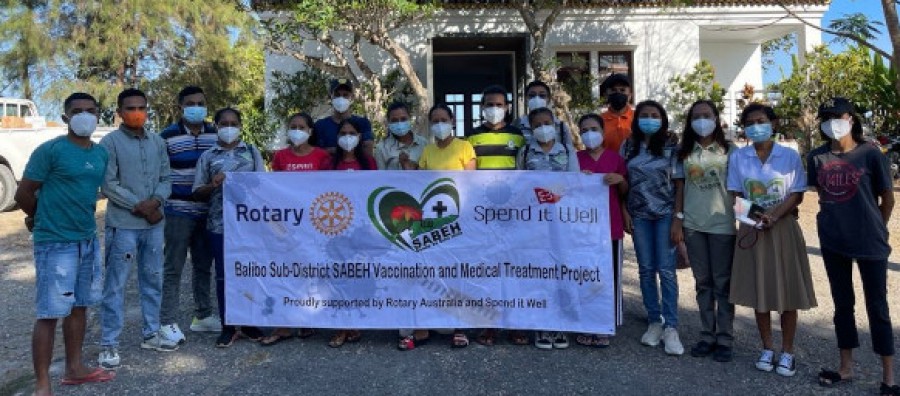
Rotary Port Phillip became aware that in Balibo, in Timor Leste, it was proving challenging to implement the COVID vaccine rollout throughout the rural villages of Timor. Given this, the Victorian Rotary Club of Port Philip, partnering with SABEH ( Saude Ba Ema Hotu - Health For All) and Spend it Well, implemented a COVID Vaccination Program in Balibo and the surrounding areas. The program commenced Monday 4th October, and will run for 14 days. The next stage will commence in approximately 12 weeks to provide the second vaccination.
SABEH will implement the program using 30 of their volunteer medical staff with vaccines sourced from the Timor-Leste government. The program will involve some of the medical staff being based in Balibo town, with the rest divided into small teams to reach remote villages within the Balibo sub-district. SABEH will also provide a free medical service alongside the vaccine delivery. The goal is to reach 5,000 to 6,000 people during each stage of the program.
Now that’s making a difference. In Victoria, we have choices with regard vaccinations. Can you imagine not having a choice? Rotary makes changes! The outcome of this project will be more lives saved not if, but when the virus makes it way to these outlying areas.
Tranquility Space at the Towers
Closer to home, we are partnering with Star Health, the Heart Gardening Project and the community at the Towers Housing Block in South Melbourne along with the local community to create a Tranquility Garden for the use of everyone. We all know that being able to connect with nature has a very beneficial impact on our wellbeing. The space is there so the ability to collaborate with others to create a beautiful, green space to relax and contemplate is a real connection endeavour. The local primary school students will be involved in the project as well as they nature the seeds and seedlings to prepare them for planting out. It takes a village…
Q. Can you tell us a little more about the merging of PM and RCMS and the benefits going forward?
Rotary Port Phillip (Formerly Rotary Melbourne South and Rotary Port Melbourne)
The merging of two clubs to make one bigger club just makes sense; more people, more passion, more ideas, more skills and more opportunity to expand how we deliver our services. Here I am thinking about digital platforms. A club that meets every first and third Monday at 6.00 at the Emerald Hotel will suit many people as the fellowship is so important, too. However, having the ability to connect through an e-club will certainly suit others who prefer to connect online to follow through on a project.
Q. What are the qualities you're seeking in new members?
Qualities of a Rotary Member
Members believe that the result of their personal goodwill and activities they become involved in will leave the world a better place as a result. I know that I joined because I thought that on my own, I won’t be making much of a difference no matter how hard I tried but with the support of the club, the district and the international rotary community, my impact will matter.
Be The Change: Join Rotary
Membership contact is Ron Adams: r.g.adams@bigpond.com

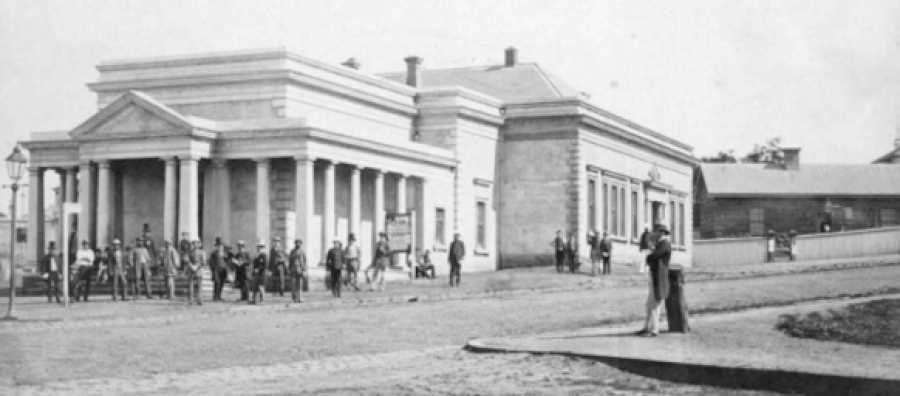
Following the first sales of crown land in December 1842, St. Kilda rapidly became a fashionable suburb. It was under the jurisdiction of Melbourne Town Council until February 1857 when St. Kilda was proclaimed a separate municipal district. On Saturday, 7th March 1857, 250 residents attended a public meeting in a garden in Acland Street to nominate candidates for the new council. The election was held two days later at a polling booth at the Junction Hotel, and seven councillors were elected.
On 11th March 1857, the first council meeting was held in a public room at the Junction Hotel, at the corner of Barkly Street and High Street (now St. Kilda Road). For lack of other accommodation, most early meetings of municipal councils adjoining Melbourne were held at hotels of good repute. Two weeks later, St. Kilda council meetings were moved to the court house, which occupied a triangular piece of land bounded by Punt Road and St. Kilda Road, directly opposite the Junction Hotel. When a new court house was completed in April1859 at the corner of Barkly and Grey Streets, council's weekly meetings were transferred there also.
Early in 1859, council bought properties so that Carlisle Street could be extended to meet Acland Street and the Esplanade. Some money remained from the amount allocated, so in May 1859 council directed the town surveyor to draw up plans and specifications for a town hall and municipal offices, modest in both size and design, on land next to the court house.
A description, presumably written by the Town Surveyor, tells us that the building was almost square, measuring 63 feet by 58 feet 6 inches. An 1862 engraving shows that the façades were "in the Roman Doric style with Italian windows."
Entrances from both Grey and Barkly Streets led to the council chamber, which extended the whole length of the building. There was a council committee room and rooms for the Town Clerk, the Town Surveyor and the contractors. The foundation stone was laid on 12th July 1859 by the Chairman of the Council, the Honourable Alexander Fraser, MLC. A handsome portico was added to the court house, "with pediment and flight of steps, facing the angle formed by the junction of Grey and Barkly Streets, and on either side of the portico is a colonnade of pillars in the Roman Doric style."
The impressive council chamber, with Roman Doric cornices and pilasters and a splendid ceiling rose, was designed so that it could also be used for public meetings, balls, etc. The first function, on 19th December 1859, was an inaugural lecture to the recently established St. Kilda Mechanics' Institute. St. Kilda council met in its handsome town hall for the first time on 4th January 1860. From 1860 to 1890, while the building was used by council, the shape of St. Kilda was set – streets were made, public transport routes established, churches, schools, shops and hotels erected, and the greater part of St. Kilda's housing built with the exception of Elwood, which was still a swamp.
Within a few years, it was obvious that the building was too small, but it was not until 1887 that the site of the present town hall was accepted and loan funds made available. A design by William Pitt was selected, which included a tower with a richly decorated pediment, a clock and a spire. On 23rd June 1890, St. Kilda council met for the first time in the new town hall, which had been completed minus clock and spire.
The old building in Grey Street was sold to the Victorian government on 29th September 1890. It was used as a court house and police station until 1930, when new police buildings were erected in Chapel Street. For a few months, the old building stood abandoned and derelict; it was then sold and replaced by the present block of flats.
Source:
Cooper, John Butler, The History of St. Kilda 1840 to 1930; Vol.I pp60-93; Vol.II pp39-64.
Courthouse and Town Hall, Barkly Street [ca. 1860], photographer unknown,
Pictures Collection, State Library of Victoria
Copyright © St Kilda Historical Society Inc. 2012
https://www.stkildahistory.org.au/
Plane Tree Poisoning
It was Tuesday and I woke up feeling fine. It was windy all night and morning was the same. I stepped outside briefly to visit the lemon tree and suddenly started sneezing, my eyes and nose were streaming and I felt myself gagging and itchy in the throat, tissues couldn’t be drawn quickly enough to stem the flow. Then it dawned on me … Plane Tree season!
The street I live on doesn’t actually have any plane trees but all around us, and all over The City of Port Phillip the streets are lined with them. So when the spring winds hit I suffer and no amount of anti histamines will help.
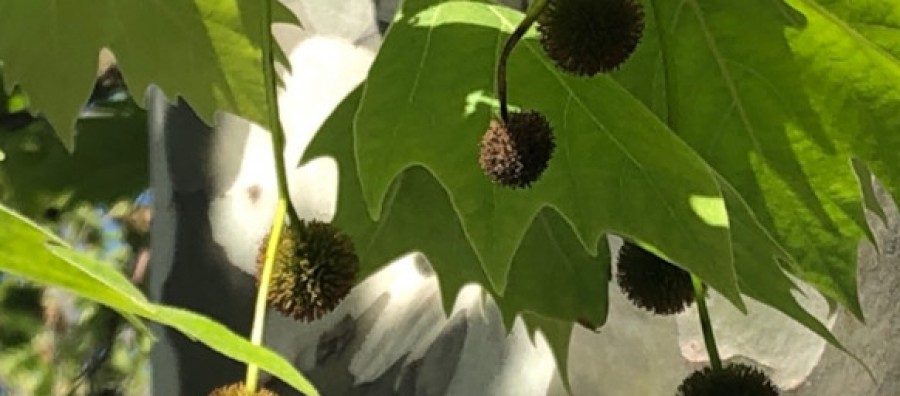
These are wonderful looking European trees that cover much of our neighbour hood streetscapes, yet these trees for many months of the year have people gasping and gagging for air as they bombard our airways with their airborne irritants. You may have have experienced their effects as they drop their bombs of trichome fibres which swirl in the air getting into eyes, throats and airways.
While many people associate wrongly the symptoms with allergies they are simply an irritant that can trigger allergy like reactions especially throughout the months of September to January. I myself suffer from allergies which I have had identified and eliminated with treatment via an allergy and respiratory specialist. I was allergic to my cat and my partner said we had to keep it or I had to leave, so I undertook 3 years of monthly injections to desensitise me from the effects of Phillip (the cat) hair and dander. I also suffer bouts of manageable hay fever so I understand a thing or two about allergies. However the effects of the Plane Trees are, according to my Doctor, quite seperate from an allergy and many people suffer from them whether they suffer from hay fever or not. In my own case I have noticed the effects more dramatically over the past 2 years due no doubt to being in lockdown within Port Phillip with little escape from the Trees.
Having done some Googleing on this topic there has been scant medical research done on the effects that these trees have on people other than research that has looked at the hay fever effects of pollens and grasses. As my specialist pointed out these are an unrelated category but anecdotally in my own case they do seem to trigger hay fever like symptoms and my use of puffers over the Covid years has hit new heights. However on the rare occasions when the ring of steel has been lifted and I can travel outside the Port Phillip municipality to our family weekender to do maintenance and cut pre summer grasses before the bushfire period. I breath in the country dust and pollen drenched atmosphere but the asthma puffers and anti histamines don’t ever get used…. until I return to Port Phillip.
I am not a Plane tree hater and love the umbrella like effects that these trees present throughout the Municipality but I believe that they do represent a serious health hazard that has not been officially identified. Having said that the City of Melbourne has taken the stance to replacing these trees with more sensible local and drought resistant varieties that do no possess the health risks.
It would be interesting to ascertain how many other people suffer as I do from Plane Tree poisoning. Perhaps our council could do some initial research… In any case some community feedback would be welcome… Maybe its time to give our natives a go...
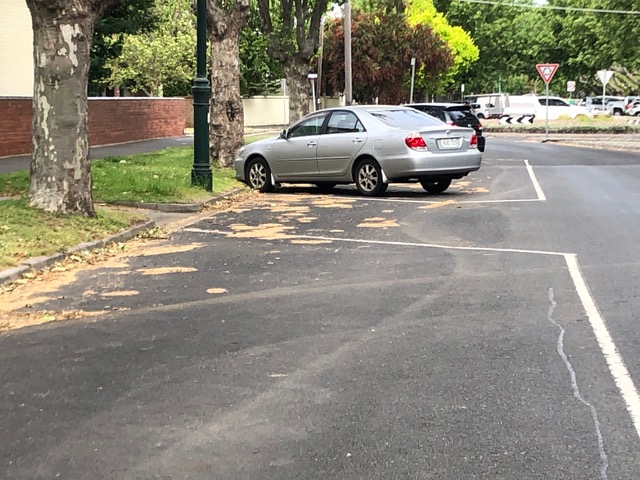
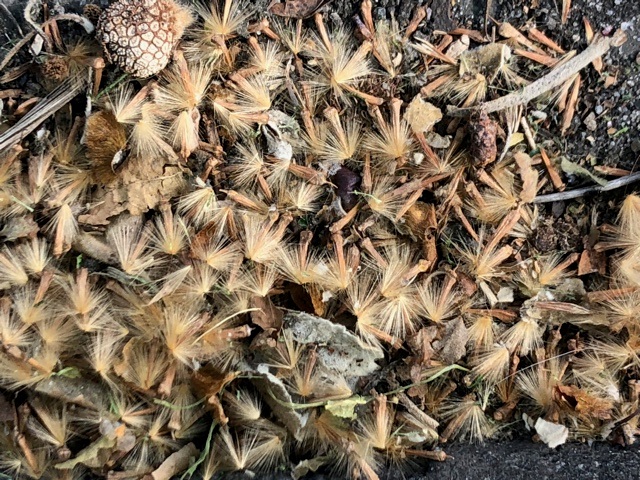
Below is visual evidence of the vast amounts of the seed bombs that these trees shed on an ongoing basis for up to 5 months of the year - (Must be costing council bomb to clean each year as well)
https://www.theage.com.au/national/victoria/plane-trees-a-serious-health-risk-during-spring-doctors-say-20151030-gkmxzd.html
https://theconversation.com/plane-trees-getting-on-your-nose-the-truth-about-hay-fever-9223
plane tree trichomes https://www.theguardian.com/australia-news/2019/oct/24/melbournes-plane-trees-to-be-replaced-by-species-resistant-to-climate-change
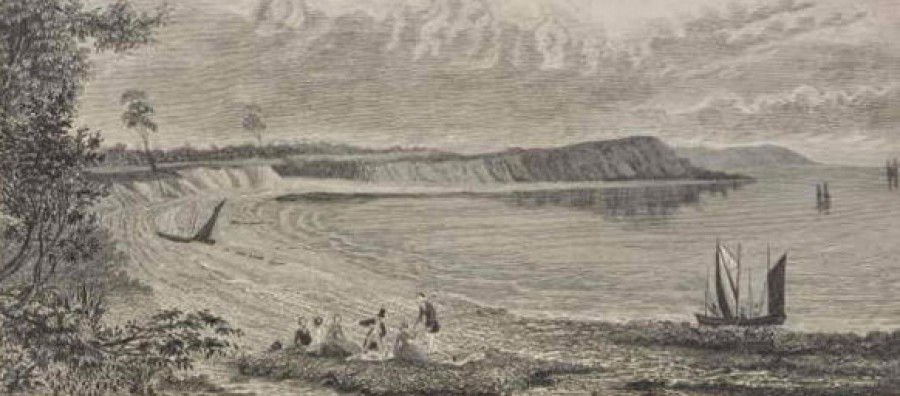
Sited at the western end of Glen Huntly Road, at Point Ormond in Elwood, Victoria, is the locale of Victoria’s very first quarantine station dating back to 1840 – not five years since John Batman proclaimed that “This will be the Place for a Village” on the 8th June 1835:
” . . . In looking over an old journal of my Predecessor, Dr Hunt, then stationed at Williamstown, I find that prior to November, 1852, the Quarantine Anchorage was off the Red Bluff, near Brighton, and that the Government Emigrant Ships Manata, Lady Evelyn, and Chance, were detained there in September and October the sick being transferred to a [?] Hospital . . . “ **
In fact, the suburb Glen Huntly, and the road that connects Point Ormond to this suburb being Glen Huntly Road – bear the name of the very first ship to arrive in Port Phillip Bay displaying the dreaded yellow flag in 1840 . . .
” . . . The first yellow-flagged ship arriving in Port Phillip was the ” Glen Huntley,” from Greenock, with immigrants, on the 17th April, 1840. Typhus fever had shown itself on the voyage, and out of 157 passengers there were no less than fifty on the sick list . . . “ ***
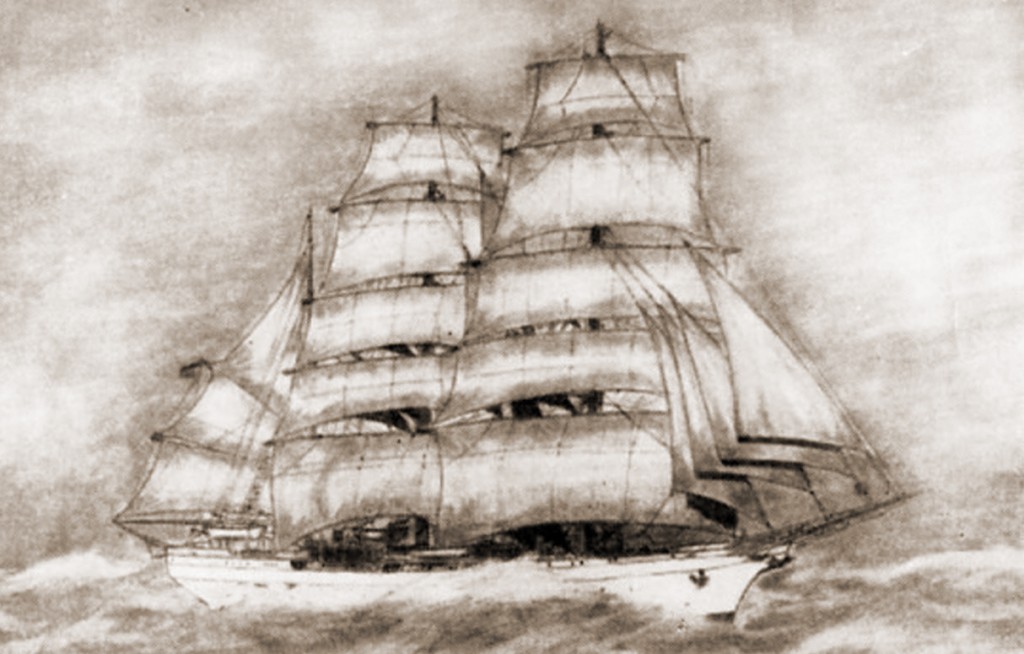
The barque ‘Glen Huntly’ was a 450 ton emigrant ship which left Greenock, Scotland in the December of 1839 under the charge of Captain Buchanan with 157 passengers on board. The voyage would prove to be ill-fated – beginning with a collision with a coaster during the very first night at sea. Hampered by thick fog which encased the English Channel, she then struck a submerged rock, straining her timbers even further. Whilst sailing the North Atlantic, she collided with an American Packet Ship which removed her figurehead and tore away her lower spars. Shortly after crossing the Equator, Typhoid Fever raged through the ship. It was common place for the merchants of the time to overcrowd their ships; provide minimal food, comfort and sanitation for their passengers. As is common place in history, the merchants were more concerned for their profit and those on board. Hence, it was easy for a plague to engulf the weakened physical state of these poor immigrants. Ten passengers died at sea, whilst at least a third of those on board grappled with the disease. When they arrived at Port Phillip on the 17th April 1840 with the yellow plague flag flying, the authorities directed the ship to anchor off the swamp where Elwood now stands.
” . . . Great was the consternation amongst the townspeople on the appearance of so unexpected and unwelcome an importation as a probable pestilence, and no time was lost in arranging for the establishment of a Quarantine Station. The then umbrageous, picturesque territory, now thoroughly civilized and known as St. Kilda, was designated by the Aborigines ” Euro-Yroke ” from a species of sandstone abounding there, by which they shaped and sharpened their stone tomahawks. Its first European appellation was the ” Green Knoll” (the eminence, then much higher, now recognized as the Esplanade), until Superintendent Latrobe named the country St. Kilda in compliment to a dashing little schooner, once a visitor in the Bay. St. Kilda was considered a smart walk from town, and adventurous pedestrians made Sunday trips there in the fine weather. About a mile further, looking out in perpetual watch over Hobson’s Bay, was a point known as the Little Red Bluff, afterwards improved into Point Ormond, and here some four miles from Melbourne, a pleasant enough spot, was organized our first sanitary station, where tents were pitched, and crew and passengers sent ashore. Ample precautions were taken to intercept communication with the interdicted world by land or sea, and Dr. Barry Cotter, Melbourne’s first practising medico, not being too full handed with patients in a small, healthy, youthful community, with a magnanimity that did him credit, volunteered his services to take charge of the newly-formed station. There was a military detachment located there, from which a guard was assigned to protect the encampment on the land side, whilst the revenue-cutter, ” Prince George,” from Sydney, was stationed seaward to shut off communication by boat or otherwise. The Surgeon-Superintendent entered upon his duties with a becoming sense of their importance. By an amusing perversion of terms he styled the place ” Healthy Camp,” and whilst lording it there, issued regular bulletins upon the condition of the invalids and convalescents consigned to his care. Three of the immigrants died there, and were interred near the Bluff. Their lonely graveyard was afterwards enclosed with a rough wooden railing, but has been destroyed by time, and from oversight or culpable neglect has not been replaced, and so their mortal remains have rested in peace, unprotected and undisturbed . . . “*****
**Source: Excerpt – ‘Queenscliff Sentinel, Drysdale, Portarlington and Sorrento Advertiser’ (Vic) – Article “Ye early history of the Quarantine Station, Point Nepean” – published 22nd January 1887
*** Source: Excerpt – ‘The Chronicles of Early Melbourne – 1835 to 1851 – Vol II’ – by Garryowen – published 1888
*****Source: Excerpt – ‘The Chronicles of Early Melbourne – 1835 to 1851 – Vol II’ – by Garryowen – published 1888
Extracted from page: https://poi-australia.com.au/points-of-interest/australia/victoria/elwood/quarantine-station-c-1840-point-ormond-elwood-melbourne-vic/#post_content

I’ve lived for over thirty years in Bayside. My husband Mark was an artisan and I taught at a primary school in Keysborough. Six years ago, Mark sadly died of chronic kidney disease. He left me our business Don Sheil Australia which I ran for a time until I sold it in 2016. I was pleased that the business would be ongoing and a lasting legacy to my family albeit with a different captain. Now free, and my children settled, I rented out my house and started travelling In Earnest. The more remote the better and I had a ball for over three years travelling (usually solo) from South America, northern Canada, Antarctica to Murmansk in Russia – a challenge in the depth of winter.
Love, circumstance and a lust for life bought me to Port Phillip. After been forced to return home from my last travels to Myanmar last year I had to find a temporary home; first to quarantine then to live. Port Philip was a perfect fit. It had vibrancy, the lake, beach, restaurants, diverse inhabitants, spaces of natural beauty and a respect for historic buildings. Clearly, it also showcases the many challenges of displacement and the need which tends to keep you grounded. It also helped that I fell in love with a local and luckily he was okay with that! Win win.
My passion is for living fully, both for me, my children and my partner. I love all things artistic and find they challenge and feed my soul. Port Phillip has an energy about it that you can feel from the first. Everyone feels accepted and I find this stimulating and freeing. I’m hooked.

St Kilda Icon
Monaco (Monarch Cakes) first started in 1931 in Lygon St, Carlton by a Jewish family who migrated from Poland. They recreated the Polish treats they had loved back home, so they could share them with their migrant community that was growing in Carlton. They moved their shop to 103 Acland Street, St Kilda 3 years later. There was a growing Jewish community in the area and they felt that being seaside was a dream for many who had come from Poland and had never lived near by the sea. Here they renamed the cake shop Monarch and it has been in this exact spot for 87 years.
Monarch Cakes has been a cherished destination for many generations....once a much loved cake shop for the Jewish community, it has now been widely embraced and attracts people from all over the world. Baking to traditional recipes that have not changed in decades, using only the best local (where possible) ingredients, Monarch has been widely recognised as Melbourne's oldest and most renowned cake shop. In 2013, the Port Phillip council applied for an exemption from the Victorian State Government to enable the laneway next to Monarch to be named Monarch Lane. There was a great deal of petitioning by local residents and the council worked hard to fight for this exemption, on the basis that "Monarch is not just a business, but a community hub"....the exemption was given and for our 80th birthday, we were presented with the honour of "Monarch Lane". It was a very special moment with the opening ceremony attended by councilors, residents, local identities and media. It is the only street in Melbourne named after a business!
Our connection to St Kilda is very strong and we are here to stay....well hopefully! The last few years have been very tough. The tram upgrade, closure of the street to through traffic and the plaza have effected us greatly. The beautiful, small village feel of Acland Street was destroyed by the tram super stop. So much damage was done and to reverse this will be a great challenge. We are thankful to be in the 'Paris end' of Acland Street, where we still feel like we are back in the good old days....but sadly when you walk towards the plaza, the reality hits you in the face. Some days, we feel like it's time to move on, find a new hood, knowing our customers will always seek us out. But we stay, because we are loyal to our local community and realise how valued we are and how much we must stay here for them.
Monarch is a family run business....in practice not just in name...we are 3 generations working here together. The pandemic has been a challenge, but at the same time there were many very special memories made....on occasions like Mother's Day for example, when most were unable to see their families, we were very lucky. I got to work with my mum and my daughters....we are all grateful for that. We do not know what lies ahead and no one can tell when things will return to 'normal' but we will try very hard to be part of the revival of St Kilda. We are extremely passionate about that. We love what we do and we treasure our part in the history of St Kilda. We appreciate our local, loyal customers...they keep us going! Through 18 months of instability and uncertainty, the local St Kilda community has given us the strength to stay open every single day...their thanks, their words of encouragement and their gratitude gave us energy to fight on! St Kilda will be back....you can count on that!

Brodie, originally from Mornington moved to Port Melbourne in 2018. It was the proximity to the bay, much like he had growing up in Mornington that initially attracted him to the area.
Whilst searching for his new home, he saw that Port Melbourne had a community feel that is rare in such proximity to the CBD. “I realised quite quickly, Port Melbourne had such an interesting story that really captured my attention” he said.
“Community has always been important to me. I think growing up on the Peninsula, I always felt like we were connected there. Everyone knew everyone. It instilled a strong sense of value around community and knowing your neighbours” he said. “I always sought purpose through my community, and it’s been a common theme through my work too. I’ve always sought roles that connected me with my community.“
Brodie recently started working with ‘Be Collective’ as a Community Development Manager.
“It’s an awesome role. I get to engage directly with these amazing people working and volunteering in our City. I’m inspired and excited by the work these unsung heroes do every day.” “A typical day for me might be meeting with local community centre leaders to discuss volunteering ideas, talking to Council about the social impact in our city and supporting local charities to engage with their volunteers in new ways.”
“Volunteering offers so much. It allows corporations and their staff to have deeper insight into their community, provides employment pathways for at risk groups and perhaps most importantly, it brings people together, forming small communities with shared purpose.”
Be Collective is a social enterprise that was established in South Melbourne in 2015 and now supports thousands of volunteers and organisations across Australia, New Zealand, the UK and Europe through its online volunteer management platform. “I’m really proud to be a part of an organisation that was born right here in the City of Port Phillip,” Brodie said. Brodie is also a devoted dog lover and started an online community group in 2020 for Port Philip Residents. The group now has over 800 members.
“I always wanted a dog. When I did finally get George my French Bulldog, I hadn’t beenI hadn’t been living in the city for that long and I certainly wasn’t ‘in’ with the dog community. I was looking for support and advice. It just so happened this coincided with CovId. What I found was, there was a lot of fear and uncertainty in the city, but our community online and in the dog parks, allowed a space for us to support each other and comfort each other. Our dogs were facilitating a level of community cohesion few other activities could during Covid. It was quite incredible.
Brodie recently spoke at our local Council meeting, bringing attention to the role pet ownership is having on mental health and wellbeing.
“It’s something I experienced first-hand. I live alone and I’ve been working from home for almost two years now. Like everyone, I had to really assess how I made this life work. My dog has been instrumental in keeping me connected in community and I think the value of this needs to be recognised at a local Council level.”
“Any program or activity that is supporting wellbeing, community cohesion and social connection needs to be front and centre at a local council level.” He said.
I asked Brodie how he sees 2022 unfolding. “I think we have a rare opportunity to really look at how we participate in our community and how we can help others to do this too. Right now, people need our support as we look towards ‘re-entry and a re-emergence post COVID. Our people need leadership here at a time when they’re trying to find ways back into traditional community.” Brodie said.