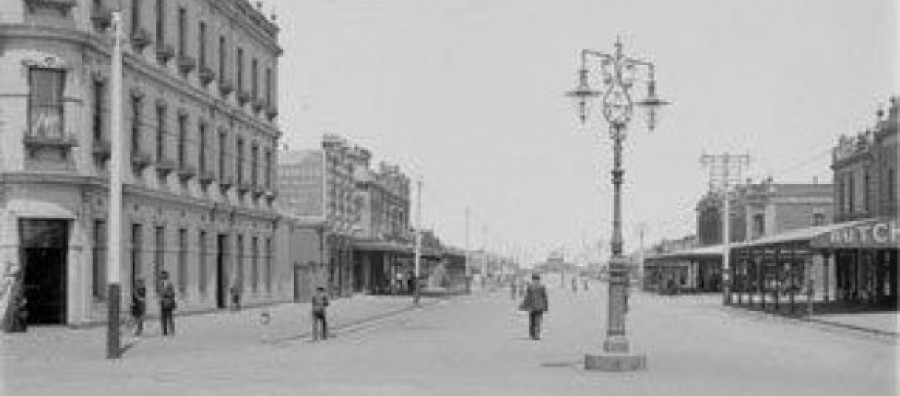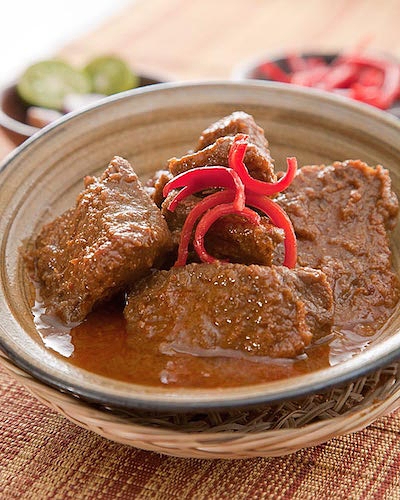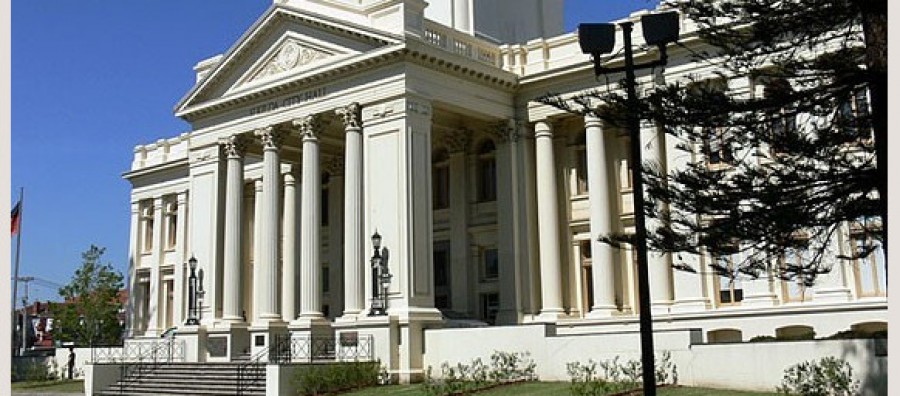
The link takes the viewer to a third-party website providing information about theatre in the region.
...more

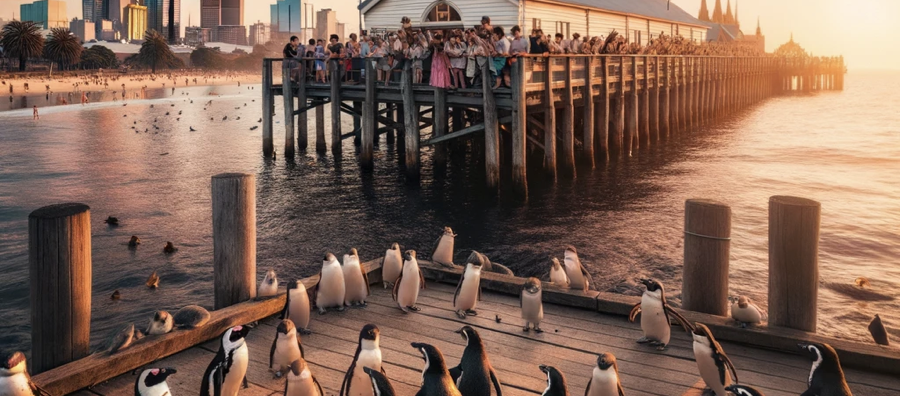
In the bustling metropolis of Melbourne, the St Kilda Pier serves as an urban oasis for weary city dwellers seeking a glimpse of nature's majesty. Home to a thriving community of 1,300 Little Penguins, the breakwater has become a sanctuary not only for these marine birds but also for the city's residents and tourists. The confluence of concrete and ocean, skyscraper and sky, meets its most tranquil counterpart in the sight of these penguins returning to their burrows each evening.

However, Parks Victoria's recent proposal to monetise this experience through a pay-per-view scheme for the penguin colony raises important ethical and economic questions. As they undertake a $53 million redevelopment of the pier, officials are eyeing entrance fees that could range from $30 for tiered seating to $95 for a guided ranger tour, akin to the prices at Phillip Island's penguin parade. While the government purports that charging a fee will enable better management of visitor numbers and, by extension, the penguins' well-being, we must ask: should access to Mother Nature come at a cost?

The Dystopia of a Privatised Foreshore

Dubbed by critics as "CityLink for penguins," this move towards monetising access to natural beauty risks creating a dystopian future where the splendours of nature become gated communities for the financially privileged. Many argue that the foreshore should remain a common good, open to all, especially when it serves as one of the few free recreational opportunities for lower-income families. Volunteers have managed the penguin viewing experience with nothing but passion and commitment; their efforts should not be commodified.

The Economic Fallacy

From an economic standpoint, monetising public goods often leads to an inefficient allocation of resources. The marginal cost of allowing one additional viewer to witness the penguins is practically zero, yet the proposed fee creates an artificial barrier to entry. This is hardly an example of market efficiency; rather, it reflects a short-sighted grab for revenue at the expense of societal welfare.

The Social Contract Revisited

While the State has a duty to conserve and manage natural resources, this responsibility should not extend to erecting paywalls around public spaces. Governments are caretakers, not landlords, of our natural heritage. If the goal is to manage crowd size for the benefit of the penguin colony, then timed entries, a reservation system, or even a donation-based model could achieve this without excluding those who cannot afford the fee.

Environmental Stewardship Over Profit

Local St Kilda resident and long time reader asserted that “at a time when families are facing cost of living pressures and wanting a fun day in St Kilda, the fee proposal is the last thing that should be on Parks Victoria’s radar.”. He went on the say “We all know what happens to fees anyway. It starts with good intentions, but nothing ever is reinvested. It all ends ups in consolidated revenue.”

There are numerous ways to ensure environmental protection without commodifying nature, such as through better crowd management techniques, increased public awareness, and reinforced regulations against harassment of the penguins.

In a world increasingly dictated by market forces, the tranquility of a Melbourne sunset and the simple joy of watching penguins waddle home should remain priceless. To put a price tag on such experiences would not only be unfair but also profoundly unwise.

Thus, as stewards of both natural and economic ecosystems, our governments should resist the temptation to turn public wonders into private commodities. The penguins, and indeed the broader principle that access to the wonders of Mother Nature should be free, are worth far more than the sum of their potential admission fees.

Port Phillip Matters (PPM) has received much interest in this matter. Jenni Roper, local St Kilda resident, has summed up her thoughts on this:

"The pressing question at hand is the amount Parks Victoria plans to charge for viewing the penguins. There must be transparency on their part in communicating not only the cost but also the allocation of these funds. Specifically, how will the revenue benefit the local environment, the community, and the penguins themselves? Penguin-watching has apparently become a lucrative venture. As a 23-year resident of St Kilda, I've always considered it a privilege to take my children and visitors down to the pier to see the penguins, all without incurring a fee. This has been an integral part of our local community experience. I sincerely hope that Parks Victoria will refrain from charging local residents. However, if large tour buses start to frequent the area, as they do at Phillip Island, a nominal fee could be levied, provided that the collected funds are channeled directly into educational and conservation initiatives for the penguins."


...more
Promotion
Lavished 60's Ballads
Taking a well worn Bossa Nova book lavished with 60’s ballads and a happy handful of cabaret pizzazz this delightful quartet is far from a typical Melbourne Jazz experience.
...more
JAAG is a community group formed in 2002

By Virginia Rogers

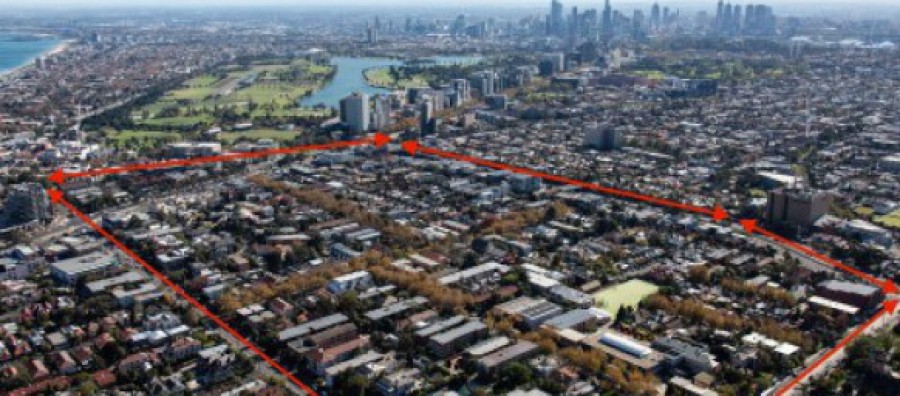
The Junction Area Action Group known widely as JAAG, is a community group which was formed in 2002.  Since inception, the group has grown from a few local residents to now represent more than 300 concerned residents and business owners in two St Kilda Junction precincts; one bounded by St Kilda Road, Alma Road, Chapel Street and Dandenong Road and the other bounded by Fitzroy Street, Princes Street and Barkly Street, St Kilda.

The boundaries are highlighted in the above photo (courtesy of Andrew Hobbs).

The precincts comprise of an eclectic mix of heritage homes, low rise social housing, two to four storey apartments as well as some office and commercial buildings, St Michael’s Grammar school and two synagogues.

Mission Statement

St Kilda’s JAAG strives to preserve our highly sought after sense of community values and protect our much loved local heritage buildings and streetscapes by addressing local issues (ranging from inappropriate developments, parking issues and traffic congestion to residents’ safety and streetscape improvements).

JAAG achieves these outcomes by lobbying local and state government and other bodies and challenging planning applications to protect and bring about positive decisions that enhance the livability of our ‘prized” precinct.

Regular news letters are published and group gatherings are held from time to time, to help keep the JAAG members informed and actively involved with local issues.

Strategy

Promote what JAAG stands for, its values and where and over what it will ‘draw a line’ in the sand.

Key Issues

  • High Rise developments likely to negatively impact the area
  • Traffic congestion, speeding, illegal turns, road safety
  • Community’s safety
  • Parking issues
  • Trees and streetscape improvements
  • Street amenity (ie backpackers, street camping out, non compliance by developers of planning permits and construction management plans)

Yes you can easily become a member of JAAG StKilda if you live, work or own property in the precinct. There are no joining or annual fees, so just fill out our form and send it in.

Benefits of becoming a JAGG Member:

  • Regular email newsletters
  • Opportunity to get to know your local community and make new friends
  • Advice and possible support should you have an inappropriate planning issue
  • Chance to have your views and concerns heard by the community and Council
  • Group meetings from time to time
  • Invitation to JAAG organised events

Visit JAAG - https://jaagstkilda.com/about/ 

...more

A team is at work researching and writing a history of Albert Park. The book will be the latest in a series published by The Middle Park History Group.

The first was THE HEART OF MIDDLE PARK: Stories from a suburb by the sea. It was designed to take readers on ‘ a voyage of discovery of iconic places, people and milestones in the life of an Edwardian suburb by the sea.’

It was followed by MIDDLE PARK: From Swamp to Suburb, a much larger volume tracing early history and the development of swamps and lagoons into the suburb that is Middle Park.

In the latest MIDDLE PARK: The way we were, the reader is introduced to daily life, as it used to be,  in the area. This ranges from the milkman and his horse to small industries, clubs, corner shops (lots of them) memories of the Greek community, even violence and crime.

The Avenue Bookshop in Albert Park has long urged the publication of a history of that suburb prompted by interest in the Middle Park volumes. Now it is underway.

The Middle Park History Group comprises a dedicated band of amateur and professional historians, writers, researchers and enthusiastic local residents

https://middleparkhistoryg.wixsite.com/mphg 

Image: courtesy of State Library of Victoria (Rose Stereograph Co. (1920). ARMSTRONG STREET, MIDDLE PARK, VICTORIA).

...more
Good MorningImage Caption
The article provides information about activities and events as well as links to relevant third-party websites.
Image Caption


...more
Diverse Cultural Backgrounds.

From City of Port Phillip website

The City of Port Phillip promotes positive community relationships and provides a range of services and advice to assist people from culturally and linguistically diverse backgrounds.

The City of Port Phillip is a vibrant multicultural city. This rich, cultural diversity is one of our greatest strengths and one we celebrate.

  • We are home to people from over 163 different birthplaces, speaking 114 different languages
  • One in three of Port Phillip’s 100,870 residents were born overseas
  • In our community, 51.8 per cent have at least one parent who was born overseas
  • Of our residents, 20.6 per cent speak a language other than English at home.

Cultural diversity in Port Phillip
If you would like to request the latest settlement and cultural diversity statistics, please contact the Diversity Officer.

Multicultural Advisory Committee
The Multicultural Advisory Committee (MAC) was established by the Port Phillip Council to provide advice and feedback on all issues that affect multicultural communities, refugees or asylum seekers in the City of Port Phillip. It is also active bringing matters of concern within the community to the attention of the Council.

Key objectives of MAC are to be the peak advisory and advocacy body on issues affecting multicultural, refugee or asylum seeker communities within the Port Phillip municipality.

  • Provide advice to Council on its policies, plans and services that impact our multicultural communities
  • Liaise with other organisations and networks that have a direct interest in advocating for or serving multicultural communities, refugees or asylum seekers in the City of Port Phillip.
  • Consider and provide advice on key Government initiatives, issues, programs and reviews.
  • Assist Council to promote the benefits of cultural diversity, social cohesion and inclusion of all residents within the City of Port Phillip and beyond.
  • Provide advice to Council on its communication, engagement and consultation with multicultural communities.
  • Celebrate the achievements of multicultural communities and raise awareness of their specific needs.

The term of the current Committee is until 7 May 2021. To view the Committee’s Terms of Reference, go to Special and Advisory Committees

We want to hear from you
Members have been selected so that the MAC encompasses a wide range of backgrounds, experiences and views. The Committee welcomes feedback from the community and anyone with concerns or suggestions is encouraged to contact the Diversity Officer. We are concerned to improve the lives of this city's multicultural population.

Let us know by contacting the Diversity Officer.

See source article: https://www.portphillip.vic.gov.au/people-and-community/multicultural-community 

...more
Article Text of Lede. Article Text of Lede. Article Text of Lede. Article Text of Lede. Article Text of Lede. Article Text of Lede. Article Text of Lede. Article Text of Lede. Article Text of Lede. Article Text of Lede. Article Text of Lede. Article Text of Lede. Article Text of Lede. Article Text of Lede. Article Text of Lede. Article Text of Lede. Article Text of Lede. Article Text of Lede. Article Text of Lede. Article Text of Lede. Article Text of Lede. Article Text of Lede. Article Text of Lede. Article Text of Lede. Article Text of Lede. Article Text of Lede. Article Text of Lede. Article Text of Lede. 
Article Text of Lede. Article Text of Lede. Article Text of Lede. Article Text of Lede. Article Text of Lede. Article Text of Lede. Article Text of Lede. Article Text of Lede. Article Text of Lede. Article Text of Lede. Article Text of Lede. Article Text of Lede. Article Text of Lede. Article Text of Lede. Article Text of Lede. Article Text of Lede. Article Text of Lede. Article Text of Lede. Article Text of Lede. Article Text of Lede. Article Text of Lede. Article Text of Lede. Article Text of Lede. Article Text of Lede. Article Text of Lede. Article Text of Lede. Article Text of Lede. Article Text of Lede. Article Text of Lede. Article Text of Lede. Article Text of Lede. Article Text of Lede. Article Text of Lede. Article Text of Lede. Article Text of Lede. Article Text of Lede. Article Text of Lede. Article Text of Lede. Article Text of Lede. Article Text of Lede. Article Text of Lede. Article Text of Lede. Article Text of Lede. Article Text of Lede. Article Text of Lede. Article Text of Lede. Article Text of Lede. Article Text of Lede. Article Text of Lede. Article Text of Lede. Article Text of Lede. Article Text of Lede. Article Text of Lede. Article Text of Lede. Article Text of Lede. Article Text of Lede.
Article Text of Lede. Article Text of Lede. Article Text of Lede. Article Text of Lede. Article Text of Lede. Article Text of Lede. Article Text of Lede. Article Text of Lede. Article Text of Lede. Article Text of Lede. Article Text of Lede. Article Text of Lede. Article Text of Lede. Article Text of Lede. Article Text of Lede. Article Text of Lede. Article Text of Lede. Article Text of Lede. Article Text of Lede. Article Text of Lede. Article Text of Lede. Article Text of Lede. Article Text of Lede. Article Text of Lede. Article Text of Lede. Article Text of Lede. Article Text of Lede. Article Text of Lede. Article Text of Lede. Article Text of Lede. Article Text of Lede. Article Text of Lede.  
Article Text of Lede. Article Text of Lede. Article Text of Lede. Article Text of Lede. Article Text of Lede. Article Text of Lede. Article Text of Lede. Article Text of Lede. Article Text of Lede. Article Text of Lede. Article Text of Lede.


...more
Test Blank Row

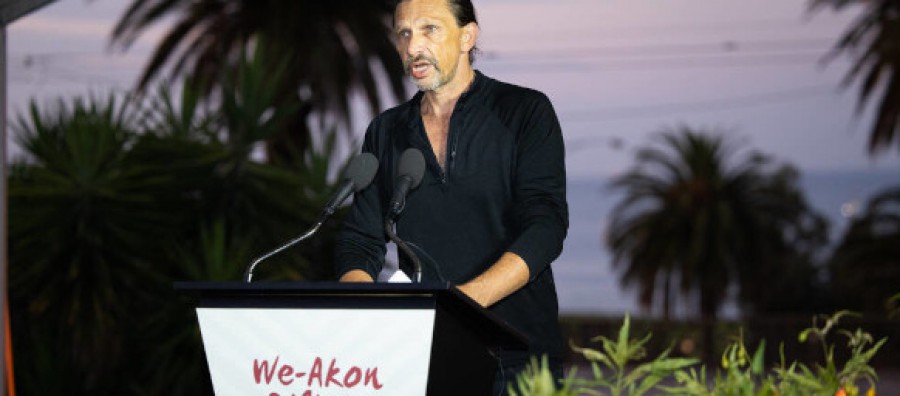
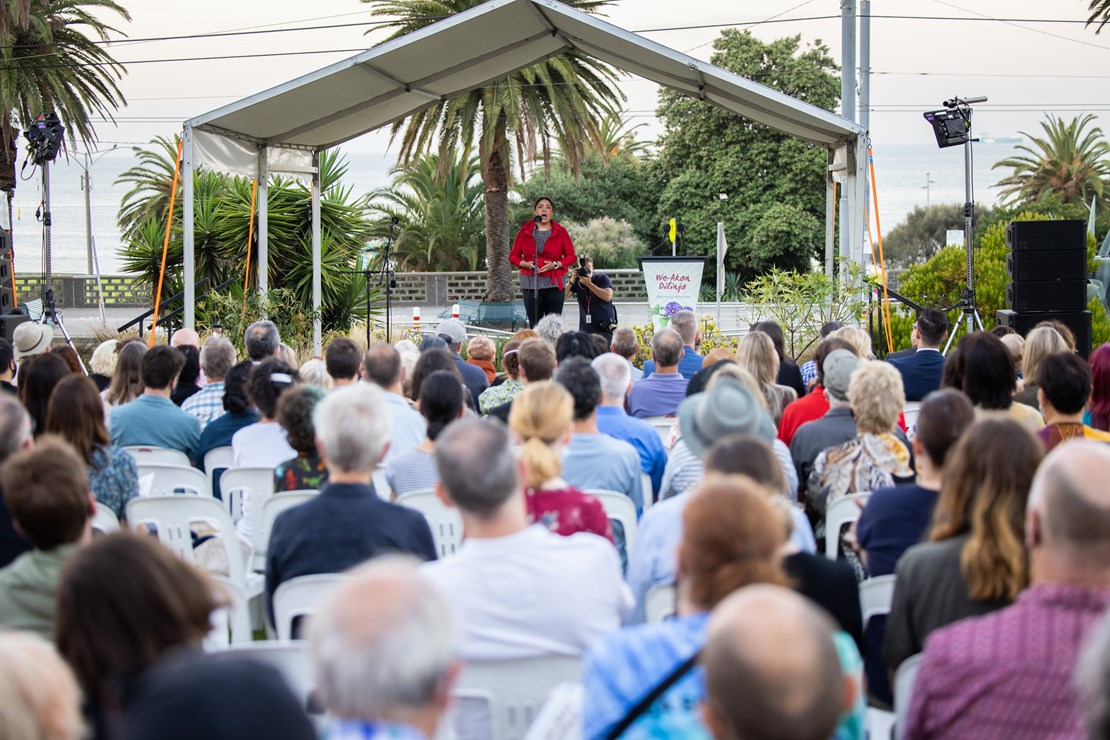
The third We-Akon Dilinja (mourning reflection) ceremony was attended by an estimated crowd of 500 people at Alfred Square on Australia Day.

The moving ceremony was also livestreamed for those unable to attend the St Kilda ceremony.

Presented by the Boonwurrung Land and Sea Council (BLSC), and supported by our Council and the National Australia Day Council, this year’s theme was Healing through Remembrance, Reflection and Recognition.

As dawn broke, Kiernan Ironfield’s skilful didgeridoo playing opened the proceedings. The culture and history of the Boonwurrung people was then conveyed through readings and music with a smoking ceremony concluding the inclusive event.

N’arweet Jason Briggs said: “This ceremony is an important step in acknowledging our shared history with other Australians who’ve come to our Country.”

To view the ceremony, click here 


2022 WE-AKON DILINJA PROGRAM

MC – Bo Svoronos

Didgeridoo player – Kiernan Ironfield

Boonwurrung Welcome Song – James Henry (written by James Henry & Jarra Steel)

Welcome to Country and Introduction – Parbinata Dr Carolyn Briggs AM

N’arweet Jason Briggs

Boonwurrung song – “Long Time Living Here” – Shauntai Batzke (written by Deborah Cheetham AO, Parbinata Carolyn Briggs, Jarra Steel & Aunty Fay Stewart Muir)

1st reading – Dick Gross

Shofar with Jewish prayer – Rabbi Gabi Kaltmann

Wiradjuri song – “Babirra Nyiwarri Gariya Giran” – Shauntai Batzke (written by Shauntai Batzke)

2nd reading – Cr Marcus Pearl, City of Port Phillip Mayor

Tribute to past Boonwurrung Elders – Parbinata Carolyn Briggs and Michael Julian

Boonwurrung song – Balayang (written by Marbee Williams) & Yuwaalaraay song – Murrgumurrgu (written by James Henry) – James Henry (lead vocals) accompanied by Michael Julian (percussion) & Caerwen Martin (cello)

Smoking Ceremony – David Tournier

...more

The City of Port Phillip is a great place to live. Our beachside suburbs, parks, and laid-back neighbourhoods make our city one of the most liveable in Australia. But climate change is affecting our way of life. The probability of bushfires, rising sea levels and flooding threaten our city, our country, and our way of life.

How can Port Phillip contribute to reducing carbon emissions?

Council has a role to play in reducing carbon emissions, but council itself is only responsible for <1% of emissions in the City of Port Phillip. To council’s credit, they have achieved zero net emissions in 2020/21. However, the big changes needed, like less carbon-intensive energy sources and cleaner modes of transport, can only be meaningfully addressed by state and federal governments. Council can deliver cost-effective, measured actions on climate change such as reducing the amount of residential waste going to landfill and thereby reducing greenhouse gas emissions. 

What is the biggest impact council can have for a sustainable future?

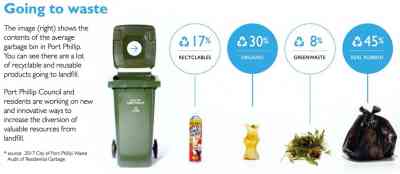
The City of Port Phillip is surrounded by councils that provide food waste and green waste bin services. Port Phillip sends over 70% of waste to landfill , whereas the average Victorian council saves 50% more waste from landfill than Port Phillip. 

About half of the waste found in our average landfill bins are made up of food and garden waste. By recycling food and garden waste, we can help reduce the amount of greenhouse gases generated and contribute to the creation of nutrient-rich compost. Recycling food and garden waste helps reduce the amount of waste that goes to landfill and turns it into a valuable resource for farmers and parks and gardens.

The City of Melbourne introduced the new food and organic service in May 2021 to 9,000 single storey residences at no additional cost to residents  and is part of the council’s wider plan to reduce landfill and improve waste and recycling services across the municipality. in the second stage of the program, the City of Melbourne will roll out this service to high-rise apartments. 


Why hasn’t Port Phillip provided green and food waste bins? 

The option to introduce a green and food waste bins was considered by council in 2018 but rejected because it “was found to be extremely expensive due to high set up costs and would only meet the needs of half of our community." This decision by our council to deny residents green/food waste bin services has resulted in an extra 8,000  tonnes of waste going to landfill per year. 

Council commenced a trial of FOGO (food organic and garden organic) waste bins in August 2020, but only after the Victorian government mandated these bins to be rolled out by 2030 (‘Recycling Victoria, a new economy’).

Other councils have had these bins for many years, and they are highly effective at reducing waste sent to landfill. For a council that has declared a ‘climate emergency’, it is hypocritical that this important sustainability measure was not introduced earlier and even now, it will not be fully implemented for some time yet. 

Council ought to be able to fund essential services, like food and green waste bins, out of its existing rates revenue. Council has a duty to provide waste management and recycling services without increasing the total amount of rates & charges collected. Waste management and recycling are fundamental core services and currently these services are substandard. Council must prioritise spending or find efficiencies to deliver these basic services. 

Credits:

Image: Landfill at St Albans- Courtesy of The Age 

https://knowyourcouncil.vic.gov.au/councils/port-phillip/reports/waste-collection

https://www.melbourne.vic.gov.au/residents/waste-recycling/Pages/food-garden-waste.aspx

Council meeting 17 October 2018, item 11.1 (http://www.portphillip.vic.gov.au/Minutes%20Ordinary%20Council%2017%20October%202018.pdf)

21,000 tonnes of garbage per year. 38% is organic and green. Source: http://www.portphillip.vic.gov.au/default/WasteManagementOperationsDocuments/WM_ Waste_Recycling_A4_6PP_0317_PROOF5_Spreads.pdf

...more
Know Your Neighbourhood

After hoons took over Marine Parade in January 2021, Council promised to act, but solutions to prevent hoon driving may not be available in time for summer.

Hoon driving is an unfortunate and frequent occurrence along Port Phillip's foreshore, especially in summer. From St Kilda to Port Melbourne, residents have reported hoon driving, antisocial behaviour, violence, excessive noise, and property damage. The dangerous driving has compromised the safety of pedestrians and other vehicles, and has had a detrimental impact on residents and on community safety.

The most notable recent example was in January 2021. St Kilda witnessed hundreds of people gathering on Marine Pde outside the BP service station to watch burnouts. The crowd quickly turned violent with bottles and rocks being thrown including at a police car trying to break up the group. Police later raided homes from Dandenong to Hillside suburbs, arresting 14 people and seizing 12 cars.

Video footage from the St Kilda hoon driving incident can be viewed here: https://youtu.be/NrmLTPrZ7Ck 

At the time, Port Phillip Council promised to help prevent similar episodes by deploying CCTV cameras for police use. A community petition was presented to Council in February, and Council decided to seek funding from State Government, in a joint application with Port Phillip Police, for the purchase of a mobile CCTV camera. Council also applied to the Department of Transport to have six fixed cameras installed.

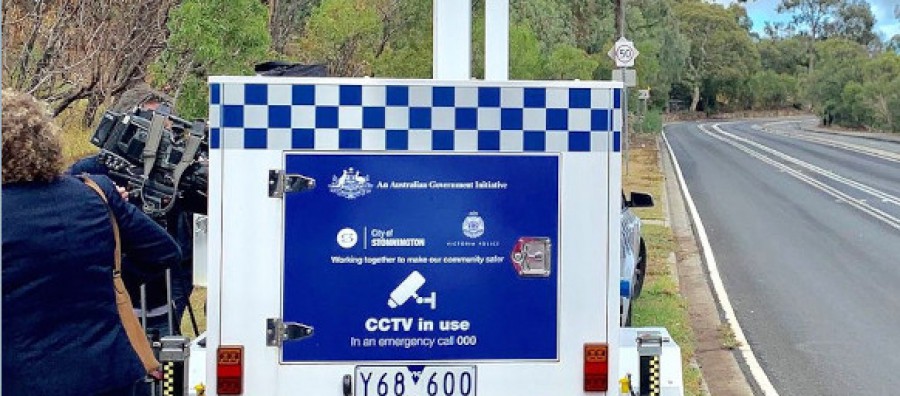
In June, the state government rejected the application, so Council borrowed and trialled the City of Stonnington’s camera (pictured) which was found to be effective in assisting police to identify, locate, and respond to hooning. Council submitted a grant application to the Federal Government in August, but the outcome of the grant application will not be known until October.

The Port Melbourne Road Safety Group (PMRSG), concerned about the lack of progress, presented another petition to Council in August, and at the September 15 Council meeting the petition was considered. 7 of 9 councillors voted for better surveillance, reduced speed limits, physical barriers, new signs and parking restrictions.

FOR: Crs Crawford, Cunsolo, Bond, Sirakoff, Martin, Pearl and Clark
AGAINST: Crs Baxter and Copsey

Two Councillors voted against the motion stating different reasons for their vote. Cr Copsey did not want to spend the money. Cr Baxter cited many reasons including: “nobody else in Port Phillip has even told us what they think that they could be surveilled anywhere, anytime by a mobile piece of equipment" and “we can’t give police everything they want”.

Conversely, Cr Clark supported this motion, stating this issue had been raised many times by residents, councillors and police over the past year, and the community was tired of waiting for action as summer approaches again. Cr Pearl thanked the police for their service to the local community, and local community groups for promoting mobile CCTV to reduce hoon driving and anti-social activity. He acknowledged this is not council's primary function but stated that if the community is asking Council to look at this issue then Council should partner with state government and police to deliver the much needed equipment.

A mobile CCTV trailer would cost $117,120, with an additional $5,000 per annum required for maintenance, insurance, registration, and data costs. This amount would be a rounding error in the City of Port Phillip budget, yet make an enormous difference to the local community and improve community safety.

The City of Melbourne operate a Safe Cities Camera Program which involves 65 CCTV cameras with an additional 315 cameras funded by state government after the Bourke St incident in 2017. City of Melbourne employs specially trained security contractors to monitor the cameras, record incidents and pass information onto police. They also operate a security patrol vehicle that is fitted with 360 degree CCTV surveillance cameras on weekend nights.

Council has dithered on this issue since the events of last summer. A recent interview of Mayor Louise Crawford with ABC’s Virginia Trioli confirmed that Council has no definitive plan to stop hooning this summer, despite it being debated in chambers 8 months ago. No-one wants to see more hoon driving along Marine Parade this summer, and no one wants pedestrians and the community to be put at risk. With hindsight, Council should have budgeted for the acquisition of a mobile CCTV camera given the risk that the grant applications failing.

It is clear most councillors are supportive of community safety and neighbourhood amenity, Residents should demand that Council purchase a mobile CCTV if the Federal Government rejects Council’s application, so that this summer, our roads can be a safe place for our community to unwind after a tough year for everyone.

Image of the City of Stonnington and Victoria Police mobile CCTV trailer:
https://sen.news/2019/10/11/city-of-stonnington-seeks-cctv-access-control-services/city-of-stonnington-mobile-cctv-trailer/ 

...more
Promotion
Streets of South Melbourne

South Melbourne, between the south bank of the Yarra River and Port Phillip Bay, originated at the area known as Emerald Hill, 2 km. south of Melbourne.   Emerald Hill, an old volcanic outcrop, stood out from the surrounding swamp land and had greener vegetation. Its elevation above the Yarra delta attracted the initial settlement. During summer, the swamp land dried out and it could be used for recreation or military training.  Settlement south of the Yarra River was focused on Sandridge (Port Melbourne), which was linked to Melbourne by a track from a pier at Sandridge beach. Land sales in South Melbourne were few during the 1840s, but in 1852 a survey of Emerald Hill resulted in the auction of subdivided lots. Settlement happened quickly and within two years its residents were complaining that the Melbourne City Council was not giving them value for their rates. On 26 May, 1855, Emerald Hill was proclaimed a separate borough.

At the time of the survey of Emerald Hill in 1852 a temporary township was created west of St. Kilda Road, south of the river. It was Canvastown, a low-lying area with tent accommodation for gold-field immigrants. It lasted for two years and gave its name to the first school (1853) in the area at the corner of Clarendon and Banks Street.  Slightly later in Emerald Hill, church primary schools were opened: Presbyterian (1854), Catholic (1854), Anglican (1856) and the Orphanages, Protestant (1856) and Catholic (1857). A mechanics’ institute was opened in 1857.   The opening of the Melbourne to Hobsons Bay railway in 1854 did not benefit Emerald Hill very much because it skirted the area, but the Melbourne to St. Kilda line (1857) had an Emerald Hill station by 1858.

The land around Emerald Hill remained unsuitable for housing or industry until it could be drained. The Victoria Barracks, on higher land in St. Kilda Road, was built in 1859, and the military freely roamed the area: rifle butts were in Albert Park and a shore battery was at the end of Kerford Road. In 1863 massive floods inundated the surrounding area and the few optimistic infant industries.  Although flood mitigation did not gain a significant boost until the Coode Canal (1887), land reclamation, drainage and river embankment works encouraged settlement on the flat area.  The Albert Park lagoon was excavated to form a lake for boat jaunts in 1875.

On 1 March, 1872, Emerald Hill was proclaimed a town which led to the council moving its town hall from Cecil Street to the site occupied by the Protestant Orphan Asylum.  State schools replaced church schools: the Eastern Road school (1877), the Dorcas Street school (1881), the City Road school (1884) and Montague (1889), all grew to become crowded, as the population of South Melbourne more than doubled in twenty years, reaching nearly 42,000 in 1891. Before trams came to South Melbourne, Clarendon Street emerged with a main retail strip.

Industries along the river had been mainly noxious, imparting unpleasantness to the growing residential areas. The Harbor Trust (1877) forced the industries to move downstream, and manufacturing replaced them, drawn by the better access across the Falls (Queens Street) Bridge and the construction of South Wharf.

Football clubs were formed in the 1870s and in 1879 the South Melbourne club with red and white colours took its place in the Victorian Football Association. It was one of the founding clubs of the Victorian Football League in 1897. Emerald Hill town changed to South Melbourne on 25 September, 1883.

Tram lines along Clarendon Street and Park Street were opened in 1890, along with the connection made to the city seven years before with a steam ferry between Clarendon and Spencer Street. Manufacturing and food-processing industries expanded back from the riverside. The giant red brick Tea House building, originally a stationer’s warehouse (1890), is a surviving example in Clarendon Street. Notable food processors were Hoadley’s Chocolates (later Allens Sweets) and Sennits ice-cream. Textile mills, timber merchants and furniture trades set up in the 1880s. Clarendon Street, in addition to having many food and drapery retailers, had furniture retailers. Maples, Tyes and Andersons began in South Melbourne and grew to become metropolitan chains. Crofts grocers also began in South Melbourne.

Education broadened to secondary level with a technical school (1919-92), St. Joseph’s technical school (1924-88) and the conversion of the City Road primary school to the Domestic Arts School (1930). Another was the transfer of the Melbourne Girls’ High School to MacRobertson Girls’ High School, in a corner of Albert Park, in 1934.

From Emerald Hill’s beginning with the Orphan asylums, welfare has had strong community support in South Melbourne. The Montague kindergarten opened in 1909, along with Methodist and Catholic kindergartens within a few years. Baby welfare and child hygiene centre were opened during the 1920s. When a South Melbourne local, Harold Alexander, was appointed Town Clerk in 1936, the council deepened its interest in welfare activities. The charitable community-chest and increased rates from commercial properties help to fund welfare activities. At that time South Melbourne was receiving the first postwar migrants, who increased in the nest two decades. Cricket and football was played beside the South Melbourne Hellas Soccer Club (1959), and adult migrant English classes were run at the Eastern Road primary school. Riverside industry expanded, and the Montague kindergarten closed in 1959. Montague was disappearing.

South Melbourne has a strip of land on the west side of St. Kilda Road from the river to the end of the Albert Park. Part of it came from severance from the Albert Park reservation in 1875, providing sites for boulevard mansions. Closer to the river there were several institutional land uses: the Homeopathic (later Prince Henry’s) Hospital, 1882, the Immigrants’ Home (1852-1911) and the Victoria Police hospital. On the site which would ultimately be the Arts Centre complex there were the Green Mill, Wirth’s Olympia and (later) the Trocadero and Glaciarium entertainment venues.

In the postwar years Melbourne’s central business district spilled down St. Kilda Road. Land was cheaper and the council encouraged development attracted by the increased rates. In 1944 the State Government agreed with South Melbourne’s council that the Wirth’s circus site should be reserved for a cultural centre. Postwar shortages delayed the project, and the first part of the Art Centre was opened in 1968.   As culture officially came to South Melbourne gentrification came to its residential area. The Emerald Hill Precinct is a registered historic area, and inspired conservation initiatives both private and municipal. By 1981 the population was less than half its postwar figure, and local support for the football club had waned. In 1982 the Swans became the Sydney Swans, and the Lake oval lost its main tenant.

The particularly noticeable changes since the 1960s have included high-rise Housing Commission flats (Emerald Hill Court, 1962, and Park Towers, 1969), the Westgate Freeway (1975-95) and the development of Southbank. On a smaller scale there were the conversion of the South Melbourne Gas Works to a park (1982) and the conversion of the Castlemaine Brewery to the Malthouse Theatre (1987).

On 18 November, 1993, the area of South Melbourne defined as Southbank and extending to Docklands was annexed to Melbourne city. On 22 June, 1994, South Melbourne city was united with St. Kilda and Port Melbourne cities to form Port Phillip city.

South Melbourne municipality’s census populations were:

1861:  8,822
1881:  25,374
1891:  41,724
1921:   46,873
1961:   32,528
1991:   17,712

...more
Promotion
Council Watch

Wendy youve recently been appointed the President of the Rotary Melbourne South – what does your role involve?

My role is work with our club members to identify projects that we know will have the biggest and most sustainable impact on the local, broader and global communities.  We depend on fund raising and grants to complete our projects.  Publicly we are mostly known for the famous Bunning’s Sausage Sizzles and the money from these events goes towards making a difference to so many lives.

You have some exciting news re an upcoming merger

 How proud we are at Rotary Port Melbourne and Rotary Melbourne South, as we have decided to merge into one bigger club, Rotary Port Phillip, as from 1st October.  You read it here first! A bigger club has more resources, skills and synergy to have a broader reach to serve communities. We will have the capacity to set up some e-clubs for businesses in the area and an e-club for Interactors heading off to tertiary studies.  

What are some of the projects the club is delivering?

 Here’s a snapshot: Kitchen Garden at the South Melbourne Towers public housing, involvement with the Pollinators Corridor from Port Melbourne to South bank, introducing Earlyact (primary schools), partnering with Interact (secondary students), distribution of bakery items from Noisette to various charities, sending two containers of medical equipment and medical supplies to a hospital in Moyo, Uganda, delivering care packages to those being admitted into the Mental Health Unit at the Alfred Hospital. We do have other projects on the go so come along and see if you would like to join us.

How does the Club decide on what projects to pursue?

The areas of focus are promoting peace, fighting disease, providing clean water, sanitation and hygiene, saving mothers and children, supporting education, growing local economies, and sustainability and the environment. In essence we assess a situation, decide on a project, make a plan, carry out the project and evaluate the project.  Rotary Park on Jacka Boulevard is a case in point; land that had limited use will be an area where families can barbecue together and play on the new playground equipment. Rotary saw a niche to support families, collaborated with the community, CoPP and other rotary clubs.  By December this year, you will see the finished product.

 There seems to be a lot of facets to Rotary like foundation and international – how does it all work?

Service Above Self:  Rotary International aims to bring together business people and professionals with the prospect of providing humanitarian assistance and to further peace throughout the world.  Rotary Foundation transforms monetary gifts into life changing projects both locally and internationally as it is the charitable arm. Clubs can apply for grants through Rotary Foundation.

The structure is in three different levels: clubs (Rotary Port Phillip being one), district and international.

To an outsider Rotary seems like an old-fashioned organisation – yet it has stood the test of time for over 100 years?

Rotary is a vibrant and successful institution which has proven itself over the past 100 years. There are 1.2 million Rotarians globally.  It has grown with the times as well as it once was the domain of working males but now is far more diverse and equal. I suppose Rotary isn’t particularly great at publicising itself.  After I joined, I was staggered when I discovered the extent of Rotary’s impact locally and globally. 

Competing for the charity $ must be tough in the current environment?

It is as is everything else in this current climate.  However, every disruption results in change and some of those changes can be beneficial.  Rotarians have been productive through organising events and activities for post lockdown, reaching out to our more vulnerable members of the community and continuing with our own knowledge bank.

How does one join rotary?

I joined Rotary because, I knew I wanted to be part of an organisation that would enable me to give back to the community.   You can come along to our meetings, perhaps volunteer and when you decide it’s right for you, then approach one of the members.  Our Club’s Membership contact is Ronald Adams – r.g.adams@bigpond.com

Credit - Warwick Lloyd

...more
Promotion
Tourist Attraction

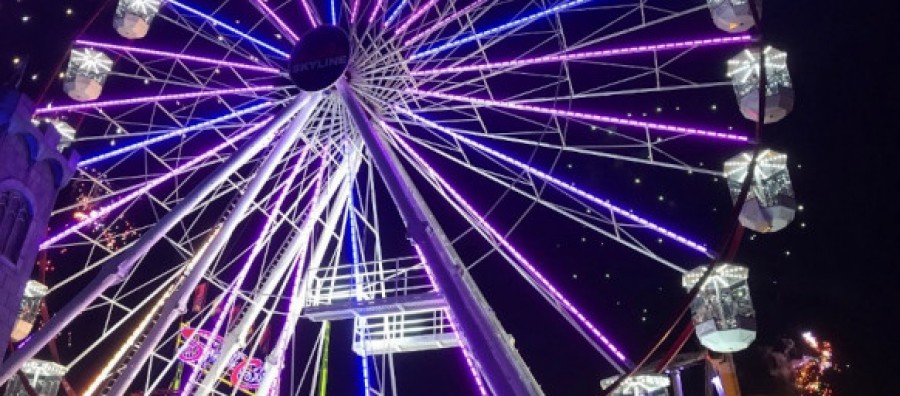
The Skyline Ferris Wheel is set to return to St Kilda after Councillors voted unanimously to provide provisional approval for an event permit for the Skyline Ferris Wheel to operate from Catani Gardens from October 21 to March 22 for one year only, pending consent from Heritage Victoria, DELWP, DJPR and other stakeholders such as Victoria Police. 

St Kilda business leaders advocated for the Ferris wheel to help revitalise St Kilda after the impact of extensive COVID lockdowns on retail and hospitality sectors. The Ferris Wheel is expected to attract families to the Catani Gardens where families can also enjoy ride ponies every Sunday and enjoy a range of close-by St Kilda Cafes, Bars and Restaurants. Parking (450 spaces) is available nearby at Sea Baths. 

The Skyline Ferris Wheel is Australia’s largest transportable Ferris Wheel, standing 35 metres high, with 24 gondolas that gives views of St Kilda, Melbourne, and Port Phillip Bay. The Skyline Ferris Wheel is a welcome tourist attraction for St Kilda and the associated economic benefits are desperately needed. The St Kilda Ferris Wheel will be the highest Ferris wheel in Melbourne following the recent closure of the Melbourne Star Observation Wheel at Docklands. 

We last saw the Skyline Ferris Wheel in 2019 when it was located at St Kilda’s South Beach Reserve, right next door to St Kilda Sea Baths. An earlier application received from the Skyline Ferris Wheel to operate on the South Beach Reserve between October 21 and March 22 was declined by Council. After extensive consultation and debate Councillors agreed the Catani Garden would be a better location for the Wheel because of limited lawn area on the South Beach Reserve.

...more
Local Personalities
Difficult Times for Business

Who are you and what is your connection with our Port Phillip community? 
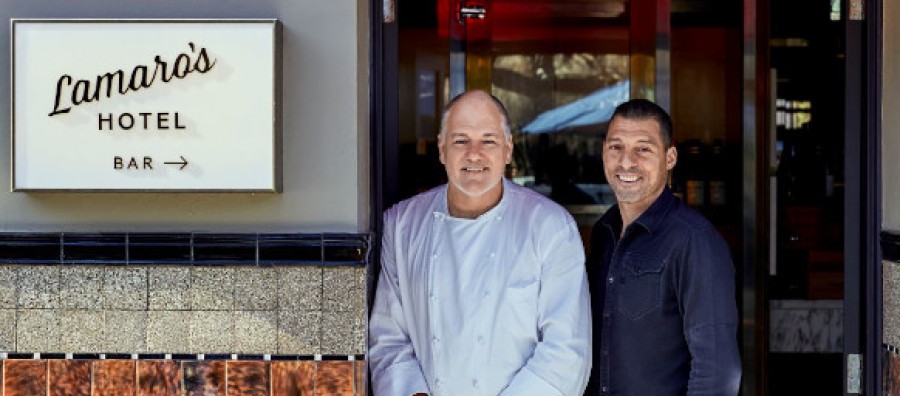
I am Paul Dimattina. Proprietor of Lamaro’s Hotel, proud Elwood resident and supporter of the local community and sporting clubs.

We sponsor Middle Park Primary school and Kindergarten, St Kilda City Junior Football Club, St Kilda Cricket Club, South Melbourne Park Primary school, Elwood Primary School market and many more local coomunity groups.

Why do you choose to live in Port Phillip? 
I chose to live here as I have always loved the eclectic cosmopolitan feel of Elwood. It has a very relaxed vibe and we have so many liked minded friends that live in the area. We also have easy access to the beach, lots of parks and gardens and plenty of great cafes and restaurants.

What is your passion? 
My passion is family, food, football and friends!! I am really lucky that I have been able to live my childhood dreams of owning my own restaurant/pub and playing AFL football. Hospitality is in my blood and I just love the social aspect of what we do. I really love my food and wine and being in hospitality I get to enjoy these every day!!

Tell us about the impact in these challenging times.
The last 18 months have been the toughest and most challenging of my business life.

The uncertainty and restraints put on us are a great strain.

The tears from the staff every time we get sent into another Lockdown are heart wrenching.

Total days the hospitality has been shut in Melbourne is 232 days and counting.

Total days all of us have been locked in our homes is 206 days. There were a further 26 days when lockdown had ended but we were not permitted to open.

When we have been allowed to trade, we have been working with severe capacity restrictions for another 300 days, and counting. We first got hit with capacity restrictions on 18/03/20.

230+ days of forced closure.

302+ days of capacity limits and restrictions.

It is not easy trying to run a business with a maximum capacity of 50% but still incurring full operational costs!!!

The greatest challenge has been staff retention and to provide leadership, inspiration and hope for them.

We treat our staff like family here at Lamaro’s and I feel a great sense of obligation to assist them through these tough times.

It is particularly hard for the casual workforce?
We have provided assistance in the form of food and personal loans where needed.

The mental toll has been debilitating not only to the staff but also to us in leadership and management roles.

A great leader inspires, a great leader cares, a great leader shows empathy and compassion and a great leader leads from the front and does everything possible to keep up morale and hope.

I have been doing my utmost to be the best leader I can be and to instill hope and positivity into the wonderful team that works with me.

Tough times don’t last, tough people do!!

We pride ourselves on being a community hub and knowing our customers personally.

We love tending to their needs and seeing the smiles we can put on people’s faces.

We love to surprise and delight our customers.

We look forward to welcoming you with open arms when we get to open again.

...more

In this edition Campbell Spence interviews St Kilda resident Geoffrey Conaghan.

Tell me about your connection to the Port Phillip community.
I came to Melbourne in 1987 and moved to West St Kilda.  I bought my flat in 1990 in St Kilda so I haven’t moved far - about 500 metres.

I met Mathew, my partner of 20 years and my husband of 3 years, in a St Kilda coffee shop. He lived around the corner so it was a very local romance.

In the 1980s I discovered Linden gallery on Acland Street and I’ve learnt a lot about contemporary art by attending seminars, artists talks and events.  Around 2000 I joined the Linden Board for 6 years and was chairman for three years.  In 2018 I was made ambassador of Linden Contemporaries, the donor network. 

My Greek club (through my mother) is the Kastellorizian Association in South Melbourne.  Descendants of this tiny island arrived at Station Pier in the early 20th century and settled in Port Phillip’s suburbs and many of us live in the area.

In 2020 I stood for Council as an independent candidate.  My outstanding vision was not shared by the citizens as I secured only 8% of votes.

Why do you choose to live in Port Phillip?
There are many reasons - St Kilda’s great public transport (we don’t have a car), interesting architecture and great assets like Theatre Works, the Palais theatre, Red Stitch, the Jewish Museum - all in walking distance. Access to the city is easy and the foreshore and Albert Park are nearby.I also like the medium density environment and interesting neighbours with diverse backgrounds.

Tell us about yourself Geoffrey - what has your career looked like?
I'm 62 and retired from full time work.  I now advise one client in the specialised area of international airline business development.  So, I’m a single-client consultant!

I was with Melbourne Airport management company for 15 years in a variety of roles and previously to that the founding executive director of the Tourism and Hospitality Industry Training Board. 

My final two roles were with the public sector as Victoria’s Commissioner to India based in Bangalore and then Victoria’s Agent General in London. I’ve had interesting jobs across the private, public and not for profit sectors.

I was a board member of Tourism Victoria for over a decade, appointed by Labor and Liberal governments so I’d like to think I was a merit appointment. In the 1990s I chaired the Victorian Tourism Awards and was a judge on the Australian Tourism Awards for five years. Before I left for India in 2009 I received a Victorian tourism industry award for Outstanding Contribution by an Individual.

What are your interests?
Since the 1970s I’ve travelled extensively through Asia, the Middle East and Europe.  I’m a slow, independent traveller and enjoy ‘the deep dive’.  Our last overseas holiday was a trip to Rome for about 3 weeks - one city, one flat. Our ‘holiday project’ was to see as many Caravaggio paintings as possible, visit second tier museums, find the best pasta Carbonara in Rome and eat only Lazio cuisine. We returned via Bangkok and spent three weeks visiting the old capitals of Thailand. 

I’m a keen collector of contemporary art. Mathew remains amazed that the walls can accomodate new paintings, but I’ve always said ‘where there’s a wall, there’s a way’.  I’ve never called myself a collector as it suggests a sense of purpose and discipline.  I buy what I want to look at every day, there’s not much discipline to it.

What really matters to you?
Education is a door-opener and my own path changed dramatically in the 1970s due to education and I’ve never looked back.  I want to see the doors of opportunity open for others.

Closing the gap for Indigenous Australia matters to me and education, health and housing are three basic requirements to engage successfully and equally with the broader population.

Other things? I hear a lot about ‘Australian values’ but fear they are deteriorating.  Two pillars of Australian society have been meritocracy and home ownership.  We’ve lost ground in these areas.

I get anxious about housing unafordability.  When I brought my flat it was 3 times my annual income which ownership possible.  I think people are now looking at  8,9,10 times their household income.  For people who aren’t ever going to own their home we need secure, quality housing for low income Australians.

I hope environmental targets don’t forget waste management and litter. There are volunteer groups that clean the Port Phillip foreshore - endlessly - and I ask the question: why is the rubbish there in the first place? Dumped rubbish around Port Phillip, cigarette buts and litter around Fitzroy, Acland and Carlisle streets.  I don’t think ‘heightened environmental awareness’ is broadly embraced.

I’m a fan of promoting excellence.  Australians are increasingly anti-elite, unless it has ‘sport’ in front of it. We need to promote elite musicians and performers, writers and intellectuals, visual and performing artists, teachers, artisans and trades people.  There’s nothing wrong with elite.  I wish I was elite at something!

Are there any secret passions?
I have a passion for the hand crafted and hand made. Our home has many things that we’ve ‘commissioned’ or found and had restored. 

I’m a good cook.  Mathew and I both cook, which has been a big bonus during Covid lock downs as we’ve had a varied and good menu. My mother was a very good cook because she could create a great meal from whatever was at hand.  As a result my sister and I can do the same.

OK, tell us somethings people would be surprised to find out about you.
Where do I start! 

I didn’t drink alcohol until I was 40 years old. I was a good swimmer - I did my surf lifesaving bronze medal when I was a teenager in Sydney, and later did many distance swims of over 3km.  I was a competition ballroom dancer which was abandoned as I had to choose between study and dancing. There may be a pattern here - I’ve never been particularly worried about being ‘on trend’!

I pick and then preserve the olives from trees on the footpaths around Middle Park and Albert Park.  There are dozens of untended trees, I leave the ones that are being looked after by locals.  Last year we picked 10 kilos.

In the mid 1990s I was the founding co-convenor of the Victorian Gay and Lesbian Rights Lobby, now The Victorian Pride Lobby. That group was formed in response to the notorious Tasty nightclub raid that proved to be pure harassment of its gay and lesbian clientele. The Pride Lobby remains a significant advocacy group.

...more
Promotion


Thank you to the people who contributed article for issue 3 of Port Phillip Matters. We were pleased to see our readers are growing with each issue: there were more than 2,100 views for issue 2 of the newspaper. The most read articles were the stories about Port Phillip people which you can find in the Local Personalities section. Also popular were the articles about the Elwood swamp and the community electric vehicle charging stations. This issue contains articles on the history of South Melbourne and Middle Park.

You are welcome to contribute articles or community announcements. We encourage you to submit articles about local people, community groups, local news and celebrate living in Port Phillip. Do you have information about sports clubs, schools, community groups and local events? If you would like to send us an article, please click on the “Got something to Say” panel at the bottom of this page to provide text and an image. We anticipate that you may want to contribute information about events and activities at your schools and sport clubs when COVID restrictions end.

Remember a picture is worth a thousand words. Please upload images in landscape format.

You can access information about Family Friendly Fun, Council Services, Local Live Music, and a Cinema guide – by clicking on the relevant sections listed under the masthead. We acknowledge lockdown restrictions have impacted cultural and family activities.

We will be adding Looking for a Local Tradie in future editions. If you are a trades person and would like to place a classified advertisement, please contact us using the button at the bottom of the page.

To access future issues, like our Port Phillip Matters Facebook Page Port Phillip Matters | Facebook to receive notifications.  You can also subscribe to the e-newspaper by clicking on the “Order Yours Free” panel at the bottom of this page.  

If you would like to provide feedback on Port Phillip Matters, simply click the "Contact Us" panel below and let us know your thoughts.

Remember our paper can be read in 14 languages by selecting the language button at the top right of the page.

...more
Promotion
Have Your Say
Promotion
Promotion
Promotion